


 Pregledaj u prostoru
 Podeli
 Podeli
 Detalji
 Vodič
Vodič

 Preuzmi sliku
 Slični predmeti
 Rendgenski snimak
 Automatska prezentacija
 Statistika
Mud
 1919
1919 335.0 x 203.0 cm
 Pročitaj više
Giclee štampa / Umetnički otisak
Giclée štampa ili print na platnu muzejskog kvaliteta uz brzu izradu i raznovrsne opcije završne obrade. ( Naručite ručno oslikano reprodukciju Pređi na prodaju digitalnih slika)




































Izaberite jednu od naših unapred definisanih veličina koje odgovaraju originalnim proporcijama umetničkog dela.

Unesite širinu i visinu koja vam je potrebna, kako bi se uklopili u vaš ram ili na vaš zid. Štampa se može samo iseći, nikada ne može biti veća od originalne slike, stoga format sa drugačijim proporcijama gubi deo slike. Poslaćemo vam digitalni prikaz radi potvrde pre nego što započnemo štampu. Slika prikazana na ovoj stranici ne pokazuje stvarni rez — to pokazuje samo digitalni prikaz.
Dostava širom sveta () za 2 nedelje umesto uobičajenih 4/5 nedelja. (23 октобар)

Besplatna ekspresna dostava širom sveta

Visokokvalitetno laneno platno

Sveobuhvatno osiguranje transporta

Garancija povraćaja carine i uvoznih dažbina

Garancija vernosti boja i autentičnosti pri reprodukciji

Politika povraćaja u roku od 100 dana (samo u slučaju nedostataka)

Garancija povrata 100% novca

Popust pri većoj količini
 Opcija sa staklom dostupna je samo za dimenzije manje od 110 cm

Mud
Giclee štampa / Umetnički otisak
Veličina reprodukcije
-


Ukupna cena
дин 6611
Srodna umetnička dela


Biografija umetnika
Gilbert Rogers (1881 – 1956): Witnessing War Through Impressionistic Vision
Gilbert Rogers was a British painter whose artistic output primarily focused on capturing the visceral experience of World War I, specifically depicting stretcher bearers and the medical corps. Born in London in 1881, Rogers possessed an innate fascination with art from a young age, honing his skills through self-study and experimentation before embarking on a formal artistic education at Slade School of Fine Art. This formative period instilled in him a deep appreciation for Impressionism, influencing his distinctive style and palette—characterized by loose brushstrokes and vibrant colors intended to convey mood and atmosphere rather than precise detail.- Early Life & Artistic Influences:
- Rogers’s upbringing fostered an interest in sketching and drawing landscapes, establishing a foundational understanding of composition and tonal variation.
The WWI Canvas: Capturing the Front Line Experience
Rogers's artistic career gained prominence during the First World War. Recognizing the urgent need for visual documentation of the conflict’s realities—particularly the grueling conditions faced by medical personnel—he volunteered his talents to depict scenes from hospitals and ambulance convoys. His most celebrated works include “First World War A Convoy of Ambulances of the Royal Army Medical Corps after a Battle,” an evocative portrayal of stretcher bearers navigating the aftermath of combat, meticulously rendered in oil on canvas. This painting exemplifies Rogers’s commitment to conveying emotion through color and brushwork—a hallmark of Impressionistic technique—creating a powerful impression of both chaos and compassion amidst the horrors of war. He collaborated closely with photographers like Bertram Wooster to produce composite images that combined photographic realism with artistic interpretation, furthering the effort to document the war's impact on human experience.- Notable Paintings:
- "First World War A Convoy of Ambulances of the Royal Army Medical Corps after a Battle" (1917): Demonstrates Rogers’s masterful use of Impressionistic brushstrokes to convey the emotional intensity of wartime trauma.
Technique & Artistic Style: Impressionism's Impact
Rogers embraced Impressionist principles wholeheartedly, prioritizing subjective perception over objective representation. He eschewed meticulous detail in favor of capturing fleeting moments and atmospheric conditions—a deliberate choice that aligns with the broader artistic movement’s rejection of academic conventions. Rogers skillfully blended pigments to achieve luminous color harmonies, layering brushstrokes to build up tonal depth and creating a sense of immediacy and dynamism on his canvases. His approach mirrored the pioneering efforts of artists like Monet and Renoir, who sought to capture the essence of light and color as experienced by the human eye—a stylistic decision that cemented Rogers’s legacy as a significant contributor to British Impressionism.Legacy & Historical Significance
Gilbert Rogers's paintings stand as poignant reminders of the First World War’s profound psychological toll on soldiers and medical staff alike. Beyond their aesthetic beauty, they serve as invaluable historical records—offering insights into the daily lives of those involved in treating wounded veterans. Rogers’s artistic vision transcended mere visual depiction; he aimed to communicate empathy and understanding for the suffering endured by individuals confronting unimaginable circumstances. His work continues to resonate with audiences today, prompting reflection on themes of resilience, compassion, and the enduring power of art to bear witness to human experience during times of crisis.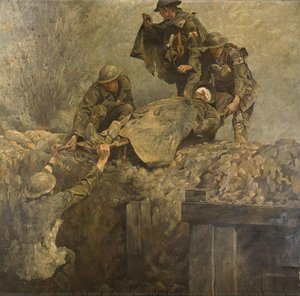
Gilbert Rogers
1881 - 1956
Brzi pregled
- Artistic Movement Or Style: Impressionism
- Artists Or Movements Influenced By This Artist: ['Post-Impressionism']
- Artists Who Influenced This Artist:
- Claude Monet
- Pierre Auguste Renoir
- Date Of Birth: 1881
- Date Of Death: 1956
- Full Name: Gilbert Rogers
- Nationality: British
- Notable Artworks: ['First World War A Convoy of Ambulances']
- Place Of Birth: London, England

