

Marble. Museo dell'Opera del Duomo.

§ 1Catalogue data


§ 2Abstract
Opis predmeta
 Pročitaj više
Biografija umetnika
Firenca Italija Đžoto di Bondone Đžoto Otkrijte Đžota di Bondona (1267-1337), revolucionarnog italijanskog slikara! Istražite njegove freske u stilu proto-renesanse, naturalizam i emotivnu dubinu u delima poput Scrovegnijeve kapel. Ključna figura u istoriji umetnosti. Proto-renesansa Masacio Čimabue oko 1267. godine 1337. godine Đžoto di Bondone Italijan Scrovegnijeva kapela Firenca,
§ 3Commentary
Daedalus by Giotto di Bondone: A Renaissance Masterpiece
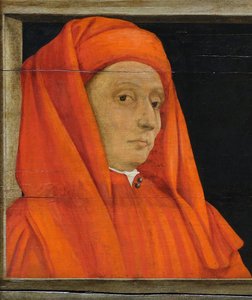
Giotto di Bondone's Daedalus, housed within the Museo dell’Opera del Duomo in Florence, Italy, stands as a pivotal work of the Italian Renaissance. This marble relief sculpture exemplifies Giotto's groundbreaking approach to depicting human emotion and movement, marking a significant departure from earlier artistic conventions.
The Story and Significance
Daedalus, created between 1305 and 1310, portrays the legendary figure of Daedalus from Greek mythology. He is depicted with wings affixed to his back, symbolizing his desperate attempt to escape imprisonment on the island of Crete alongside his son Icarus. Giotto masterfully captures a moment of intense emotion – the yearning for freedom, the fear of failure, and perhaps even a touch of hubris. The sculpture’s power lies not just in its narrative but also in the subtle details: the carefully rendered folds of Daedalus' clothing, the strain evident in his posture, and the expression on his face that conveys both determination and anxiety.
Historical Context: A Shift Towards Naturalism
Giotto’s Daedalus emerged during a period of profound artistic transformation. The Italian Renaissance witnessed a renewed interest in classical Greek and Roman art and culture, prompting artists to move away from the stylized conventions of Byzantine art. Giotto was at the forefront of this shift, pioneering a more naturalistic style that emphasized human emotion and realistic representation. He, alongside figures like Michelangelo Buonarroti (though much later), fundamentally reshaped the artistic landscape of the period. His work signaled a departure from purely symbolic representations towards depictions grounded in observed reality – a key characteristic of Renaissance art.
Artistic Technique and Symbolism
The sculpture is crafted from marble, showcasing Giotto’s skill as a sculptor. The relief technique—where figures are carved in raised detail against a flat background—allows for depth and dimension while maintaining a sense of unity. The wings themselves are laden with symbolism; they represent not only Daedalus' ambition to escape but also the human desire for transcendence and freedom from earthly constraints. The choice of marble, a material associated with classical antiquity, further reinforces the work’s connection to Renaissance ideals. Giotto’s use of light and shadow across the sculpted surface enhances the drama and emotional impact of the scene.
Experience Daedalus Through Reproduction
For those unable to experience this masterpiece firsthand at the Museo dell'Opera del Duomo, AllPaintingsStore.com offers meticulously crafted oil painting reproductions of Giotto’s Daedalus. These reproductions are created by skilled artists employing traditional techniques to faithfully capture the beauty and essence of the original artwork. Owning a reproduction allows art enthusiasts to bring a piece of Renaissance history into their homes, appreciating the innovative spirit and artistic genius of Giotto di Bondone.
- Discover more about Giotto Di Bondone and his works on AllPaintingsStore.com
- Learn about the Museo dell'Opera del Duomo and its collection of Renaissance art on AllPaintingsStore.com
- Explore the world of Renaissance art and discover new artists and works on AllPaintingsStore.com
Pitanja i odgovori
Kako se emocija i prilika za poklon spajaju kod dela „Daedalus”, autor Đijoto Di Bondone?
„Daedalus“ odiše Dramatic emocijom, a kao preporuka za poklon navedeno je Anniversary.
Iz kog je istorijskog perioda „Daedalus”, autor Đijoto Di Bondone?
"Daedalus" pripada periodu Late Medieval.
Koja osnovna nijansa prožima „Daedalus”, autor Đijoto Di Bondone?
Dominantna nijansa dela „Daedalus”, autor Đijoto Di Bondone je Amber to Saffron. Ova nijansa predstavlja osnovni ton palete.


 Pređi na štampu


 Za umetnička dela ili reprodukcije čija je bilo koja strana veća od 105 cm (približno 41 inč), okvir će biti isporučen u obliku rastavljenog seta za sklapanje. Ovaj metod osigurava bezbednu dostavu i sprečava oštećenja tokom transporta.


![Scrovegni - [05] - Joakimovo san](/media/artworks/images-thumb/8f/67/8f67bb5da87296bd452b3f0b237b528d.jpg)


