Garancija povraćaja novca · 100 dana Besplatna dostava širom sveta
449.587umetnička dela 30.613umetnici 4.660muzeji 32jezici
Valuta
    Jezik
      Atelje · Osnovan 2015. · Pariz, Francuska
      AllPaintingsStore
      allpaintingsstore.com
      Catalogue entry

      Salome Dancing

      1886. Acrylic On Canvas, 336.0 x 213.0 cm. Muzej d'Orsej.

      Fig. 1. Густав Море Ау, Salome Dancing, 1886. Shown as the reproduction you are specifying: , .

      § 1Catalogue data

      § 2Abstract

      Opis predmeta

      Biografija umetnika

      Жртва симбола и визионар слике, Густав Море је био француски ренесансни уметник који је оставио траг у историји сликања. Из познатог музеја Мореа у Парису су му се прецизније прилагодиле техничке карактеристике и стил, док су његове најзначајније слике представљале митове и бибљске приче које су га одликовале. Иновативни и веома емоционални Море је био утицајан на последишње уметнике као што су Ма

      § 3Commentary

      Gustave Moreau: A Visionary Steeped in Myth and Symbol

      Moreau’s “Salome Dancing Before Herod” isn't merely a depiction of biblical legend; it’s an immersive experience into the heart of Symbolist art—a movement that sought to transcend realism, prioritizing emotion and psychological depth over objective representation. Painted in 1886, this monumental canvas embodies Moreau’s signature style: opulent ornamentation combined with unsettling juxtapositions of figures and motifs drawn from mythology and religious iconography. The artwork immediately captivates the viewer with its dramatic lighting—a chiaroscuro technique reminiscent of Rembrandt—that sculpts Salome's form against a backdrop of richly textured fabrics and shimmering chandeliers, creating an atmosphere of palpable tension and anticipation.

      The Anatomy of Symbolism: Technique and Composition

      Moreau’s meticulous craftsmanship is evident in every detail. He employed tempera on canvas, layering pigments with painstaking precision to achieve luminous colors and velvety surfaces—a deliberate choice designed to evoke a sense of timeless beauty and spiritual resonance. The composition itself is deliberately unsettling. Salome dominates the left side of the frame, positioned centrally amidst a swirling vortex of drapery and birds, symbolizing both allure and danger. Herod’s gaze is averted, conveying indifference and complicity, while the surrounding figures—including attendants and musicians—are rendered in muted tones, emphasizing Salome's prominence and highlighting the psychological drama unfolding before us. The placement of the three chandeliers isn’t accidental; they serve as beacons of illumination within the darkness, symbolizing divine judgment and illuminating the unsettling narrative.

      Mythological Echoes: Herod and Salome’s Narrative Context

      The painting draws heavily upon biblical lore—specifically the story of Salomé and Herod—but Moreau transcends mere retelling. He transforms the tale into a meditation on desire, power, and transgression. Salome's dance is not simply an act of seduction; it’s a ritualistic performance imbued with symbolic significance. The birds circling above represent both beauty and death—a motif frequently explored by Symbolist artists—underscoring the precarious balance between innocence and corruption. Herod’s detachment speaks to the broader anxieties of the era regarding moral decay and the corrupt influence of authority, reflecting the intellectual ferment of late 19th-century Paris.

      Emotional Resonance: Capturing Inner Turmoil

      Moreau's intention wasn’t to portray a historical event but rather to convey an emotional state—the unsettling thrill of impending doom and the seductive allure of forbidden pleasure. The painting compels viewers to confront uncomfortable truths about human nature, prompting contemplation on themes of obsession, vulnerability, and the consequences of unchecked ambition. It’s this profound psychological depth that distinguishes “Salome Dancing Before Herod” from its Impressionist counterparts and cements Moreau's place as a pioneer of modern fantasy art—a visionary who dared to explore the darkest recesses of the human psyche while simultaneously celebrating the sublime beauty of mythic narratives.

      A Legacy Enduring Inspiration

      Moreau’s influence extends far beyond his own lifetime, inspiring generations of artists who embraced Symbolism’s expressive power. Reproductions of “Salome Dancing Before Herod” continue to fascinate collectors and interior designers alike—a testament to the painting's enduring ability to evoke emotion and provoke thought. Its opulent aesthetic and unsettling narrative offer a unique perspective on biblical storytelling and serve as a reminder that art can transcend mere representation, achieving instead a profound connection with the human spirit.

      Pitanja i odgovori

      Kakav osećaj prenosi „Salome Dancing”, autor Густав Море Ау?

      U delu "Salome Dancing", Dramatic raspoloženje prati Mysterious emocija.

      Pod kojim drugim imenima je Густав Море Ау poznat/a?

      Ostala imena zabeležena za Густав Море Ау, autora dela "Salome Dancing", uključuju Густав Море, Море Ау.

      Ko je kreirao "Salome Dancing" i u kojoj godini?

      Delo "Salome Dancing" delo je umetnika Густав Море Ау iz 1886. godine.
      § 4The artist

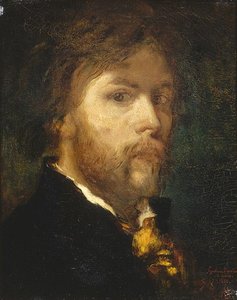
      Густав Море Ау

      Густав Море Ау

      1826 - 1898, Француска

      Quick facts about Густав Море Ау

      • Artistic Movement Or Style: Симболизам
      • Artists Or Movements Influenced By This Artist:
        • Хенри Матисс
        • Жорж Роуолт
      • Artists Who Influenced This Artist:
        • Евгење Делакроа
        • Микеланђело
        • Леонардо да Винчи
      • Date Of Birth: Април 6, 1826
      • Date Of Death: Април 18, 1898
      • Full Name: Gustave Moreau
      • Nationality: Француски
      • Notable Artworks:
        • Саломе Джижући Предо Herod
        • Юпитер И Семеле
        • Орфейс
        • Априцитион
        • Десдемона
      • Place Of Birth: Париз, Француска

      Biografija umetnika

      A Dream Weaver of Symbolism: The Life and Art of Gustave Moreau

      Gustave Moreau, a name synonymous with the ethereal beauty and enigmatic depths of Symbolist painting, emerged from 19th-century Paris as a singular artistic voice. Born in April 6, 1826, into a bourgeois family—his father an architect and archivist—Moreau’s early life was steeped in intellectual curiosity and aesthetic sensibility. From a young age, he displayed a remarkable gift for drawing, nurtured through traditional academic training at the École des Beaux-Arts under figures like François-Édouard Picot. However, Moreau's artistic path would diverge sharply from the prevailing Realist and Impressionist currents of his time. He wasn’t interested in capturing fleeting moments or objective reality; instead, he sought to unlock the hidden realms of myth, religion, and the human psyche through a deeply personal and symbolic visual language. His journey was one of inward exploration, translating subjective emotions and spiritual yearnings onto canvas with an obsessive attention to detail and a vibrant, often opulent palette.

      The Forge of Imagination: Influences and Artistic Development

      Moreau’s artistic development wasn't born in a vacuum. While rejecting the dominant trends of his era, he drew inspiration from diverse sources. The dramatic use of color and exotic subject matter found in the works of Eugène Delacroix ignited a passion for narrative painting imbued with emotional intensity—a fascination that would shape many of his early compositions. He held Renaissance masters like Michelangelo and Leonardo da Vinci in high esteem, admiring their mastery of composition, anatomy, and psychological insight; figures whose monumental sculptures and paintings profoundly impacted his artistic sensibilities. Yet, Moreau wasn’t merely imitating these artists; he was synthesizing their influences into something entirely new. His formative years were spent absorbing the art of antiquity and the Renaissance, meticulously copying Old Master paintings—not as an exercise in mere replication, but as a means of immersing himself in their techniques and unlocking their secrets. This dedication to craft, combined with his burgeoning interest in mythology and literature, laid the foundation for his unique artistic vision. He diligently studied the works of Dante Alighieri and Friedrich Nietzsche, whose philosophical ideas resonated deeply with his own spiritual quest.

      A World of Symbols: Themes and Techniques

      Moreau’s paintings are not simply illustrations of myths or biblical stories; they are complex allegories that invite contemplation and interpretation. He delved into narratives like those of Salome, Orpheus, Jupiter and Semele, exploring their underlying psychological and spiritual truths—truths far beyond the surface appearance of the tales themselves. His canvases teem with symbolic imagery—serpents representing temptation, jewels signifying earthly desires, and figures embodying abstract concepts like grief, loss, or redemption. He masterfully created a dreamlike atmosphere through intricate detail, rich textures, and an unsettling juxtaposition of light and shadow; techniques honed during his extensive travels to Italy where he encountered the grandeur of Roman ruins and the artistic fervor of Florentine Renaissance studios. Moreau’s technique was characterized by meticulous layering of paint—a painstaking process that resulted in surfaces shimmering with iridescent colors and evoking a sense of otherworldly beauty. He prioritized expressive power over realistic representation, focusing on color and form to convey mood and meaning—a deliberate departure from the prevailing Impressionist preoccupation with capturing fleeting visual sensations.

      Notable Works

      • Salome Dancing before Herod: Perhaps his most iconic work, this painting exemplifies Moreau’s opulent style and fascination with biblical narratives; its unsettling gaze and dramatic lighting continue to captivate viewers today.
      • Jupiter and Semele: A monumental depiction of Greek mythology showcasing Moreau's mastery of composition and color—a testament to his ambition and artistic prowess.
      • Orpheus: Several paintings by Moreau explore the myth of Orpheus, reflecting themes of loss, grief, and artistic inspiration; these works demonstrate his profound understanding of human emotion.
      • The Apparition: Demonstrrates Moreau’s skill in creating ethereal and otherworldly scenes—a hallmark of his Symbolist style.
      • Desdemona: A poignant portrayal of Shakespeare's tragic heroine, imbued with psychological depth and emotional resonance.

      Legacy and Influence: The Enduring Power of Symbolism

      Though initially met with mixed reactions from the Parisian art establishment, Moreau gradually gained recognition as a pivotal figure in the burgeoning Symbolist movement during the 1890s—a movement that championed imagination, subjectivity, and artistic freedom. Unlike many of his contemporaries who actively sought public acclaim, he remained somewhat reclusive, preferring to work independently and avoid artistic controversies; prioritizing artistic integrity above social prestige. Nevertheless, Moreau’s influence extended far beyond his immediate circle. He accepted a professorship at the École des Beaux-Arts in 1893, where he profoundly impacted generations of artists—including Henri Matisse and Georges Rouault—inspiring them to embrace Symbolist principles and forge their own distinctive artistic paths. His unwavering belief in the transformative power of art—coupled with his meticulous craftsmanship and profound understanding of mythology—established him as a towering presence in the history of modern art. Gustave Moreau died April 18, 1898, leaving behind an unparalleled body of work that continues to inspire artists and scholars alike—a legacy enshrined in the Musée Gustave Moreau, established in his former studio and home in Paris—where visitors can immerse themselves in the captivating world of this extraordinary artist.

      § 5Comparanda

      § 6Questions

      Osnovne informacije

      • Year: 1886
      • Notable elements or techniques: Dramatic lighting; Symbolic ornamentation
      • Influences:
        • Walter Pater
        • Oscar Wilde
      • Movement: Symbolism
      • Subject or theme: Mythology; Biblical Narrative
      • Artist: Gustave Moreau

      § 7Cite this entry

      AllPaintingsStore.com, “Густав Море Ау, Salome Dancing (1886)”, https://allpaintingsstore.com/sr/art/gustave-moreau-salome-dancing-8Y3DXV-en/ArtistReproduction/ (accessed 1 октобар 2026).

      § 8The reproduction

      Ručno rađena uljana reprodukcija

      Ručno oslikano uljanim bojama na platnu u dimenzijama i okviru po vašem izboru, izrađeno po porudžbini od strane naših umetnika. ( Pređi na štampu Pređi na digitalnu sliku)

      It is specified on the order sheet in the margin; the present state of that sheet reads as follows.

      Salome Dancing

      Tehnika reprodukcije

      Dimenzije reprodukcije

      -

      Vrhunski maestri umetnosti

      Više detalja, prefinjenosti i dodatnog vremena za izradu

      -

      Okvir za reprodukciju

      -

      -

      Za umetnička dela ili reprodukcije čija je bilo koja strana veća od 105 cm (približno 41 inč), okvir će biti isporučen u obliku rastavljenog seta za sklapanje. Ovaj metod osigurava bezbednu dostavu i sprečava oštećenja tokom transporta.

      Potrebna je profesionalna montaža – ovo nije proizvod namenjen samostalnoj izradi.
      Set mora sastaviti i platno zategnuti iskusni profesionalni ramitelj, koristeći drveni lepak (nije uključen u set), hvataljku za zatezanje platna i stege kako bi se održao prav ugao okvira dok se lepak suši. Nepravilno sklapanje ili neravnomerno zategnuto platno mogu trajno oštetiti umetničko delo, što nije pokriveno našom garancijom.

      • Sve šipke od masivnog drveta su uključene, precizno isečene po veličini.

      • Montira se pomoću priloženih šrafova, uz dodatno korišćenje lepka za drvo za spojeve u uglovima, koji nije uključen u set i koji vaš čuvar okvira mora obezbediti.

      • Potreban je profesionalni alat koji nije uključen u set: klešta za zatezanje platna (zatezač) i stege za održavanje pravih uglova letvica tokom sušenja lepka.

      Važno:
      Za spojeve u uglovima neophodan je lepak za drvo, šipke se moraju pričvrstiti stezgama dok lepak potpuno ne osuši, a za zatezanje platna na sklopljenom ramu potrebne su hvataljke za zatezanje platna. Nijedan od ovih alata nije uključen u komplet. Pre naručivanja ove veličine, molimo Vas da unapred obezbedite iskusnog profesionalca za ramačenje.

      Kratki opis natpisa

      -

      -

      Zaštitni lak

      Sjajni lak (pojačava intenzitet boja, štiti od svetlosti i vlage)

      -

      Personalizujte svoje umetničko delo

      Primeri mogućnosti izmene: Zamena lica fotografijom kupca; Dodavanje ljubimca (npr. zamena mačke psom); Uključivanje skrivene poruke u pozadini; Promena pejzaža ili elemenata pozadine.

      -

      Hitna dostava

      Svetska isporuka () za 3/4 nedelje umesto uobičajenih 5 nedelja. (30 октобар). Bez kompromisa po pitanju kvaliteta.

      -

      Brza dostava

      Dostava širom sveta () u roku od 5 nedelja. (6 новембар).

      Uključeno u cenu

      Ukupna cena

      дин 26711

      Included with every order

      • Besplatna ekspresna dostava širom sveta
      • Visokokvalitetno laneno platno
      • Potpuno osiguranje transporta
      • Garancija povraćaja carine i uvoznih dažbina
      • Garancija vernosti boja
      • Politika povraćaja u roku od 100 dana (samo u slučaju nedostataka)
      • Garancija povrata 100% novca
      • Popust na više proizvoda
      Order sheet