Garancija povraćaja novca · 100 dana Besplatna dostava širom sveta
449.564umetnička dela 30.613umetnici 4.660muzeji 32jezici
Katalog ulazak

St Christopher

Oil On Panel.

Sl. 1. Јеронимијус Бош, St Christopher. Prikazano kao reprodukcija koju ste odabrali: , .

§ 1Katalog podaci

§ 2Apstraktno

Opis predmeta

Bosch’s haunting St Christopher portrays a surreal landscape populated by symbolic birds amidst a mountainous backdrop—a masterpiece of the Early Netherlandish Renaissance that captures unsettling beauty and invites contemplation.

Biografija umetnika

Хијеронимиј Бош (1450-1516), ренесансни холандски мајстор сурреализма и симболизама, познат по својим емоционалним и дивљим делима као што су Садржаље земљних радости и Последње суђење – трајан утицај на историју слике.

§ 3Komentar

The Vision of Saint Christopher

In the hauntingly beautiful realm of Hieronymus Bosch, the painting St Christopher emerges as a profound window into the Early Netherlandish Renaissance. The scene captures a moment of immense spiritual and physical weight, as the giant Saint Christopher carries the Christ child across a river. As he traverses the water, the child’s presence becomes an unbearable burden, for he carries within him the weight of all the sins of the world. This singular act of devotion transforms a simple crossing into a monumental encounter between the earthly and the divine.

The landscape itself is a surreal tapestry of symbolic elements set against a backdrop of distant mountains. Within this meticulously detailed environment, several figures are positioned throughout the scene, including individuals near the left, center, and right sides of the composition. The atmosphere is further populated by birds that drift through the sky—one located above the center-left, another on the far right, and a third near the top left corner. Through this blend of meticulous detail and imaginative imagery, Bosch invites the viewer into a world where the boundaries between reality and the supernatural are beautifully blurred.

Technical Details and Composition

The artwork is characterized by its use of oil on panel, a medium that allows for the luminous colors and intricate textures so central to Bosch's style. The composition is structured around the movement of the saint through the landscape, utilizing a palette that includes pigments such as azurite, lead-tin yellow, vermilion, red lake, and ochres. These elements work together to define the river, the green and blue landscapes, and the sky.

Key visual components include:

  • A mountainous background providing depth to the scene.
  • The central figure of Saint Christopher bearing the Christ child.
  • Various individuals placed in different positions across the landscape.
  • Three distinct birds positioned in the upper portions of the painting.

Pitanja i odgovori

Da li je „St Christopher”, autor Јеронимијус Бош svetlo ili tamno umetničko delo?

Sveukupno, "St Christopher" je zabeležen kao deep_shadow. Percepcija osvetljenosti opisuje koliko delo deluje svetlo ili tamno.

Mogu li da gledam "St Christopher" kao prezentaciju preko celog ekrana?

Dijaporama dela "St Christopher" dostupna je na stranici Galerija slika tog umetničkog dela.

Postoji li vodič za „St Christopher”, autor Јеронимијус Бош?

Vodič za "St Christopher" je stranica Vodič za učenike za ovo umetničko delo – štampani informativni list koji prikazuje delo sa njegovim opisom, podacima o autorstvu i identifikacionom tabelom (umetnik, datumi, tehnika, originalna veličina, kolekcija).
§ 4Umetnik

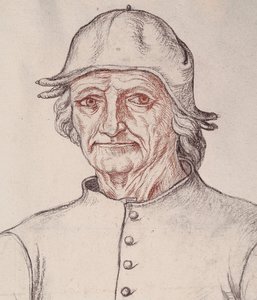
Јеронимијус Бош

Јеронимијус Бош

1450 - 1516, Holandija

Kratke činjenice o umetniku Јеронимијус Бош

  • Artistic Movement Or Style: Surrealizam i simbolizam
  • Artists Or Movements Influenced By This Artist: ['Pieter Bruegel stariji']
  • Date Of Birth: c. 1450
  • Date Of Death: 1516
  • Full Name: Hieronymus Bosch
  • Nationality: Nizozemski
  • Notable Artworks:
    • Posljednji Sud
    • Odvijanje Svete Duše
    • Epifanska Križanje
  • Place Of Birth: Den Bosch, Nizozemska

Biografija umetnika

A Netherlandish Enigma: The Life and Art of Hieronymus Bosch

Born around 1450 in the vibrant, bustling town of ’s-Hertogenbosch in the Netherlands—then part of Brabant—Hieronymus Bosch, originally Jheronimus van Aken, remains one of art history’s most compelling and mysterious figures. His world was steeped in late medieval religious fervor, folklore, and a growing sense of societal unease, all of which would profoundly shape his uniquely unsettling artistic vision. Coming from a family with a long tradition of painting—his grandfather, Jan van Aken, and father, Anthonius van Aken, were both artists—Bosch likely received his earliest training within the family workshop, absorbing the techniques and conventions of Netherlandish painting. However, even in his formative years, he began to diverge from established norms, hinting at the extraordinary imagination that would define his career. Biographical details are frustratingly scarce; records are fragmented, leaving much open to speculation and interpretation, adding to the aura of mystique surrounding both the man and his work. He married Aleyt Goyaerts van den Meerveen sometime before 1481, a union that provided him with some financial security through her family’s holdings, but little else is known about their personal life. Fantastical Visions and Symbolic Depths Bosch's artistic style is instantly recognizable—a captivating blend of meticulous detail and wildly imaginative imagery. He primarily worked with oil on oak panels, demonstrating a masterful command of the medium, achieving luminous colors and intricate textures. While his early works show influences from traditional Netherlandish painting, particularly in their realism and attention to detail, he quickly moved beyond mere imitation, developing a profoundly original vision. His paintings are not simply representations of reality; they are allegorical landscapes populated by bizarre creatures, hybrid beings, and unsettling scenes that seem plucked from dreams—or nightmares. Religious themes form the core of much of his work, but these are rarely straightforward depictions of biblical stories. Instead, Bosch uses symbolism to explore complex moral and theological concepts, often focusing on the dangers of sin, the fragility of earthly pleasures, and the inevitability of divine judgment. His creatures—grotesque demons, fantastical animals, and strangely human figures—are not merely decorative elements; they are embodiments of vice, temptation, and spiritual corruption. The blending of the sacred and the profane, the beautiful and the grotesque, creates a uniquely unsettling effect that continues to captivate viewers centuries later.

Masterpieces of Moral Allegory

Among Bosch’s most celebrated achievements is The Garden of Earthly Delights (c. 1490-1510), a triptych that remains one of the most enigmatic and debated works in art history. When opened, it presents a panoramic vision of paradise, earthly life, and hell—a complex allegorical representation of humanity’s fall from grace. The left panel depicts the Garden of Eden, teeming with fantastical creatures and lush vegetation; the central panel portrays a world consumed by sensual pleasure and unrestrained desire; and the right panel offers a terrifying glimpse into the torments of hell. The Triptych of the Last Judgement (c. 1480-1490) is another powerful example of his skill in portraying both heavenly bliss and infernal torment, while The Ascent of the Blessed (c. 1480-1490) demonstrates his ability to create ethereal and dreamlike scenes. Even smaller works like Epiphany (c. 1495) showcase his innovative use of oil on wood and complex symbolism, revealing a mind constantly grappling with profound questions about faith, morality, and the human condition.

Influences and Artistic Development

Bosch’s artistic trajectory reveals a gradual shift from conventional Netherlandish painting to an increasingly personal and expressive style. Early works demonstrate considerable skill in depicting realistic figures and landscapes—traits inherited from his family tradition—but he quickly abandoned these techniques in favor of bolder colors, more dramatic compositions, and a preoccupation with unsettling imagery. Scholars suggest possible connections to medieval folklore, religious texts—particularly those emphasizing apocalyptic themes—and the prevailing anxieties of the time, including fears of heresy and social upheaval. However, it’s clear that Bosch synthesized these elements into something entirely new and uniquely his own. His artistic vision was profoundly shaped by humanist ideas circulating in Europe during his lifetime, prompting him to question established dogma and explore psychological dimensions previously ignored by artists. He absorbed influences from artists like Pieter Bruegel the Elder, whose landscapes conveyed moral lessons with a similar blend of realism and symbolism.

Legacy and Enduring Influence

Identifying Bosch’s direct influences is a challenging task, given the originality of his vision. Scholars suggest possible connections to medieval folklore, religious texts—particularly those emphasizing apocalyptic themes—and the prevailing anxieties of the time, including fears of heresy and social upheaval. However, it's clear that he revolutionized Netherlandish painting by introducing unprecedented levels of psychological complexity and symbolic depth. His impact on subsequent artists is undeniable. Pieter Bruegel the Elder directly followed in his footsteps, adopting similar themes and compositional techniques, while later movements, such as Surrealism, also drew inspiration from Bosch’s dreamlike imagery and exploration of the subconscious. Artists like Salvador Dalí and Max Ernst openly acknowledged their debt to his unsettling visions. Even today, Bosch's work continues to fascinate and provoke debate, solidifying his place as a master of Netherlandish painting and a visionary artist whose influence extends far beyond his own time. His paintings offer valuable insights into the religious, social, and psychological climate of the late 15th and early 16th centuries, challenging conventional norms and paving the way for new forms of artistic expression. He died in 1516, leaving behind a body of work that continues to haunt and inspire, ensuring his enduring legacy as one of art history’s most singular and unforgettable voices.

§ 5Srodna dela

§ 6Pitanja

Osnovne informacije

  • Subject or theme: Saint Christopher carrying a child
  • Movement: Late Gothic Style
  • Notable elements or techniques: Symbolic birds and mountainous backdrop

Kviz o umetnosti

Svako pitanje ima samo jedan tačan odgovor.

Pitanje 1:
Who is the artist of the painting 'St Christopher'?
Pitanje 2:
What is being depicted in the scene of the painting?
Pitanje 3:
Where can the mountains mentioned in the description be seen?
Pitanje 4:
How many birds are visible in the painting according to the description?
Pitanje 5:
What is the location of the bird mentioned as being near the top left corner?

§ 7Citiraj ovaj unos

AllPaintingsStore.com, “Јеронимијус Бош, St Christopher”, https://allpaintingsstore.com/sr/art/hieronymus-bosch-st-christopher-9H69TL-en/ (prizren 6 октобар 2026).

§ 8Reprodukcija

Ručno rađena uljana reprodukcija

Ručno oslikano uljanim bojama na platnu u dimenzijama i okviru po vašem izboru, izrađeno po porudžbini od strane naših umetnika. ( Pređi na štampu Pređi na digitalnu sliku)

To je navedeno u margini narudžbenice; trenutno stanje tog dokumenta glasi kao sledi.

St Christopher

Tehnika reprodukcije

Dimenzije reprodukcije

-

Vrhunski maestri umetnosti

Više detalja, prefinjenosti i dodatnog vremena za izradu

-

Okvir za reprodukciju

-

-

Za umetnička dela ili reprodukcije čija je bilo koja strana veća od 105 cm (približno 41 inč), okvir će biti isporučen u obliku rastavljenog seta za sklapanje. Ovaj metod osigurava bezbednu dostavu i sprečava oštećenja tokom transporta.

Potrebna je profesionalna montaža – ovo nije proizvod namenjen samostalnoj izradi.
Set mora sastaviti i platno zategnuti iskusni profesionalni ramitelj, koristeći drveni lepak (nije uključen u set), hvataljku za zatezanje platna i stege kako bi se održao prav ugao okvira dok se lepak suši. Nepravilno sklapanje ili neravnomerno zategnuto platno mogu trajno oštetiti umetničko delo, što nije pokriveno našom garancijom.

  • Sve šipke od masivnog drveta su uključene, precizno isečene po veličini.

  • Montira se pomoću priloženih šrafova, uz dodatno korišćenje lepka za drvo za spojeve u uglovima, koji nije uključen u set i koji vaš čuvar okvira mora obezbediti.

  • Potreban je profesionalni alat koji nije uključen u set: klešta za zatezanje platna (zatezač) i stege za održavanje pravih uglova letvica tokom sušenja lepka.

Važno:
Za spojeve u uglovima neophodan je lepak za drvo, šipke se moraju pričvrstiti stezgama dok lepak potpuno ne osuši, a za zatezanje platna na sklopljenom ramu potrebne su hvataljke za zatezanje platna. Nijedan od ovih alata nije uključen u komplet. Pre naručivanja ove veličine, molimo Vas da unapred obezbedite iskusnog profesionalca za ramačenje.

Kratki opis natpisa

-

-

Zaštitni lak

Sjajni lak (pojačava intenzitet boja, štiti od svetlosti i vlage)

-

Personalizujte svoje umetničko delo

Primeri mogućnosti izmene: Zamena lica fotografijom kupca; Dodavanje ljubimca (npr. zamena mačke psom); Uključivanje skrivene poruke u pozadini; Promena pejzaža ili elemenata pozadine.

-

Hitna dostava

Svetska isporuka () za 3/4 nedelje umesto uobičajenih 5 nedelja. (3 новембар). Bez kompromisa po pitanju kvaliteta.

-

Brza dostava

Dostava širom sveta () u roku od 5 nedelja. (10 новембар).

Uključeno u cenu

Ukupna cena

дин 27032

Uključeno uz svaku porudžbinu

  • Besplatna ekspresna dostava širom sveta
  • Visokokvalitetno laneno platno
  • Potpuno osiguranje transporta
  • Garancija povraćaja carine i uvoznih dažbina
  • Garancija vernosti boja
  • Politika povraćaja u roku od 100 dana (samo u slučaju nedostataka)
  • Garancija povrata 100% novca
  • Popust na više proizvoda
List za poručivanje