


 Pregledaj u prostoru
 Pošalji
 Podeli
 Detalji o delu
 Vodič
Vodič

 Preuzmi
 Slični predmeti
 Rendgenski snimak
 Automatska prezentacija
 Q&A
Q&A Statistika
Argus, Mercury and Io

- 204.0 x 193.0 cm


 Pročitaj više
Giclee štampa / Umetnički otisak
Giclée štampa ili print na platnu muzejskog kvaliteta uz brzu izradu i raznovrsne opcije završne obrade. ( Kupite ručno oslikano delo Pređi na digitalnu sliku)




P118B дин10

P118H дин10

P118W дин10

P438Z дин10

P508JH дин12

P508YH дин12

P805H дин10

P805Z дин10

P919BZ дин10

P919G дин10

P919XJ дин10

P959ZH дин10

P968JZ дин12

W106C дин8

W218G дин10

W218JH дин8

W218Y дин10

W307PJ дин10

W316G дин10

W316PJ дин8

W316Y дин10

W398PJ дин8

W4111J дин10

W500HY дин15

W500JH дин15

W692G дин12

W849H дин8

W940BG дин15

W953PJ дин8




Izaberite jednu od naših unapred definisanih veličina koje odgovaraju originalnim proporcijama umetničkog dela.

Unesite željenu širinu i visinu kako bi se štampa uklopila u vaš ram ili zid. Štampu je moguće samo iseći, ali nikada povećati iznad dimenzija originalne slike, stoga format sa drugačijim proporcijama uzrokuje gubitak dela slike. Pre početka štampe, poslaćemo vam digitalni prikaz radi potvrde. Slika prikazana na ovoj stranici ne predstavlja stvarni isrez — to pokazuje samo digitalni prikaz.
Dostava širom sveta () za 2 nedelje umesto uobičajenih 4/5 nedelja. (1 новембар)

Besplatna ekspresna dostava širom sveta

Visokokvalitetno laneno platno

Potpuno osiguranje transporta

Garancija povraćaja carine i uvoznih dažbina

Garancija vernosti boja

Politika povraćaja u roku od 100 dana (samo u slučaju nedostataka)

Garancija povrata 100% novca

Popust na više proizvoda
 Opcija sa staklom dostupna je samo za dimenzije manje od 110 cm

Argus, Mercury and Io
Giclee štampa / Umetnički otisak
Dimenzije reprodukcije
-


Ukupna cena
дин 6667
A Baroque Symphony of Myth and Mastery
In the heart of the Dutch Golden Age, a period defined by opulent patronage and an unwavering pursuit of beauty, Jacob van Campen breathed life into a scene of divine tension and mythological drama. His 1630 masterpiece, Argus, Mercury and Io, is far more than a mere depiction of ancient legend; it is an immersive experience that captures the very essence of the Baroque period. The canvas unfolds a narrative steeped in the complexities of Greek mythology, presenting a tableau where the boundaries between the divine and the mortal blur under a turbulent, stormy sky. As the viewer gazes upon this monumental oil on canvas, they are transported to a world where celestial intervention meets earthly vulnerability.
The painting portrays a dramatic moment involving Mercury, Argus Panoptes—the giant with a hundred eyes—and Io, the wife of Zeus caught in a harrowing predicament. The scene unfolds upon the ground, bathed in an ethereal luminescence that underscores the gravity of their situation. Io, pursued relentlessly by the jealous Hera, seeks refuge beneath the rough bark of a tree trunk, a symbol of resilience amidst adversity. Amidst this tension, Mercury attempts to soothe Io’s suffering with music, representing the power of reason and solace against overwhelming emotion. The inclusion of watchful dogs adds an element of primal instinct, while the presence of sheep and a distant cow grounds the divine drama in a pastoral reality, creating a striking contrast between the eternal and the everyday.
The Precision of Dutch Classicism
Van Campen's style embodies the burgeoning influence of Classical ideals within the broader Baroque aesthetic. Unlike many of his contemporaries who favored flamboyant ornamentation and chaotic movement, Van Campen prioritized clarity, balance, and architectural precision. This approach aligns him with the principles of Dutch Classicism, a movement that sought to marry native textures with the refined Vitruvian principles he encountered during his time in Italy. His technique is nothing short of breathtaking; he meticulously renders a variety of textures—from the smooth, luminous skin of Io to the rugged, tactile bark of the sheltering tree.
The artist demonstrates an unparalleled command of chiaroscuro, using the masterful manipulation of light and shadow to create profound depth. This play of light does more than just define form; it guides the viewer's gaze across the composition, pulling the eye from the central figures toward the periphery of the pastoral landscape. For the discerning collector or interior designer, this technique offers a captivating visual rhythm that can serve as a commanding focal point in any sophisticated space, providing both a sense of movement and a profound stillness.
An Eternal Legacy for the Modern Collector
Beyond its technical brilliance, Argus, Mercury and Io resonates with an emotional depth that transcends centuries. It is a study of protection, fear, and the search for peace amidst chaos. The painting’s ability to evoke such a wide spectrum of human emotion—from the anxiety of pursuit to the tranquility of melodic solace—makes it a timeless piece of storytelling. For those seeking to adorn their homes or galleries with works that inspire contemplation, this reproduction offers a window into the soul of the 17th century.
Owning a high-quality reproduction of such a significant work allows for the integration of historical grandeur into contemporary living. Whether placed in a sunlit study or a formal dining hall, the painting’s rich palette and dramatic narrative provide an unparalleled sense of prestige and intellectual depth. It is not merely a decoration; it is an invitation to engage with the legends of antiquity and the masterful hand of one of the Netherlands' greatest artistic minds.
Pitanja i odgovori
Mogu li videti „Argus, Mercury and Io”, autor Jacob van Campen pod različitim svetlima?
X-Ray prikaz dela „Argus, Mercury and Io”, autor Jacob van Campen možete videti na stranici Rentgensko posmatranje: to je interaktivno istraživanje slike kroz jedanaest optičkih slojeva.
Gde bi najbolje bilo okačiti reprodukciju dela „Argus, Mercury and Io”, autor Jacob van Campen?
Sa svojim Square oblikom, reprodukcija dela "Argus, Mercury and Io" idealna je za Living Room.
Da li je „Argus, Mercury and Io”, autor Jacob van Campen portret, pejzaž ili kvadratna kompozicija?
„Argus, Mercury and Io”, autor Jacob van Campen je kompozicija u Square formatu. Vredno je proveriti proporcije pre odabira veličine printa.
Srodna umetnička dela


![L’enlèvement De Psyché [the Abduction Of Psyche] — Oscar Pereira Da Silva, Academic Historicism](/media/artworks/images-thumb/5f/a0/5fa0456cb481bd203147aae9eef9336a.jpg)


Biografija umetnika
Jacob van Campen: Life and Legacy
Early Life and Background
Jacob van Campen was born in Haarlem, Netherlands, in 1596. He came from a relatively prosperous background, inheriting the estate of Randenbroek near Amersfoort from his mother. He significantly expanded and embellished this estate, later commissioning Caesar van Everdingen to decorate it. Van Campen never married but had one son, Alexander van Campen.
Artistic Development and Influences
Van Campen was a selective artist, carefully choosing his projects. His artistic development saw him move towards a distinctive style blending architectural precision with Baroque dynamism. He was notably influenced by Paulus Bor, one of the founders of the Bentvueghels – a group of Dutch painters known for their unconventional and often satirical work. This influence is visible in some similarities between Van Campen’s paintings and wall decorations, such as those at Paleis Huis ten Bosch.
Architectural Achievements
Van Campen's primary legacy lies in his architectural contributions. He designed numerous churches, including those at Renswoude and Hooge Zwaluwe, and the Nieuwe Kerk in Haarlem. The Nieuwe Kerk’s design was so significant that Pieter Saenredam created three paintings and eight engravings documenting it. Beyond churches, he also designed gates and towers for prominent Amsterdam landmarks like the Westerkerk and Nieuwe Kerk.
- Mauritshuis: Perhaps his most famous work, this palace in The Hague now houses a renowned collection of Dutch Golden Age paintings.
- Amsterdam's Royal Palace: Van Campen played a key role in the design of this iconic building, originally conceived as Amsterdam’s Town Hall.
Painting and Decorative Work
While primarily known as an architect, Van Campen was also a skilled painter. He created notable still life paintings, often featuring intricate arrangements of objects symbolizing mortality and the passage of time. His wall decorations, particularly at Paleis Huis ten Bosch, demonstrate his ability to integrate painting with architectural space.
- Still Life Themes: Van Campen’s still lifes frequently included books, musical instruments, scientific instruments (like celestial globes), and symbolic objects like skulls and owls.
Historical Significance
Jacob van Campen was a pivotal figure in introducing Classicism to Dutch Baroque design. He bridged the gap between earlier Renaissance influences and the evolving artistic sensibilities of the 17th century. His architectural designs helped shape the urban landscape of the Netherlands, and his work continues to be admired for its elegance, precision, and innovative use of space. He died in 1657 and was buried at Randenbroek, the estate he so carefully cultivated.

Jacob van Campen
1596 - 1657 , Netherlands
Osnovne informacije
- Name: Jacob van Campen
- Movement: Dutch Golden Age, Dutch Classicism, Baroque
- Birth Date: 1596
- Death Date: 1657
- Influenced: Pieter Saenredam
- Birth Place: Haarlem, Netherlands
- Nationality: Dutch
- Date Of Birth: 1596
- Date Of Death: 1657
- Influenced By: Paulus Bor
- Notable Works: Mauritshuis, Amsterdam's Royal Palace, Nieuwe Kerk (Haarlem)
- Place Of Birth: Haarlem, Netherlands
Povezani članci

Rembrandt van Rijn: 25 Majstorstava Svetla i Senke za Vaš Dom | AllPaintingsStore
Uronite u svet Rembrandta van Rijna! Otkrijte 25 najlepših dela holandskog majstora – portrete, istorijske scene i biblijska platna. Kvalitetne reprodukcije slika za dekoraciju enterijera dostupne na AllPaintingsStore.com.

Barok Majstor dela: Top 10 Umjetničkih Remeka za Vaš Dom
Otkrijte 10 remek dela koja su definisala baroknu umetnost! Karavagio, Bernini i više – istražite priče iza ovih ikoničnih slika. Inspiracija za vaš dom? Pogledajte kolekciju na AllPaintingsStore.com!

Sir Anthony van Dyck: Courtly Portraiture & the Shaping of Baroque Identity
Explore the life & legacy of Sir Anthony van Dyck, the leading court painter of his era. Discover his innovative portraiture, Baroque masterpieces, and investment potential for discerning collectors. Learn more at AllPaintingsStore.

Charles-André van Loo: A Study in Rococo Portraiture & the French Court's Artistic Dynamics
Explore the elegant world of Charles-André van Loo, a master of Rococo portraiture at the French court. Discover his life, techniques, and enduring influence on 18th-century art. Hand-painted reproductions available.
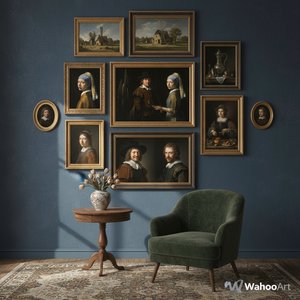
Dutch Baroque Masters: 10 Paintings That Shaped an Era | AllPaintingsStore
Journey through the Golden Age with our guide to the Top 10 Dutch Baroque masterpieces! Explore iconic paintings by Rembrandt, Vermeer & Frans Hals. Find museum-quality art reproductions and elevate your home decor at AllPaintingsStore.com.