Garancija povraćaja novca · 100 dana Besplatna dostava širom sveta
449.514umetnička dela 30.612umetnici 4.658muzeji 32jezici
Katalog ulazak

Acacia

Acrylic On Canvas.

Sl. 1. Џејмс Енсор, Acacia. Prikazano kao reprodukcija koju ste odabrali: , .

§ 1Katalog podaci

§ 2Apstraktno

Opis predmeta

Explore James Ensor’s ‘Acacia,’ a haunting monochromatic etching of winter’s decay. Romantic Symbolism meets Expressionism in this textured, atmospheric landscape.

Biografija umetnika

Пионер експресионизма poznat po delu Hristov ulazak u Brisel. Истражите његов застрашујући свет маски и сенки већ данас.

§ 3Komentar

A Winter’s Reverie: Decoding James Ensor's ‘Acacia’

Acacia, a hauntingly beautiful etching by Belgian master James Ensor, transports viewers to a desolate winter landscape steeped in atmosphere and symbolic weight. This monochromatic work is not merely a depiction of nature; it’s an exploration of time, decay, and the enduring power of memory – themes central to Ensor's complex artistic vision.

Subject & Composition: A Dialogue Between Nature and Ruin

The composition centers around a stark, bare tree—an *acacia*, presumably—that dominates the foreground. Its skeletal branches reach upwards, mirroring the verticality of a crumbling stone tower or ruin visible in the distance. This architectural fragment, partially obscured by distant trees and a hazy horizon, suggests a forgotten past. The arrangement isn’t one of idyllic harmony but rather a poignant juxtaposition: nature asserting its presence alongside the remnants of human endeavor. Ensor masterfully uses linear perspective to create depth, though it's subtly flattened – characteristic of etching as a medium – drawing the eye into the scene while maintaining an intriguing sense of ambiguity.

Technique & Style: The Etched Soul of Romanticism

Ensor’s technique is exemplary. He employs etching—a process involving acid to create lines on a metal plate—to build up texture and tonal range. Notice the meticulous hatching and cross-hatching used to render the rough bark of the tree and the weathered stonework of the tower. These techniques aren't simply descriptive; they contribute significantly to the artwork’s emotional impact, evoking a sense of fragility and age. The style leans heavily into late 19th-century Romanticism and Symbolism. While not striving for photographic realism, Ensor prioritizes atmospheric effect and emotional resonance. The lines themselves are expressive, carrying the weight of solitude and melancholy.

Historical Context: An Artist Ahead of His Time

Born in Ostend, Belgium in 1860, James Ensor was a pivotal figure bridging the gap between Impressionism and Expressionism. He rejected academic conventions early on, developing a highly personal style that often incorporated unsettling imagery – masks, skeletons, carnivals – to explore themes of human alienation and societal critique. While Acacia doesn’t feature these overtly jarring elements, it shares Ensor's characteristic preoccupation with mortality and the passage of time. His work profoundly influenced later movements like Surrealism, establishing him as a true visionary.

Symbolism & Emotional Impact: Echoes of Loss and Remembrance

The symbolism within Acacia is layered and open to interpretation. The bare tree can represent both death and resilience—a stark reminder of winter’s harshness but also a promise of eventual renewal. The crumbling tower speaks to the impermanence of human creations, the inevitable decay that time inflicts upon all things. The overall mood is one of quiet contemplation, evoking feelings of solitude, nostalgia, and perhaps even a gentle sadness. It's an artwork that invites introspection, prompting viewers to reflect on their own relationship with memory, loss, and the enduring beauty of the natural world.

Collecting & Interior Design: A Timeless Addition

  • For Collectors: An original etching by James Ensor is a significant investment, representing a cornerstone of Belgian art history.
  • For Interior Designers: The monochromatic palette and evocative subject matter make Acacia incredibly versatile. It would complement a range of interior styles – from traditional to contemporary – adding depth and sophistication to any space. Its subdued tones work particularly well in studies, libraries, or bedrooms, creating a calming and contemplative atmosphere.
  • Reproductions: High-quality reproductions capture the intricate detail of Ensor’s etching technique, offering an accessible way to bring this masterpiece into your home.

Pitanja i odgovori

Gde mogu da preuzmem „Acacia”, autor Џејмс Енсор?

Digitalnu sliku dela „Acacia”, autor Џејмс Енсор možete preuzeti na stranici za preuzimanje ovog umetničkog dela: Preuzimanje digitalnog prikaza: preuzimanje digitalne slike visoke rezolucije.

Koji umetnički pravac obuhvata „Acacia”, autor Џејмс Енсор?

„Acacia“ je delo Romanticism pokreta. Ovaj pokret označava umetničku tradiciju kojoj je delo pripada.

Sa kojim osećanjem je povezano "Acacia"?

„Acacia“ je povezano sa Melancholic osećajem. Emocionalni ton opisuje utisak koji delo ostavlja.
§ 4Umetnik

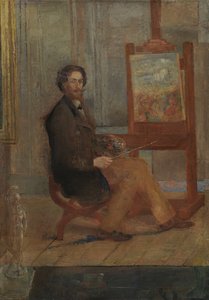
Џејмс Енсор

Џејмс Енсор

1860 - 1949, Белгија

Kratke činjenice o umetniku Џејмс Енсор

  • Artistic Movement Or Style:
    • Симболизам
    • Експресионизам
  • Artists Or Movements Influenced By This Artist:
    • Експресионизам
    • Сурреализам
  • Artists Who Influenced This Artist:
    • Питер Бругел Стари
    • Франсиско Гоја
    • Џејмс Ејбот Макнил Вистлер
  • Date Of Birth: 1860
  • Date Of Death: 1949
  • Full Name: James Sidney Edouard Ensor
  • Nationality: Белегијац
  • Notable Artworks:
    • Христово улазак у Брисл
    • Човек са жаљењем
    • Једеница са острима
    • Муке Светог Антона
    • Скелети који се боре око hanging man
  • Place Of Birth: Остенд, Бележија

Biografija umetnika

James Ensor: A Pioneer of Expressionism and Surrealism

James Sidney Edouard, Baron Ensor (Ostend, 13 April 1860 – 19 November 1949) was a Belgian painter and printmaker who stands as one of the most influential figures in the development of Expressionism and Surrealism. Born into an English father and Belgian mother amidst the vibrant atmosphere of Ostend’s seaside resort town, Ensor’s upbringing instilled within him a profound fascination with observation and detail—a foundation upon which he would construct his distinctive artistic vision.

Early Influences and Artistic Training

From a young age, Ensor demonstrated an exceptional talent for drawing and painting. Encouraged by his parents' operation of a souvenir shop brimming with curiosities and carnival masks – a veritable cabinet of wonders that ignited his imagination – he pursued formal artistic training at the Académie Royale des Beaux-Arts in Brussels. Despite encountering resistance from the rigid academic conventions of the time, Ensor quickly recognized the necessity of forging his own path, prioritizing experimentation and personal expression above all else.

The Emergence of Grotesque Vision

Around 1886–87, Ensor embarked on a transformative artistic journey, rejecting Impressionistic ideals in favor of a bold embrace of grotesque imagery. Influenced by Rembrandt’s masterful use of chiaroscuro, the unsettling visions of Francisco Goya, and the evocative symbolism of Japanese woodcuts, he developed a highly personal iconography characterized by jarring juxtapositions of color and form.

Major Works and Recurring Themes

Ensor's oeuvre is marked by an unparalleled exploration of psychological complexity and social critique. Paintings like *The Oyster-eater* (1882) exemplify his meticulous attention to detail and his ability to convey profound emotional resonance, while *Christ’s Entry into Brussels* (1888–89), arguably his magnum opus, remains a monumental satire of religious hypocrisy—a painting initially met with vehement disapproval but now universally recognized as a cornerstone of Expressionist art.

Legacy and Influence

James Ensor's uncompromising artistic vision profoundly impacted subsequent generations of artists. His rejection of academic formalism, coupled with his fearless confrontation of taboo subjects and his masterful manipulation of visual language—particularly the use of bold brushstrokes and vibrant hues—established him as a pivotal figure in the genesis of Expressionism and Surrealism. Today, Ensor’s work continues to inspire awe and provoke contemplation, serving as a timeless reminder that art possesses the capacity to unsettle conventions and illuminate the darkest recesses of human consciousness.

§ 5Srodna dela

§ 6Pitanja

Osnovne informacije

  • artist: James Ensor
  • notable elements: Bare tree, crumbling tower, winter landscape, atmospheric perspective
  • title: Acacia
  • style: Linear, textured, monochromatic

Kviz o umetnosti

Svako pitanje ima samo jedan tačan odgovor.

Pitanje 1:
James Ensor is most closely associated with which artistic movements?
Pitanje 2:
What printmaking technique was used to create 'Acacia'?
Pitanje 3:
The overall mood or atmosphere evoked by 'Acacia' can best be described as…
Pitanje 4:
What is a key characteristic of the lines used in 'Acacia'?

§ 7Citiraj ovaj unos

AllPaintingsStore.com, “Џејмс Енсор, Acacia”, https://allpaintingsstore.com/sr/art/james-ensor-acacia-8BWRNZ-en/ArtistReproduction/ (prizren 16 октобар 2026).

§ 8Reprodukcija

Ručno rađena uljana reprodukcija

Ručno oslikano uljanim bojama na platnu u dimenzijama i okviru po vašem izboru, izrađeno po porudžbini od strane naših umetnika. ( Pređi na štampu Pređi na digitalnu sliku)

To je navedeno u margini narudžbenice; trenutno stanje tog dokumenta glasi kao sledi.

Acacia

Tehnika reprodukcije

Dimenzije reprodukcije

-

Vrhunski maestri umetnosti

Više detalja, prefinjenosti i dodatnog vremena za izradu

-

Okvir za reprodukciju

-

-

Za umetnička dela ili reprodukcije čija je bilo koja strana veća od 105 cm (približno 41 inč), okvir će biti isporučen u obliku rastavljenog seta za sklapanje. Ovaj metod osigurava bezbednu dostavu i sprečava oštećenja tokom transporta.

Potrebna je profesionalna montaža – ovo nije proizvod namenjen samostalnoj izradi.
Set mora sastaviti i platno zategnuti iskusni profesionalni ramitelj, koristeći drveni lepak (nije uključen u set), hvataljku za zatezanje platna i stege kako bi se održao prav ugao okvira dok se lepak suši. Nepravilno sklapanje ili neravnomerno zategnuto platno mogu trajno oštetiti umetničko delo, što nije pokriveno našom garancijom.

  • Sve šipke od masivnog drveta su uključene, precizno isečene po veličini.

  • Montira se pomoću priloženih šrafova, uz dodatno korišćenje lepka za drvo za spojeve u uglovima, koji nije uključen u set i koji vaš čuvar okvira mora obezbediti.

  • Potreban je profesionalni alat koji nije uključen u set: klešta za zatezanje platna (zatezač) i stege za održavanje pravih uglova letvica tokom sušenja lepka.

Važno:
Za spojeve u uglovima neophodan je lepak za drvo, šipke se moraju pričvrstiti stezgama dok lepak potpuno ne osuši, a za zatezanje platna na sklopljenom ramu potrebne su hvataljke za zatezanje platna. Nijedan od ovih alata nije uključen u komplet. Pre naručivanja ove veličine, molimo Vas da unapred obezbedite iskusnog profesionalca za ramačenje.

Kratki opis natpisa

-

-

Zaštitni lak

Sjajni lak (pojačava intenzitet boja, štiti od svetlosti i vlage)

-

Personalizujte svoje umetničko delo

Primeri mogućnosti izmene: Zamena lica fotografijom kupca; Dodavanje ljubimca (npr. zamena mačke psom); Uključivanje skrivene poruke u pozadini; Promena pejzaža ili elemenata pozadine.

-

Hitna dostava

Svetska isporuka () za 3/4 nedelje umesto uobičajenih 5 nedelja. (13 новембар). Bez kompromisa po pitanju kvaliteta.

-

Brza dostava

Dostava širom sveta () u roku od 5 nedelja. (20 новембар).

Uključeno u cenu

Ukupna cena

дин 27066

Uključeno uz svaku porudžbinu

  • Besplatna ekspresna dostava širom sveta
  • Visokokvalitetno laneno platno
  • Potpuno osiguranje transporta
  • Garancija povraćaja carine i uvoznih dažbina
  • Garancija vernosti boja
  • Politika povraćaja u roku od 100 dana (samo u slučaju nedostataka)
  • Garancija povrata 100% novca
  • Popust na više proizvoda
List za poručivanje