Garancija povraćaja novca · 100 dana Besplatna dostava širom sveta
449.587umetnička dela 30.613umetnici 4.660muzeji 32jezici
Catalogue entry

Mirror with Skeleton

Acrylic On Canvas.

Fig. 1. Јемас Енсор, Mirror with Skeleton. Shown as the reproduction you are specifying: , .

§ 1Catalogue data

§ 2Abstract

Opis predmeta

Biografija umetnika

Откријте Јамес Енсор (1860-1949), белгијског сликар који је био пионер експресионизма и сюрреализма. Истражите његове узнемирујуће сцене маски, карнавала и скелета.

§ 3Commentary

James Ensor’s Disturbing Reflection: Exploring the Symbolism of ‘Mirror with Skeleton’

James Sidney Edouard Ensor (1860-1949) stands as a singular figure in Belgian art history—a provocateur who relentlessly interrogated societal anxieties and psychological complexities through his unsettling visual language. Born into an English father and Belgian mother, Ensor's upbringing instilled within him a profound appreciation for duality, mirroring the paradoxical nature of his artistic output. His formative years spent amidst the vibrant spectacle of Ostend’s seaside resort town undeniably shaped his worldview, fostering an obsession with masks and disguises that would permeate his canvases throughout his prolific career. This fascination wasn’t merely aesthetic; it represented a deliberate strategy to expose hidden truths beneath superficial appearances—a core principle guiding Ensor's artistic endeavors.
  • Subject Matter: The painting depicts a stark tableau featuring a skeleton positioned before a mirror reflecting multiple faces, creating an immediate confrontation between mortality and identity.
  • Style: Ensor’s work firmly establishes itself within the Expressionist movement, rejecting academic conventions in favor of conveying raw emotion and psychological intensity.

Technique and Composition – A Masterclass in Texture and Tension

Ensor's masterful technique is characterized by thick impasto—a layering of paint that builds up substantial texture—particularly evident in the depiction of the skeleton’s bones and the surrounding faces. This tactile approach isn’t simply decorative; it serves to amplify the emotional impact of the image, conveying a palpable sense of unease and decay. The composition itself is deliberately unsettling, utilizing diagonals and overlapping planes to generate visual tension. The placement of clocks—several prominent on the left and right sides—further contributes to this feeling of disorientation and underscores the relentless passage of time against which human existence struggles. Ensor’s meticulous attention to detail ensures that every element within the painting reinforces the overarching theme of existential dread.

Historical Context – The Shadow of Trauma and Societal Critique

Created around 1908, ‘Mirror with Skeleton’ emerged during a period marked by significant social upheaval in Belgium—the aftermath of World War I profoundly impacted the nation's psyche. Ensor responded to this trauma not through idealized representations but rather through confronting uncomfortable realities. His artistic vision aligns closely with Surrealist principles, exploring dreamlike imagery and subconscious anxieties as avenues for critique. The painting’s symbolism transcends mere visual depiction; it speaks to universal concerns about death, illusion, and the fragility of human consciousness—themes that resonate powerfully even today.

Symbolism – Masks, Mortality, and the Illusion of Self

The central image of the skeleton gazing into the mirror is laden with symbolic significance. The skeleton represents mortality, confronting viewers with the inescapable reality of death while simultaneously embodying vulnerability and decay. The mirrored faces symbolize the multiplicity of identities—the masks we wear to conceal our true selves—and the deceptive nature of appearances. Ensor’s deliberate use of clocks reinforces this idea, highlighting the relentless march of time and suggesting that all endeavors ultimately succumb to oblivion. Ultimately, ‘Mirror with Skeleton’ compels us to contemplate the unsettling truth that beneath the veneer of social convention lies a profound darkness – a darkness that Ensor unflinchingly confronts in his unforgettable artwork.

Pitanja i odgovori

Koje su teme prikazane u delu „Mirror with Skeleton”, autor Јемас Енсор?

Teme prisutne u delu „Mirror with Skeleton”, autor Јемас Енсор obuhvataju body, mirrors, skeleton, što zajedno sažima suštinu ovog umetničkog dela.

Mogu li da vidim „Mirror with Skeleton”, autor Јемас Енсор na svom zidu pre kupovine?

„Mirror with Skeleton“ ima pregled proširene stvarnosti: na stranici AR prikaz možete videti umetničko delo u sopstvenom prostoru pomoću kompatibilnog uređaja.

Koji umetnik i koji stil stoje iza "Mirror with Skeleton"?

Autor dela "Mirror with Skeleton" je Јемас Енсор, koji pripada pokretu Surrealist Expressionism.
§ 4The artist

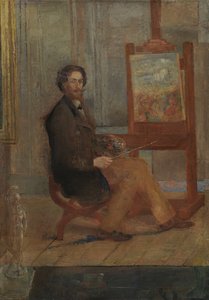
Јемас Енсор

Јемас Енсор

1860 - 1949, Бележија

Quick facts about Јемас Енсор

  • Artistic Movement Or Style: Expressionism, Surrealism
  • Artists Who Influenced This Artist:
    • Bruegel the Elder
    • Francisco Goya
    • Whistler
  • Date Of Birth: April 13, 1860
  • Date Of Death: November 19, 1949
  • Full Name: James Sidney Edouard Ensor
  • Nationality: Belgian
  • Notable Artworks:
    • The Scandalized Masks
    • Skeletons Fighting...
    • Christ's Entry into Brussels
  • Place Of Birth: Ostend, Belgium

Biografija umetnika

James Ensor: A Pioneer of Expressionism and Surrealism

James Sidney Edouard, Baron Ensor (Ostend, 13 April 1860 – 19 November 1949) was a Belgian painter and printmaker who stands as one of the most influential figures in the development of Expressionism and Surrealism. Born into an English father and Belgian mother amidst the vibrant atmosphere of Ostend’s seaside resort town, Ensor’s upbringing instilled within him a profound fascination with observation and detail—a foundation upon which he would construct his distinctive artistic vision.

Early Influences and Artistic Training

From a young age, Ensor demonstrated an exceptional talent for drawing and painting. Encouraged by his parents' operation of a souvenir shop brimming with curiosities and carnival masks – a veritable cabinet of wonders that ignited his imagination – he pursued formal artistic training at the Académie Royale des Beaux-Arts in Brussels. Despite encountering resistance from the rigid academic conventions of the time, Ensor quickly recognized the necessity of forging his own path, prioritizing experimentation and personal expression above all else.

The Emergence of Grotesque Vision

Around 1886–87, Ensor embarked on a transformative artistic journey, rejecting Impressionistic ideals in favor of a bold embrace of grotesque imagery. Influenced by Rembrandt’s masterful use of chiaroscuro, the unsettling visions of Francisco Goya, and the evocative symbolism of Japanese woodcuts, he developed a highly personal iconography characterized by jarring juxtapositions of color and form.

Major Works and Recurring Themes

Ensor's oeuvre is marked by an unparalleled exploration of psychological complexity and social critique. Paintings like *The Oyster-eater* (1882) exemplify his meticulous attention to detail and his ability to convey profound emotional resonance, while *Christ’s Entry into Brussels* (1888–89), arguably his magnum opus, remains a monumental satire of religious hypocrisy—a painting initially met with vehement disapproval but now universally recognized as a cornerstone of Expressionist art.

Legacy and Influence

James Ensor's uncompromising artistic vision profoundly impacted subsequent generations of artists. His rejection of academic formalism, coupled with his fearless confrontation of taboo subjects and his masterful manipulation of visual language—particularly the use of bold brushstrokes and vibrant hues—established him as a pivotal figure in the genesis of Expressionism and Surrealism. Today, Ensor’s work continues to inspire awe and provoke contemplation, serving as a timeless reminder that art possesses the capacity to unsettle conventions and illuminate the darkest recesses of human consciousness.

§ 5Comparanda

§ 6Questions

Osnovne informacije

  • Movement: Expressionism
  • Notable elements or techniques: Masks, skeletons, clocks
  • Title: Mirror with Skeleton
  • Influences: Symbolism
  • Location: Private Collection

§ 7Cite this entry

AllPaintingsStore.com, “Јемас Енсор, Mirror with Skeleton”, https://allpaintingsstore.com/sr/art/james-ensor-mirror-with-skeleton-8BWRSW-en/ (accessed 4 октобар 2026).

§ 8The reproduction

Ručno rađena uljana reprodukcija

Ručno oslikano uljanim bojama na platnu u dimenzijama i okviru po vašem izboru, izrađeno po porudžbini od strane naših umetnika. ( Pređi na štampu Pređi na digitalnu sliku)

It is specified on the order sheet in the margin; the present state of that sheet reads as follows.

Mirror with Skeleton

Tehnika reprodukcije

Dimenzije reprodukcije

-

Vrhunski maestri umetnosti

Više detalja, prefinjenosti i dodatnog vremena za izradu

-

Okvir za reprodukciju

-

-

Za umetnička dela ili reprodukcije čija je bilo koja strana veća od 105 cm (približno 41 inč), okvir će biti isporučen u obliku rastavljenog seta za sklapanje. Ovaj metod osigurava bezbednu dostavu i sprečava oštećenja tokom transporta.

Potrebna je profesionalna montaža – ovo nije proizvod namenjen samostalnoj izradi.
Set mora sastaviti i platno zategnuti iskusni profesionalni ramitelj, koristeći drveni lepak (nije uključen u set), hvataljku za zatezanje platna i stege kako bi se održao prav ugao okvira dok se lepak suši. Nepravilno sklapanje ili neravnomerno zategnuto platno mogu trajno oštetiti umetničko delo, što nije pokriveno našom garancijom.

  • Sve šipke od masivnog drveta su uključene, precizno isečene po veličini.

  • Montira se pomoću priloženih šrafova, uz dodatno korišćenje lepka za drvo za spojeve u uglovima, koji nije uključen u set i koji vaš čuvar okvira mora obezbediti.

  • Potreban je profesionalni alat koji nije uključen u set: klešta za zatezanje platna (zatezač) i stege za održavanje pravih uglova letvica tokom sušenja lepka.

Važno:
Za spojeve u uglovima neophodan je lepak za drvo, šipke se moraju pričvrstiti stezgama dok lepak potpuno ne osuši, a za zatezanje platna na sklopljenom ramu potrebne su hvataljke za zatezanje platna. Nijedan od ovih alata nije uključen u komplet. Pre naručivanja ove veličine, molimo Vas da unapred obezbedite iskusnog profesionalca za ramačenje.

Kratki opis natpisa

-

-

Zaštitni lak

Sjajni lak (pojačava intenzitet boja, štiti od svetlosti i vlage)

-

Personalizujte svoje umetničko delo

Primeri mogućnosti izmene: Zamena lica fotografijom kupca; Dodavanje ljubimca (npr. zamena mačke psom); Uključivanje skrivene poruke u pozadini; Promena pejzaža ili elemenata pozadine.

-

Hitna dostava

Svetska isporuka () za 3/4 nedelje umesto uobičajenih 5 nedelja. (1 новембар). Bez kompromisa po pitanju kvaliteta.

-

Brza dostava

Dostava širom sveta () u roku od 5 nedelja. (8 новембар).

Uključeno u cenu

Ukupna cena

дин 26887

Included with every order

  • Besplatna ekspresna dostava širom sveta
  • Visokokvalitetno laneno platno
  • Potpuno osiguranje transporta
  • Garancija povraćaja carine i uvoznih dažbina
  • Garancija vernosti boja
  • Politika povraćaja u roku od 100 dana (samo u slučaju nedostataka)
  • Garancija povrata 100% novca
  • Popust na više proizvoda
Order sheet