


 Pregledaj u prostoru
 Podeli
 Podeli
 Detalji
 Vodič
Vodič

 Preuzmi sliku
 Slični predmeti
 Rendgenski snimak
 Automatska prezentacija
 Statistika
The Baths at Ostend

 Pročitaj više
Giclee štampa / Umetnički otisak
Giclée štampa ili print na platnu muzejskog kvaliteta uz brzu izradu i raznovrsne opcije završne obrade. ( Naručite ručno oslikano reprodukciju Pređi na prodaju digitalnih slika)




P118B дин10

P118H дин10

P118W дин10

P438Z дин10

P508JH дин12

P508YH дин12

P805H дин10

P805Z дин10

P919BZ дин10

P919G дин10

P919XJ дин10

P959ZH дин10

P968JZ дин12

W106C дин8

W218G дин10

W218JH дин8

W218Y дин10

W307PJ дин10

W316G дин10

W316PJ дин8

W316Y дин10

W398PJ дин8

W4111J дин10

W500HY дин15

W500JH дин15

W692G дин12

W849H дин8

W940BG дин15

W953PJ дин8




Izaberite jednu od naših unapred definisanih veličina koje odgovaraju originalnim proporcijama umetničkog dela.

Unesite širinu i visinu koja vam je potrebna, kako bi se uklopili u vaš ram ili na vaš zid. Štampa se može samo iseći, nikada ne može biti veća od originalne slike, stoga format sa drugačijim proporcijama gubi deo slike. Poslaćemo vam digitalni prikaz radi potvrde pre nego što započnemo štampu. Slika prikazana na ovoj stranici ne pokazuje stvarni rez — to pokazuje samo digitalni prikaz.
Dostava širom sveta () za 2 nedelje umesto uobičajenih 4/5 nedelja. (25 октобар)

Besplatna ekspresna dostava širom sveta

Visokokvalitetno laneno platno

Sveobuhvatno osiguranje transporta

Garancija povraćaja carine i uvoznih dažbina

Garancija vernosti boja i autentičnosti pri reprodukciji

Politika povraćaja u roku od 100 dana (samo u slučaju nedostataka)

Garancija povrata 100% novca

Popust pri većoj količini
 Opcija sa staklom dostupna je samo za dimenzije manje od 110 cm

The Baths at Ostend
Giclee štampa / Umetnički otisak
Veličina reprodukcije
-


Ukupna cena
дин 6599
A Storm of Humanity: Unpacking James Ensor’s “The Baths at Ostend”
James Ensor's "The Baths at Ostend," painted in 1890, isn’t merely a depiction of a seaside scene; it’s a visceral plunge into the anxieties and complexities of modern life. This remarkable work, now available as a meticulously crafted hand-painted reproduction from AllPaintingsStore.com, stands as a cornerstone of Expressionism – a movement that dared to prioritize emotional truth over objective reality. Ensor, born in Ostend, Belgium, to an English father and Belgian mother, possessed a uniquely unsettling artistic vision, fueled by his childhood spent amidst the vibrant chaos of carnival and the bustling atmosphere of a seaside resort town. This duality profoundly shaped his work, particularly his fascination with masks, disguise, and the often-discomforting realities hidden beneath polite facades.
The painting immediately assaults the viewer with its frenetic energy. A dense throng of figures – swimmers, bathers, onlookers – are crammed together on a white sand beach, creating an overwhelming sense of claustrophobia. The composition isn’t concerned with traditional perspective; instead, Ensor employs a wide-angle view that exaggerates scale and intensifies the feeling of being swept up in a chaotic crowd. The dominant structure, resembling a bathhouse or changing room, anchors the left side of the canvas, while a distant horizon punctuated by clouds offers a meager suggestion of escape. This deliberate imbalance contributes to an underlying sense of unease – a feeling that the viewer is not merely observing but being actively absorbed into this swirling mass of humanity.
Color and Distortion: The Language of Emotion
Ensor’s masterful use of color is central to the painting's impact. A predominantly white palette, punctuated by vibrant blues, reds, yellows, and blacks, creates a jarring yet captivating visual experience. These colors aren’t blended or softened; they are applied in bold, expressive strokes, emphasizing the raw emotion at the heart of the scene. The stark contrast between the bright whites of the sand and foam and the darker tones used for the figures amplifies this effect, drawing attention to the individuals within the crowd. The loose application of paint – visible brushstrokes that seem almost frantic – further contributes to the painting’s sense of immediacy and emotional intensity.
Furthermore, Ensor deliberately distorts forms, particularly those of the human figures. Faces are caricatured with exaggerated features, creating a disconcerting effect that reflects the artist's own anxieties about anonymity and social conformity. The bodies themselves are not rendered realistically; they’re simplified and compressed, adding to the overall sense of chaos and disorientation. This distortion isn’t simply stylistic; it serves as a powerful visual metaphor for the alienation and dehumanization experienced within large crowds.
Symbolism and the Anxieties of Modernity
“The Baths at Ostend” is more than just a snapshot of a beach scene. It's a potent commentary on the anxieties of modern life, particularly the sense of anonymity and potential isolation that can arise within crowded spaces. The sheer number of figures, their distorted forms, and the overall chaotic composition suggest a critique of mass tourism or the pressures of societal conformity. As documented in research materials from MoMA and other institutions, Ensor’s friend André De Ridder described the painting as “a lunatic dance of fools,” capturing the unsettling energy of the scene perfectly. The bright colors, despite the underlying sense of unease, add to the painting's intensity, suggesting a desperate attempt to find beauty or meaning amidst the chaos.
Owning a hand-painted reproduction of "The Baths at Ostend" from AllPaintingsStore.com offers a unique opportunity to experience this powerful work firsthand. Each reproduction is created using high-quality materials and techniques, ensuring that it faithfully captures Ensor’s distinctive style and emotional impact. It's not just a print; it’s a tangible connection to a pivotal moment in art history – a window into the mind of a visionary artist who dared to confront the complexities of the human experience.
Pitanja i odgovori
Kakvu bojnu harmoniju prikazuje „The Baths at Ostend”, Јемас Енсор?
Boje dela „The Baths at Ostend”, Јемас Енсор odražavaju Discordant Palette harmoniju. Harmonija opisuje međusobni odnos boja.
Kako se kontrast i harmonija spajaju u delu "The Baths at Ostend"?
Koloristička kompozicija dela „The Baths at Ostend”, Јемас Енсор spaja Gentle kontrast sa Discordant Palette harmonijom.
Ko je kreirao "The Baths at Ostend"?
Umetnik koji stoji iza dela "The Baths at Ostend" je Јемас Енсор. Delo je katalogizovano pod imenom umetnika Јемас Енсор.
Srodna umetnička dela


Biografija umetnika
James Ensor: A Pioneer of Expressionism and Surrealism
James Sidney Edouard, Baron Ensor (Ostend, 13 April 1860 – 19 November 1949) was a Belgian painter and printmaker who stands as one of the most influential figures in the development of Expressionism and Surrealism. Born into an English father and Belgian mother amidst the vibrant atmosphere of Ostend’s seaside resort town, Ensor’s upbringing instilled within him a profound fascination with observation and detail—a foundation upon which he would construct his distinctive artistic vision.
Early Influences and Artistic Training
From a young age, Ensor demonstrated an exceptional talent for drawing and painting. Encouraged by his parents' operation of a souvenir shop brimming with curiosities and carnival masks – a veritable cabinet of wonders that ignited his imagination – he pursued formal artistic training at the Académie Royale des Beaux-Arts in Brussels. Despite encountering resistance from the rigid academic conventions of the time, Ensor quickly recognized the necessity of forging his own path, prioritizing experimentation and personal expression above all else.
The Emergence of Grotesque Vision
Around 1886–87, Ensor embarked on a transformative artistic journey, rejecting Impressionistic ideals in favor of a bold embrace of grotesque imagery. Influenced by Rembrandt’s masterful use of chiaroscuro, the unsettling visions of Francisco Goya, and the evocative symbolism of Japanese woodcuts, he developed a highly personal iconography characterized by jarring juxtapositions of color and form.
Major Works and Recurring Themes
Ensor's oeuvre is marked by an unparalleled exploration of psychological complexity and social critique. Paintings like *The Oyster-eater* (1882) exemplify his meticulous attention to detail and his ability to convey profound emotional resonance, while *Christ’s Entry into Brussels* (1888–89), arguably his magnum opus, remains a monumental satire of religious hypocrisy—a painting initially met with vehement disapproval but now universally recognized as a cornerstone of Expressionist art.
Legacy and Influence
James Ensor's uncompromising artistic vision profoundly impacted subsequent generations of artists. His rejection of academic formalism, coupled with his fearless confrontation of taboo subjects and his masterful manipulation of visual language—particularly the use of bold brushstrokes and vibrant hues—established him as a pivotal figure in the genesis of Expressionism and Surrealism. Today, Ensor’s work continues to inspire awe and provoke contemplation, serving as a timeless reminder that art possesses the capacity to unsettle conventions and illuminate the darkest recesses of human consciousness.
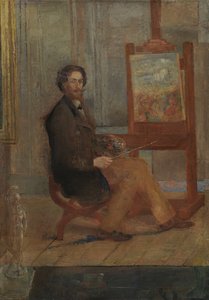
Јемас Енсор
1860 - 1949 , Бележија
Brzi pregled
- Artistic Movement Or Style: Expressionism, Surrealism
- Artists Who Influenced This Artist:
- Bruegel the Elder
- Francisco Goya
- Whistler
- Date Of Birth: April 13, 1860
- Date Of Death: November 19, 1949
- Full Name: James Sidney Edouard Ensor
- Nationality: Belgian
- Notable Artworks:
- The Scandalized Masks
- Skeletons Fighting...
- Christ's Entry into Brussels
- Place Of Birth: Ostend, Belgium
Srodni članci

Expressionism Explained: A Professional Guide to Using Bold Color and Raw Emotion in High-End Hospitality Design
Master the use of Expressionism in hospitality design. Learn how bold colors and raw emotion drive guest engagement through professional art procurement, custom oil reproductions, and large-scale multi-panel installations for high-end hotel interiors.

Expressionism Explained: A Professional Guide to Bold Colors and Emotional Depth for Interior Designers
Master the use of Expressionism in hospitality design. Learn how bold colors and distorted forms create emotional impact in hotel interiors through expert guidance on sourcing high-quality, hand-painted reproductions and large-format custom commissions for professional decorators.


