

1440. Acrylic On Canvas.

§ 1Katalog podaci


§ 2Apstraktno
Opis predmeta
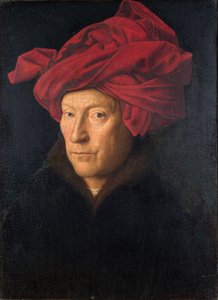
Jan van Eyck ( van EYEK; Dutch: [ˈjɑɱ vɑn ˈɛik]; c. before 1390 – 9 July 1441) was a Flemish painter active in Bruges who was one of the early innovators of what became known as Early Netherlandish painting, and one of the supreme figures of the Early Northern Renaissance. Such was his legacy, that he has been called “the
 Pročitaj više
Biografija umetnika
Jan van Eyck (oko 1390-1441): Pionir rane nemačke umetnosti, poznat po majstorstvu uljane boje i realističnim portretima. Otkrijte Gentski oltar i Portret Arnolfinija!
§ 3Komentar
The Annunciation: A Dawn of Divine Revelation
Jan van Eyck’s “The Annunciation,” housed in the Galleria Sabauda in Turin, Italy, stands as an unparalleled achievement of Early Netherlandish painting—a testament to meticulous observation and groundbreaking artistic innovation. Completed around 1440, this monumental altarpiece transcends mere depiction; it embodies a profound theological meditation on faith, humility, and God’s grace, capturing the pivotal moment when Gabriel announces Mary's miraculous conception of Jesus Christ.A Composition Steeped in Symbolism
The painting’s visual language is laden with symbolic significance. Dominating the scene is a serene room bathed in diffused light—a deliberate choice reflecting the spiritual illumination experienced by Mary and Joseph. At the center stands a statue of Saint Michael, positioned on the left side, symbolizing divine protection and authority. Opposite him resides a statue of Saint Mary, embodying purity and receptiveness to God’s will. These statues aren't merely decorative elements; they represent theological concepts crucial to Christian belief—the angel representing God’s intervention in human affairs and Mary signifying divine grace accepting God’s plan.The Revolutionary Technique of Oil Paint
What distinguishes “The Annunciation” from its contemporaries is Van Eyck’s masterful application of oil paint – a technique he pioneered, arguably transforming the artistic landscape of Northern Europe. Unlike tempera paints that rely on pigment bound in egg yolk, oil paint allows for unparalleled luminosity and detail. Observe how Van Eyck painstakingly renders textures—the folds of Mary’s robe, the smooth surface of the statue’s drapery—creating an astonishingly realistic portrayal. The subtle gradations of color achieved through layering oil pigments contribute to the painting's ethereal atmosphere, conveying a sense of divine presence. This technique was revolutionary because it allowed for greater accuracy and depth of color than previous methods, resulting in images that seemed to glow with inner light.Historical Context: Bruges at the Height of Artistic Flourishing
The painting’s creation coincided with Bruges—then Europe's commercial and artistic capital—experiencing a golden age under Burgundian rule. This era fostered patronage from wealthy merchants and nobles who commissioned ambitious artworks, propelling innovation in painting and sculpture. Van Eyck’s workshop was at the forefront of this movement, attracting skilled artisans and establishing Bruges as a beacon of artistic excellence. The Annunciation reflects the humanist spirit of the time, emphasizing human dignity alongside divine revelation—a harmonious blend that speaks to the enduring fascination with biblical narratives.Emotional Resonance: A Moment of Graceful Acceptance
“The Annunciation” transcends its formal elements to evoke a powerful emotional response in viewers. The serene expressions on Mary’s and Joseph’s faces convey humility and trust—a palpable acknowledgment of God's benevolent intervention. The delicate portrayal of Gabriel’s gesture, holding the scroll bearing the divine message, underscores the transformative power of faith. More than just illustrating a biblical story, Van Eyck’s masterpiece invites contemplation on themes of hope, devotion, and the miraculous unfolding of God’s plan—a timeless reminder of the beauty and wonder inherent in spiritual experience.Pitanja i odgovori
Kada je nastalo delo „The Annunciation”, autor Jan Van Ejck i kojem stilu pripada?
Delo "The Annunciation" nastalo je 1440. godine u okviru Early Netherlandish Renaissance pravca. Datum i umetnički pravac čine temelj ovog dela u istoriji umetnosti.
Koju temu i atmosferu spaja „The Annunciation”, autor Jan Van Ejck?
„The Annunciation“ prikazuje annunciation, virgin mary, angel gabriel, biblical scene, religious iconography, medieval art, oil painting, renaissance art, a njegovo dočarano raspoloženje je Serene.
Sa kojim osećanjem je povezano "The Annunciation"?
Emocionalni ton zabeležen za „The Annunciation”, autor Jan Van Ejck je Tranquil, što sažima osećaj koji ovo delo izražava.


 Pređi na štampu


 Za umetnička dela ili reprodukcije čija je bilo koja strana veća od 105 cm (približno 41 inč), okvir će biti isporučen u obliku rastavljenog seta za sklapanje. Ovaj metod osigurava bezbednu dostavu i sprečava oštećenja tokom transporta.


