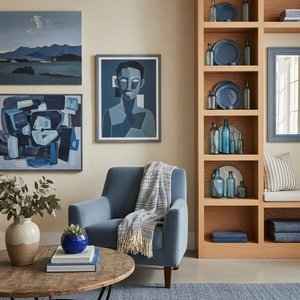
1961. Akril na platnu, 270.0 x 355.0 cm.

§ 1Catalogue data
 Akril na platnu
- Zidna umetnost
- Surrealism
 1961
1961- Modernizam
 270.0 x 355.0 cm
Ovo umetničko delo je zaštićeno autorskim pravima
Umetničko delo prikazano na ovoj stranici zaštićeno je autorskim pravima, što znači da zakonski nismo u mogućnosti da kreiramo niti prodajemo identičnu reprodukciju. Ova zaštita se sprovodi u skladu sa međunarodnim sporazumima kao što su Bernska konvencija i nacionalnim zakonima, uključujući i one koji su definisani u Američki zakon o autorskom pravu – Naslov 17.
Kao poštovana i legalna alternativa, nudimo prilagođene, ručno oslikane umetničke radove inspirisane originalom. Naši stručni i profesionalni umetnici pažljivo proučavaju stil, ambijent i umetničku suštinu originala kako bi kreirali novo, unikatno delo koje budi istu emociju – ostajući pritom potpuno autentično stvaranje.
Ovaj metod je u potpunosti usklađen sa regulativama o autorskim pravima jer ne podrazumeva kopiranje ili dupliranje zaštićenih umetničkih dela. Umesto toga, reč je o kreativnoj reinterpretaciji – novom slikarskom delu koje je inspirisano originalom, ali nije identično njemu.
 Pročitajte više
§ 2Abstract
Opis predmeta
Experience Joan Miró's 'Blue III' (1961) – a vibrant abstract masterpiece featuring a striking red kite against serene blue hues. Explore Surrealism & modern art’s legacy.
Biografija umetnika
Жоан Миро је био каталонски сликар и скулптор који је оставио траг у модерној уметности својим прецизним облицима и бојама. Погледајте његове највеће радове и откријте суровост и лепоту каталонске културе!
§ 3Commentary
A Blue Dreamscape: Unpacking Joan Miró’s “Blue III”
Joan Miró’s “Blue III,” painted in 1961, isn't merely a painting; it’s an invitation into the artist’s subconscious. Measuring a substantial 270 x 355 cm on canvas, this work pulsates with a quiet energy—a testament to Miró’s mastery of abstract expressionism and his unique ability to distill complex emotions into deceptively simple forms. At first glance, it presents as a serene expanse of blue, punctuated by the bold silhouette of a red kite soaring against an azure sky. Yet, beneath this apparent simplicity lies a rich tapestry of Surrealist influences, Catalan symbolism, and a profound exploration of the human psyche. The painting’s power resides not in representational accuracy but in its evocative capacity to trigger memories, dreams, and a sense of childlike wonder—a characteristic Miró relentlessly pursued throughout his career.The Composition: Geometry and Movement
The composition of “Blue III” is meticulously balanced despite its abstract nature. The dominant blue field acts as a grounding force, providing a backdrop for the dynamic interplay of shapes and colors. The most striking element is undoubtedly the red kite, positioned towards the upper left corner. Its two connected pieces, reminiscent of wings or abstracted figures, suggest flight, aspiration, and perhaps even a touch of melancholy. Miró’s use of bold, geometric forms—the kite itself, along with the three circles scattered across the canvas—creates a sense of controlled chaos, inviting the viewer to lose themselves in its depths. The tail of the kite extends downwards and slightly to the right, adding a subtle diagonal movement that prevents the composition from feeling static. These carefully placed elements aren’t merely decorative; they are integral to the painting's narrative, contributing to an overall sense of dynamic equilibrium.Echoes of Surrealism and Expressionism
Miró’s artistic lineage is deeply intertwined with both Surrealism and German Expressionism. The influence of artists like André Masson and Max Ernst—known for their automatic drawing techniques and exploration of the unconscious—is readily apparent in Miró's use of spontaneous, gestural brushstrokes and his willingness to embrace irrationality. However, unlike the often frenetic energy of some Surrealists, Miró’s approach is characterized by a more measured restraint, a deliberate attempt to channel the subconscious into a coherent visual language. Simultaneously, there’s a palpable resonance with German Expressionism—a shared interest in conveying intense emotions through distorted forms and vibrant color palettes. The painting's emotional intensity, its ability to evoke feelings of both serenity and unease, reflects this dual influence.A Catalan Soul: Symbolism and Memory
“Blue III” is deeply rooted in Miró’s Catalan identity. The blue itself—a shade he famously associated with dreams and the subconscious—holds particular significance for him. It wasn't simply a color; it was a portal to another realm, a space where memories, fantasies, and primal emotions could surface. The kite, too, carries symbolic weight. In Catalan folklore, kites are often associated with wishes and aspirations, representing the desire to transcend earthly limitations. Miró frequently incorporated elements of Catalan culture—from farm animals to traditional costumes—into his work, imbuing them with personal meaning and celebrating his homeland’s unique heritage. The painting can be interpreted as a meditation on memory, longing, and the enduring power of cultural identity.A Legacy of Abstraction: Relevance Today
“Blue III” stands as a pivotal masterpiece in the history of abstract art. Created during a period when Abstract Expressionism was gaining momentum in the United States—a movement that championed spontaneity and emotional expression—Miró’s work helped to shape its trajectory. His innovative use of color, form, and symbolism continues to inspire artists and captivate viewers today. The painting's enduring appeal lies in its ability to bypass rational thought and connect directly with our emotions, offering a glimpse into the boundless depths of the human imagination. For those seeking a profound and visually arresting experience, reproductions of “Blue III” offer a remarkable opportunity to engage with one of Miró’s most iconic works—a blue dreamscape that transcends time and speaks to the universal language of art.Pitanja i odgovori
Koja veličina reprodukcije se preporučuje za „Blue III”, autor Жоан Миро?
Za „Blue III”, autor Жоан Миро preporučuje se reprodukcija u veličini Veliki format. Veličina se može prilagoditi uz zadržavanje proporcija.
Koliki je nivo kontrasta kod dela „Blue III”, autor Жоан Миро?
Svetlo-tamni kontrast dela "Blue III" je označen kao Mirno. Kontrast opisuje stepen razlike između svetlih i tamnih površina.
Gde mogu da vidim prikaz za "Blue III"?
Pregled dela „Blue III”, autor Жоан Миро možete pogledati na stranici Pregled u prostoru.


 Pređi na štampu


 Za umetnička dela ili reprodukcije čija je bilo koja strana veća od 105 cm (približno 41 inč), okvir će biti isporučen u obliku rastavljenog seta za sklapanje. Ovaj metod osigurava bezbednu dostavu i sprečava oštećenja tokom transporta.