Garancija povraćaja novca · 100 dana Besplatna dostava širom sveta
449.587umetnička dela 30.613umetnici 4.660muzeji 32jezici
Catalogue entry

Susanna and the Elders, Second Version

1890. Oil On Canvas, 159.0 x 114.0 cm. Музеј Фолкуанг.

Fig. 1. Ловис Корнит, Susanna and the Elders, Second Version, 1890. Shown as the reproduction you are specifying: , .

§ 1Catalogue data

Dimenzije
159.0 x 114.0 cm

§ 2Abstract

Opis predmeta

Experience Lovis Corinth's 'Susanna and the Elders,' a captivating 1890 oil painting depicting a nude Susanna caught by two men. Explore its symbolism & artistic brilliance at AllPaintingsStore.

Biografija umetnika

Tauwade Nemačka Lovis Corinth Franz Heinrich Louis Corinth Istražite umetnost Lovisa Korinta (1858-1925), nemačkog slikara koji je spaja impresionizam i ekspresionizam. Poznat po portretima, pejzažima i surovoj reprezentaciji života – uključujući 'Ubistvo u jato'. otkrijte njegov nasleđe kao predsednik Berlinske Sekecije. Lovis Corinth, Franz Corinth, nemački slikar, impresionizam, ekspresion

§ 3Commentary

The Enigmatic Bath: Lovis Corinth’s *Susanna and the Elders*

Lovis Corinth's 1890 painting, *Susanna and the Elders*, is not merely a depiction of a biblical narrative; it’s a profound exploration of voyeurism, power dynamics, and the unsettling beauty of the human form. Captured in oil on canvas with an intimate scale of 159 x 114 cm, this work resides within the Museum Folkwang in Essen, Germany, offering viewers a direct encounter with Corinth’s intensely personal vision. The painting immediately draws the eye to Susanna, a young woman caught in a moment of vulnerability and quiet defiance as she attends to her toilette. Her posture—leaning forward, hand reaching for a towel—suggests both modesty and an awareness of being observed, a key element that anchors the entire composition.

Corinth’s stylistic choices are deliberately arresting. He eschews the idealized beauty often associated with biblical scenes, presenting Susanna with a strikingly realistic portrayal. Her skin is rendered with a palpable texture, her features subtly defined yet undeniably sensual. This departure from academic tradition was characteristic of Corinth's artistic journey – he sought to capture the essence of his subjects rather than adhere rigidly to established conventions. The muted palette—dominated by earthy tones and subtle gradations of light and shadow—further enhances this sense of immediacy, creating a feeling as though we are witnessing a private moment unfold before us.

A Story Unveiled: Biblical Roots and Corinth’s Interpretation

The story depicted is drawn from the Book of Daniel in the Old Testament. Susanna was falsely accused of adultery by two malicious elders who sought to discredit her and seize her property. To save herself, she invoked divine intervention, claiming that a dream revealed her innocence. This narrative, rich with themes of justice, deception, and female agency, has been interpreted across various cultures and artistic movements throughout history. Corinth’s choice to focus on the moment *after* the bath—the act of dressing—shifts the emphasis from the accusation itself to Susanna's immediate response: a quiet assertion of her dignity in the face of potential danger.

Interestingly, Corinth himself became part of the narrative as the unseen observer. Art historians believe he modeled for one of the elders, effectively positioning himself within the scene and adding a layer of self-awareness to the work. This bold move transforms *Susanna and the Elders* into a complex meditation on perception, representation, and the artist’s own role in shaping the narrative.

Symbolism and the Shadowy Gaze

The painting is laden with symbolic details that invite careful consideration. The stone slabs forming the backdrop are not merely architectural elements; they represent the cold, unyielding nature of societal judgment. The partially drawn curtain hints at a hidden world—a space where secrets and desires lurk just beyond view. Crucially, the two men observing Susanna from behind the curtain are rendered in shadow, their faces indistinct yet undeniably present. This deliberate obscuration speaks to the act of voyeurism – the unsettling pleasure derived from watching without being seen.

The clothing itself is significant. The simple white undergarment contrasts sharply with the richly colored robe, suggesting a vulnerability juxtaposed against an underlying strength. The scattered garments on the bench further emphasize Susanna’s state of disarray and her struggle to regain control. Corinth masterfully uses light and shadow to create a dramatic interplay between exposure and concealment, heightening the emotional tension within the scene.

A Masterpiece of Intimacy and Observation

*Susanna and the Elders* is more than just a biblical illustration; it’s a deeply personal and psychologically astute work. Corinth's innovative approach to depicting the nude figure, combined with his exploration of themes like voyeurism and power, cemented his place as a pivotal figure in the transition from Impressionism to Expressionism. The painting continues to resonate today because it confronts fundamental questions about human nature—our capacity for both beauty and cruelty, our desire for connection and our tendency towards observation. A reproduction captures this intimate drama with remarkable fidelity, offering a window into Corinth’s world and inviting viewers to contemplate the complexities of the scene long after they've first encountered it.

Pitanja i odgovori

Da li je dostupno preuzimanje "Susanna and the Elders, Second Version" u visokoj rezoluciji?

„Susanna and the Elders, Second Version“ je dostupan kao preuzimanje digitalne slike visoke rezolucije, a možete ga kupiti direktno na njegovoj Digitalna slika u visokoj rezoluciji stranici.

Za koju prostoriju se preporučuje „Susanna and the Elders, Second Version”, autor Ловис Корнит?

Preporučeni prostor za „Susanna and the Elders, Second Version”, autor Ловис Корнит je Living Room. Ovaj predlog se, naravno, može prilagoditi vašem enterijeru.

Ko je autor dela "Susanna and the Elders, Second Version"?

Delo "Susanna and the Elders, Second Version" pripisuje se umetniku Ловис Корнит.
§ 4The artist

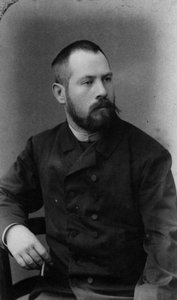
Ловис Корнит

Ловис Корнит

1858 - 1925, Немачка

Quick facts about Ловис Корнит

  • Artistic Movement Or Style: Impressionism & Expressionism
  • Artists Or Movements Influenced By This Artist: ['Expressionism']
  • Artists Who Influenced This Artist:
    • Courbet
    • Rubens
  • Date Of Birth: Jul 21, 1858
  • Date Of Death: Jul 17, 1925
  • Full Name: Franz Heinrich Louis Corinth
  • Nationality: German
  • Notable Artworks:
    • In the Slaughter House
    • Self-Portrait
    • Female Semi-Nude
  • Place Of Birth: Tauwade, Netherlands

Biografija umetnika

A Life Forged in Paint: The World of Lovis Corinth

Lovis Corinth, born Franz Heinrich Louis on July 21, 1858, in the Prussian province of East Prussia, was a figure who embodied the tumultuous transition from the 19th to the early 20th-century art world. His journey wasn’t one of immediate acclaim but rather a gradual evolution fueled by relentless study, diverse influences, and ultimately, personal tragedy. Corinth's beginnings were rooted in the rural landscapes of his birthplace, Tapiau, where his father worked as a tanner. This early exposure to the physicality of labor and the raw beauty of nature would subtly permeate his later work, even amidst more sophisticated stylistic explorations. He initially pursued studies at the Academy of Königsberg in 1876, but quickly realized that academic tradition alone wouldn’t satisfy his artistic ambitions. A period of travel followed, taking him to Munich, Antwerp, and finally Paris – each city serving as a crucial stepping stone in his development. In Munich, he absorbed the meticulous realism championed by Ludwig von Löfftz, honing his observational skills and mastering technique. Antwerp introduced him to the dramatic Baroque intensity of Rubens, while Paris exposed him to the burgeoning Impressionist movement, though his initial response was one of cautious observation rather than immediate embrace. He wasn’t interested in idealized beauty; instead, he sought to capture the untamed power and inherent drama of the landscape. Corinth's formative years instilled in him a profound appreciation for both classical tradition and naturalistic representation—a duality that would shape his artistic vision throughout his life. His early paintings, like “In the Slaughterhouse” (1878), demonstrated an uncompromising commitment to depicting reality with unflinching honesty, confronting viewers with uncomfortable truths about mortality and decay. Yet even within this stark realism, a nascent emotional depth hinted at a willingness to explore psychological complexities—a characteristic that would become increasingly prominent in his later oeuvre. The influence of Courbet’s earthy palette and expressive brushwork was palpable in these early works, establishing Corinth as a disciple of the Barbizon School and signaling his initial engagement with avant-garde currents.

From Naturalism to a Synthesis of Styles

Corinth's artistic development wasn't marked by swift revolutions but by a gradual assimilation and synthesis of diverse influences. His unwavering dedication to mastering technique—combined with an acute sensitivity to color and composition—allowed him to transcend stylistic boundaries and forge his own distinctive path. The Impressionist movement, initially viewed with skepticism, ultimately captivated Corinth’s imagination, prompting him to experiment with broken color and fleeting light effects. However, he didn't simply adopt these techniques wholesale; instead, he integrated them into his existing artistic framework, creating a style that blended impressionistic vibrancy with a distinctly German sensibility. This synthesis—evident in paintings like “Female Semi-Nude with Hat” (1906)—represented a pivotal moment in Corinth’s artistic evolution and foreshadowed the emergence of Expressionism as a dominant force in European art. He skillfully combined Rubensian dynamism with Impressionist luminosity, achieving unparalleled expressive power while maintaining compositional rigor.

A Master of Portraiture and Landscape

Corinth's oeuvre encompassed a remarkable range of genres—from biblical scenes to mythological subjects—but he is perhaps best remembered for his portraits and landscapes. His approach to portraiture extended beyond mere likeness; it was an attempt to penetrate the psychological depths of his sitters, revealing their inner lives through subtle gestures, expressive eyes, and carefully considered poses. He possessed a remarkable ability to convey character and emotion with astonishing economy of means—a hallmark of Corinth’s artistic genius. Similarly, his landscapes weren't merely scenic representations; they were emotional responses to nature—infused with Corinth’s own passionate engagement with the natural world. The Walchensee region in Bavaria became a particular source of inspiration, providing him with a wealth of motifs that he explored repeatedly throughout his later years. These paintings—characterized by their bold colors, dynamic brushwork, and palpable energy—represent Corinth's mature style at its most powerful and expressive.

Tragedy, Resilience, and Lasting Legacy

A transformative event in Corinth’s life occurred in December 1911 when he suffered a debilitating stroke that left him paralyzed on his left side. Despite facing immense physical challenges—and the looming threat of professional ruin—Corinth demonstrated unwavering determination and resilience, refusing to succumb to despair. With Charlotte Berend-Corinth by his side, he embarked upon a grueling regimen of rehabilitation exercises, relearning to paint with painstaking effort and adapting to his limitations—a testament to Corinth’s indomitable spirit. This period yielded some of his most poignant and emotionally resonant works—including “Self-Portrait” (various years)—reflecting the artist's profound introspection and confronting him with the realities of mortality. The experience profoundly deepened his artistic vision, prompting him to embrace a looser brushstroke and intensify color palette—anticipating many of the stylistic innovations that would define Expressionism. Corinth’s influence extended beyond his own painting; he served as president of the Berlin Secession from 1915 until his death in 1925, championing progressive artistic ideals and fostering a vibrant creative community. Lovis Corinth's legacy transcends mere aesthetic achievement—he remains a pivotal figure in German art history, embodying the spirit of artistic integrity and transforming personal adversity into profound expressive power. His enduring influence continues to inspire artists today, securing his place as one of the most significant painters of the early 20th century. ## Key Works & Their Significance
  • In the Slaughterhouse (1878): Demonstrates Corinth’s early mastery of technique and unflinching commitment to depicting reality with honesty—a bold confrontation with mortality and decay.
  • Self-Portrait (various years): Offers a chronicle of Corinth's evolving self-perception and artistic style—revealing profound introspection and fearless exploration of identity.
  • Female Semi-Nude with Hat (1906): Exemplifies Corinth’s blending of classical motifs with Impressionistic techniques—creating a sensuous portrait imbued with psychological complexity.
  • Walchensee Series (various years): Represents Corinth's mature style at its most powerful and expressive—characterized by bold colors, dynamic brushwork, and palpable energy.

§ 5Comparanda

§ 6Questions

Osnovne informacije

  • Title: Susanna and the Elders, Second Version
  • Dimensions: 159 x 114 cm
  • Year: 1890
  • Subject or theme: Biblical story, Susanna
  • Artist: Lovis Corinth

Kviz o umetnosti

Svako pitanje ima samo jedan tačan odgovor.

Pitanje 1:
What is the title of Lovis Corinth’s painting?
Pitanje 2:
In what year was ‘Susanna and the Elders, Second Version’ created?
Pitanje 3:
Where is ‘Susanna and the Elders, Second Version’ currently displayed?
Pitanje 4:
According to the description, what is a notable aspect of Corinth’s depiction of Susanna?
Pitanje 5:
What medium was used to create ‘Susanna and the Elders, Second Version’?

§ 7Cite this entry

AllPaintingsStore.com, “Ловис Корнит, Susanna and the Elders, Second Version (1890)”, https://allpaintingsstore.com/sr/art/lovis-corinth-susanna-and-the-elders-second-version-8LJAAV-en/ArtistReproduction/ (accessed 4 октобар 2026).

§ 8The reproduction

Ručno rađena uljana reprodukcija

Ručno oslikano uljanim bojama na platnu u dimenzijama i okviru po vašem izboru, izrađeno po porudžbini od strane naših umetnika. ( Pređi na štampu Pređi na digitalnu sliku)

It is specified on the order sheet in the margin; the present state of that sheet reads as follows.

Susanna and the Elders, Second Version

Tehnika reprodukcije

Dimenzije reprodukcije

-

Vrhunski maestri umetnosti

Više detalja, prefinjenosti i dodatnog vremena za izradu

-

Okvir za reprodukciju

-

-

Za umetnička dela ili reprodukcije čija je bilo koja strana veća od 105 cm (približno 41 inč), okvir će biti isporučen u obliku rastavljenog seta za sklapanje. Ovaj metod osigurava bezbednu dostavu i sprečava oštećenja tokom transporta.

Potrebna je profesionalna montaža – ovo nije proizvod namenjen samostalnoj izradi.
Set mora sastaviti i platno zategnuti iskusni profesionalni ramitelj, koristeći drveni lepak (nije uključen u set), hvataljku za zatezanje platna i stege kako bi se održao prav ugao okvira dok se lepak suši. Nepravilno sklapanje ili neravnomerno zategnuto platno mogu trajno oštetiti umetničko delo, što nije pokriveno našom garancijom.

  • Sve šipke od masivnog drveta su uključene, precizno isečene po veličini.

  • Montira se pomoću priloženih šrafova, uz dodatno korišćenje lepka za drvo za spojeve u uglovima, koji nije uključen u set i koji vaš čuvar okvira mora obezbediti.

  • Potreban je profesionalni alat koji nije uključen u set: klešta za zatezanje platna (zatezač) i stege za održavanje pravih uglova letvica tokom sušenja lepka.

Važno:
Za spojeve u uglovima neophodan je lepak za drvo, šipke se moraju pričvrstiti stezgama dok lepak potpuno ne osuši, a za zatezanje platna na sklopljenom ramu potrebne su hvataljke za zatezanje platna. Nijedan od ovih alata nije uključen u komplet. Pre naručivanja ove veličine, molimo Vas da unapred obezbedite iskusnog profesionalca za ramačenje.

Kratki opis natpisa

-

-

Zaštitni lak

Sjajni lak (pojačava intenzitet boja, štiti od svetlosti i vlage)

-

Personalizujte svoje umetničko delo

Primeri mogućnosti izmene: Zamena lica fotografijom kupca; Dodavanje ljubimca (npr. zamena mačke psom); Uključivanje skrivene poruke u pozadini; Promena pejzaža ili elemenata pozadine.

-

Hitna dostava

Svetska isporuka () za 3/4 nedelje umesto uobičajenih 5 nedelja. (1 новембар). Bez kompromisa po pitanju kvaliteta.

-

Brza dostava

Dostava širom sveta () u roku od 5 nedelja. (8 новембар).

Uključeno u cenu

Ukupna cena

дин 26877

Included with every order

  • Besplatna ekspresna dostava širom sveta
  • Visokokvalitetno laneno platno
  • Potpuno osiguranje transporta
  • Garancija povraćaja carine i uvoznih dažbina
  • Garancija vernosti boja
  • Politika povraćaja u roku od 100 dana (samo u slučaju nedostataka)
  • Garancija povrata 100% novca
  • Popust na više proizvoda
Istražite umetnička dela organizovana prema temama, stilovima i karakteristikama.
Order sheet