

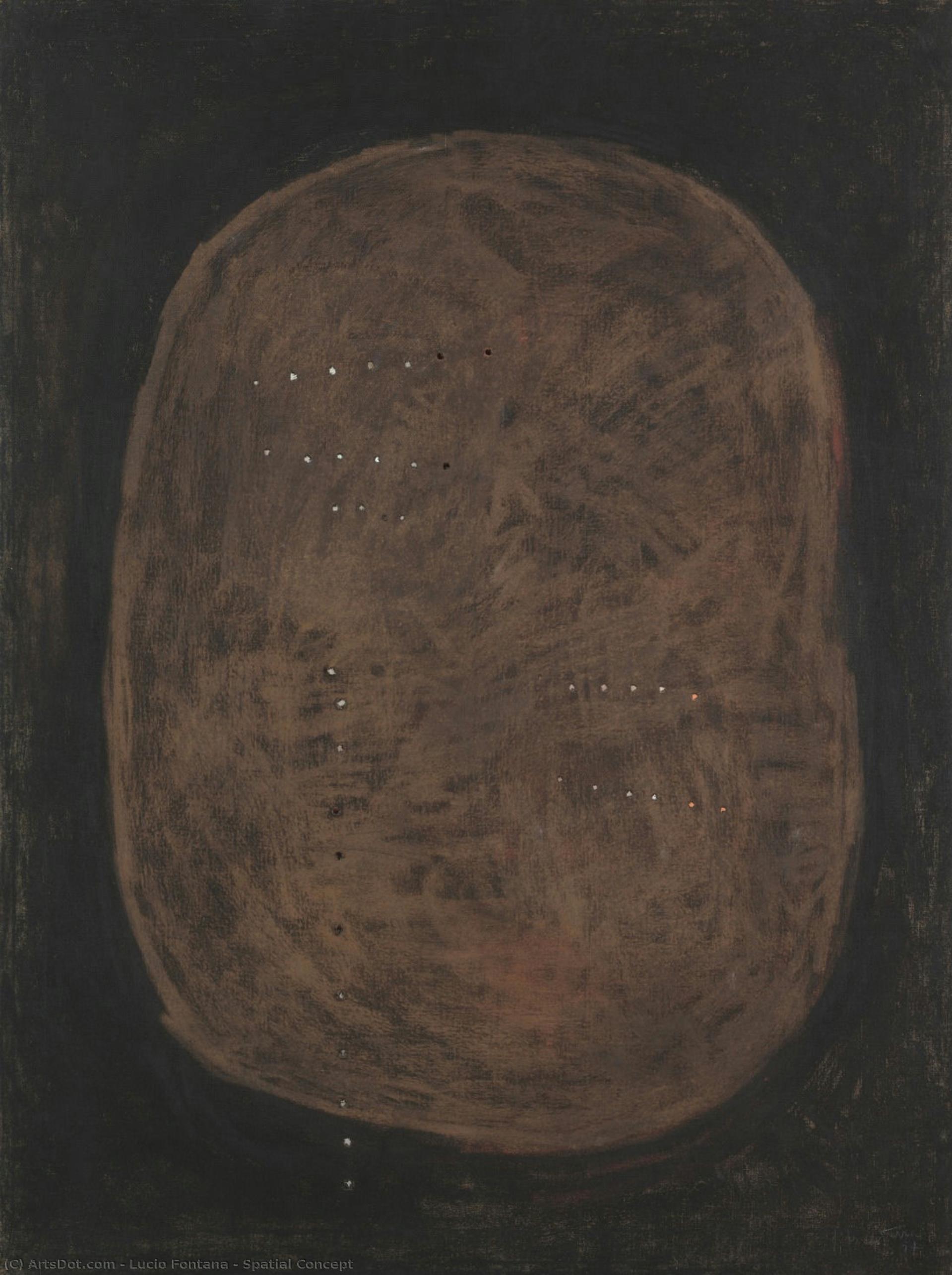
1957. Acrylic On Canvas, 180.0 x 97.0 cm. Boschi Di Stefano House Museum.
§ 1Katalog podaci

- 180.0 x 97.0 cm


Ovo umetničko delo je zaštićeno autorskim pravima
Umetničko delo prikazano na ovoj stranici zaštićeno je autorskim pravima, što znači da zakonski nismo u mogućnosti da kreiramo niti prodajemo identičnu reprodukciju. Ova zaštita se sprovodi u skladu sa međunarodnim sporazumima kao što su Bernska konvencija i nacionalnim zakonima, uključujući i one koji su definisani u Američki zakon o autorskom pravu – Naslov 17.
Kao poštovana i legalna alternativa, nudimo prilagođene, ručno oslikane umetničke radove inspirisane originalom. Naši stručni i profesionalni umetnici pažljivo proučavaju stil, ambijent i umetničku suštinu originala kako bi kreirali novo, unikatno delo koje budi istu emociju – ostajući pritom potpuno autentično stvaranje.
Ovaj metod je u potpunosti usklađen sa regulativama o autorskim pravima jer ne podrazumeva kopiranje ili dupliranje zaštićenih umetničkih dela. Umesto toga, reč je o kreativnoj reinterpretaciji – novom slikarskom delu koje je inspirisano originalom, ali nije identično njemu.
 Pročitajte više
§ 2Apstraktno
Opis predmeta
Biografija umetnika
Osnivač spazijalizma, Лучио Фонтана je poznat po svojim čuvenim sečenim platnima. Otkrijte njegovu revolucionarnu umetnost već danas.
§ 3Komentar
Spatial Concept: A Pioneering Exploration of Space and Infinity
Lucio Fontana’s “Spatial Concept,” created in 1957, stands as a cornerstone of Spatialism—a movement that fundamentally challenged the conventions of Western art after World War II. More than just a painting; it's an audacious gesture toward dismantling the perceived limitations of traditional representation and embracing the boundless potential of artistic expression.
- Artist: Lucio Fontana (1899-1968) – Born in Rosario, Argentina, Fontana embarked on a lifelong journey to redefine art’s relationship with space. His formative years instilled in him a sculptor's sensibility that would later inform his groundbreaking approach to painting.
- Historical Context: Emerging from the shadow of Futurism and influenced by Einstein’s theories of relativity, Spatialism sought to liberate art from the constraints of perspective and illusionistic depth. Fontana aimed to capture not what *appears* to be there but what *exists* beyond the surface – a concept mirroring the scientific advancements of his time.
The artwork itself is dominated by a large, roughly circular form rendered in shades of brown punctuated with numerous small dots. This seemingly simple composition belies its profound significance. Fontana’s deliberate use of tonal variations creates an illusion of depth and texture—particularly noticeable in the impasto technique applied to the central circle.
- Composition: The circle occupies a prominent position, slightly above the vertical center, establishing visual balance while immediately directing the viewer's gaze. Minimal surrounding space amplifies the impact of this solitary form.
- Color Palette: Employing a monochromatic palette—primarily browns and grey—the photograph underscores Fontana’s rejection of vibrant hues in favor of tonal gradations that convey mood and atmosphere.
Fontana's technique involved layering paint onto canvas with precision, creating visible ridges and textures that contribute to the artwork’s physicality. The dots scattered across the circle serve as visual disruptions—interpreted by many as representations of stars or punctures in reality – furthering Fontana’s exploration of spatial concepts.
- Technique: Fontana utilized impasto, applying thick layers of paint to achieve a tactile surface quality that embodies the movement and dynamism characteristic of Spatialism.
- Symbolism: The circle itself symbolizes wholeness, infinity, and potentially a gateway to another dimension—themes central to Fontana’s artistic vision and reflecting his fascination with cosmological ideas.
“Spatial Concept” transcends mere visual aesthetics; it embodies Fontana's intellectual conviction that art must engage with the universe beyond perception. As noted in MoMA’s gallery label, Fontana sought to “reach out into its surroundings,” mirroring the spirit of innovation prevalent during his era and cementing his legacy as a visionary artist who irrevocably altered the course of modern art.
Pitanja i odgovori
Koliko je izražen kontrast u delu „Spatial Concept”, autor Лучо Фонтана?
Nivo kontrasta dela „Spatial Concept”, autor Лучо Фонтана je Serene.
Koliko je godina imao/la Лучо Фонтана kada je stvorio/la "Spatial Concept"?
Лучо Фонтана je kreirao/la "Spatial Concept" u uzrastu od 58 godina. Umetnik je rođen/a 1899, a delo je datirano na 1957. godinu.
Gde mogu videti originalno delo „Spatial Concept”, autor Лучо Фонтана?
Originalno delo "Spatial Concept" možete videti u muzeju Boschi Di Stefano House Museum, Milano, Italija.


 Pređi na štampu


 Za umetnička dela ili reprodukcije čija je bilo koja strana veća od 105 cm (približno 41 inč), okvir će biti isporučen u obliku rastavljenog seta za sklapanje. Ovaj metod osigurava bezbednu dostavu i sprečava oštećenja tokom transporta.


