Garancija povraćaja novca · 100 dana Besplatna dostava širom sveta
449.587umetnička dela 30.613umetnici 4.660muzeji 32jezici
Valuta
    Jezik
      Atelje · Osnovan 2015. · Pariz, Francuska
      AllPaintingsStore
      allpaintingsstore.com
      Catalogue entry

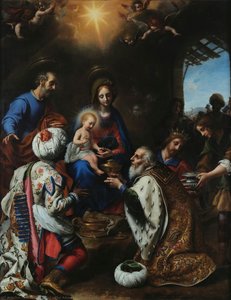
      Circumcision

      1580. Ulje, 95.0 x 73.0 cm. Hermitage Museum.

      Fig. 1. Luis De Carbajal, Circumcision, 1580. Shown as the reproduction you are specifying: , .

      § 1Catalogue data

      § 2Abstract

      Opis predmeta

      Луис де Карбажал – шпански мајстор који је у Толедоу створио монументалне алтарпије и преносио духовну фрустрацију ере ренесансе, уз инфлуенце из стила барок и Е Grecoа. Икона верске веровања и традиције.

      Biografija umetnika

      Explore the masterful works of Luis de Carbajal, a Spanish painter renowned for religious scenes & cathedral art. Discover his legacy in Toledo & beyond!

      § 3Commentary

      Luis de Carbajal: A Toledo Master Shaping Gothic Faith

      Luis de Carbajal (c. 1531 – after 1618), born in Toledo, Spain, stands as one of the most prolific and influential painters of the Spanish Renaissance, particularly renowned for his monumental cathedral altarpieces that embody the grandeur and spiritual fervor of the era. While overshadowed by contemporaries like El Greco—with whom he shared a formative artistic connection—Carvajal’s distinctive style cemented his place in art history as a pivotal figure in Toledo’s artistic revival and a masterful interpreter of Gothic sensibilities adapted to the burgeoning humanist spirit. His output spanned decades, leaving behind an impressive legacy that continues to inspire admiration for its meticulous detail and emotive power. ### Early Life & Artistic Training: The Crucible of Influence Carvajal's origins remain somewhat obscure, though he was undoubtedly educated within the vibrant intellectual milieu of Toledo, a city steeped in religious tradition and increasingly receptive to European ideas circulating from Italy. His formative years coincided with El Greco’s arrival in Toledo, establishing himself as a teacher and fostering a stylistic dialogue that would profoundly shape Carbajal's artistic vision. This mentorship instilled in him a fascination for dramatic lighting—a hallmark of El Greco’s Mannerist style—and an unwavering commitment to conveying spiritual depth through meticulously rendered figures. The influence of Villoldo, another prominent Toledo artist, contributed to his understanding of classical proportions and compositional balance, grounding his work in humanist principles alongside religious devotion. He was the brother of Juan Bautista Monegro, a sculptor who shared similar artistic sensibilities, creating a powerful synergy within Toledo’s artistic landscape. ### Cathedral Altarpieces: Monumental Expressions of Faith Carvajal’s fame rests primarily on his monumental cathedral altarpieces—a genre that flourished during the Habsburg reign and served as a powerful vehicle for disseminating theological narratives. His most celebrated commissions included seven canvases depicting saints for the Escorial Cathedral, commissioned by Philip II to commemorate the Holy Spirit. These works exemplify Carbajal's mastery of technique: he employed oil paint on canvas with painstaking precision, layering translucent glazes to achieve luminous effects and capturing subtle nuances of expression in his figures. The composition—characterized by pyramidal structures and dramatic diagonals—mirrors the architectural grandeur of the cathedral itself, reinforcing its symbolic significance as a locus of divine presence. Each saint is portrayed with palpable emotion, conveying not merely doctrinal correctness but also spiritual contemplation. This deliberate stylistic choice reflects the broader humanist preoccupation with portraying human experience authentically – capturing both physical form and psychological depth. ### Symbolism & Gothic Revival: Echoes of Tradition Carvajal’s artistic approach wasn't simply about replicating religious iconography; it was about reimagining Gothic traditions within the framework of Renaissance humanism. He deliberately incorporated elements reminiscent of medieval art—such as stylized drapery and elongated figures—to evoke a sense of solemn reverence and to honor Toledo’s rich ecclesiastical heritage. The saints depicted are not merely representations of biblical figures but embodiments of virtues – compassion, humility, courage – reflecting the moral values championed by humanist thinkers. Furthermore, Carbajal's meticulous attention to detail—from the folds of robes to the expressions on faces—demonstrates a profound understanding of human psychology and elevates his paintings beyond mere visual spectacle into emotionally resonant experiences. The use of chiaroscuro—the dramatic interplay of light and shadow—a technique inherited from Caravaggio—further enhances the emotional impact of these canvases, drawing viewers into the spiritual realm depicted. ### Legacy & Rediscovery: A Toledo Treasure Revisited Today, Carbajal’s canvases reside primarily in the Museo del Prado in Madrid, where they continue to captivate audiences with their breathtaking beauty and spiritual depth. Recent scholarship has illuminated the significance of his work within the broader context of Toledo’s artistic revival—a period marked by a renewed interest in classical ideals alongside an enduring devotion to Christian faith. His paintings stand as testament to Carbajal's skill, creativity, and unwavering commitment to conveying the sublime—a legacy that secures his place among Spain’s greatest artists and ensures that his masterpieces endure for generations to come. The Museo del Prado actively promotes awareness of Carbajal’s contribution to Spanish art history, recognizing him as a crucial link between Gothic grandeur and Renaissance humanism.

      Pitanja i odgovori

      Na koji način se "Circumcision" uklapa u teme i stil umetnika Luis De Carbajal?

      „Circumcision“ deli sa ostalim delima umetnika Luis De Carbajal svoj Baroque Revival stil i prepoznatljive teme: religious symbolism, gothic revival, patron saint imagery, cathedral decoration, baroque tradition.

      Koju emociju prenosi delo "Circumcision" u okviru Baroque Revival pokreta?

      Melanholičan emocija dela "Circumcision" prati njegov Baroque Revival stil.

      Kako mogu da pronađem dela koja su slična delu „Circumcision”, autor Luis De Carbajal?

      Radovi slični delu „Circumcision“ možete pronaći na stranici Slična dela ovog umetničkog dela.

      § 4The artist

      Luis De Carbajal

      Luis De Carbajal

      1531 - 1618, Spain

      Quick facts about Luis De Carbajal

      • Full Name: Luis de Carbajal y de la Cueva
      • Nationality: Spanish
      • Date Of Birth: 1531
      • Date Of Death: 1618
      • Place Of Birth: Toledo, Spain
      • Notable Artworks: ['Circumcision']
      • Artistic Movement Or Style: Religious Painting; Gothic Art Style
      • Artists Who Influenced This Artist: ['Alonso Berruguete']
      • Artists Or Movements Influenced By This Artist: ['El Greco']

      Biografija umetnika

      The Radiant Legacy of Luis de Carbajal

      In the heart of Toledo, a city where the echoes of medieval devotion meet the burgeoning light of the Renaissance, the life of Luis de Carbajal unfolded as a profound testament to spiritual and artistic endurance. Born around 1531, Carbajal emerged from the vibrant, intellectually charged atmosphere of Spain’s most storied religious center. While history often casts a long shadow through the ethereal mysticism of El Greco, Carbajal stands as a monumental figure in his own right—a master who bridged the gap between the soaring, structural grandeur of the Gothic tradition and the nuanced, humanistic spirit of the Spanish Renaissance. His journey was one of deep connection to the sacred, moving through the halls of cathedrals and royal monasteries, leaving behind a visual legacy that captured the very soul of an era defined by faith.

      The foundations of Carbajal’s artistry were laid within the prestigious workshops of Toledo, under the guidance of masters like Juan de Villoldo. This early training provided him with a rigorous understanding of classical proportions and compositional balance, yet it was his encounter with the transformative energy of El Greco that truly ignited his creative vision. From this connection, Carbajal embraced the dramatic power of chiaroscuro, learning to manipulate light and shadow to evoke deep emotional resonance. Unlike the more otherworldly, elongated figures of his contemporary, Carbajal’s work maintained a grounded, architectural dignity. He drew inspiration from the very bones of Toledo—its ribbed arches, vaulted ceilings, and stained glass—incorporating these Gothic elements into his canvases to create spaces that felt both physically immense and spiritually intimate.

      A Master of the Altarpiece and Royal Commission

      Carbajal’s career was marked by an extraordinary level of productivity, with estimates suggesting he produced over 300 works during his long life. His talent earned him the prestigious distinction of being named a painter for King Philip II of Spain, a role that placed him at the epicenter of the Spanish Golden Age. His brush traveled through the most sacred corridors of the empire, from the intimate oratories of the Pardo Palace to the imposing halls of the monastery in El Escorial. One of his most significant achievements was the creation of seven large-scale canvases for the church of the Escorial in 1570, where he masterfully paired saints such as Cosme and Damián, and Cecilia and Barbara, weaving complex theological narratives into single, cohesive compositions.

      His ability to command large-scale religious subjects allowed him to become a primary architect of visual devotion. His works were not merely decorations but were essential tools for the dissemination of Catholic doctrine during a period of intense religious fervor. Through his meticulous attention to detail and his ability to render the divine within a tangible, earthly framework, he achieved several notable milestones:

      • Monumental Altarpieces: He specialized in massive cathedral commissions that served as the focal points for liturgical worship, embodying the grandeur of the Habsburg reign.
      • Narrative Depth: His paintings, such as the Circumcision, utilized dramatic lighting to guide the viewer's eye through complex biblical stories.
      • Ecclesiastical Influence: By decorating the Archbishop's chapel in Toledo and various convent cloisters, he shaped the visual identity of the Spanish Church.

      Historical Significance and Enduring Spirit

      The historical importance of Luis de Carbajal lies in his role as a stabilizer of tradition during a time of radical artistic change. While the art world moved toward the more distorted and emotive Mannerism, Carbajal provided a sense of continuity, anchoring the new humanist ideas within the familiar, comforting language of Gothic architecture and classical balance. He was a painter who understood that to move the heart, one must first respect the structure of the faith. His work remains a vital link in the evolution of Spanish art, representing a moment when the medieval past and the Renaissance future existed in perfect, painted harmony.

      Today, the traces of his genius can still be found in the great repositories of Spanish heritage, including the Museo del Prado in Madrid. To study Carbajal is to witness the pulse of Toledo itself—a master who took the stone and light of his homeland and transformed them into an eternal dialogue between the human and the divine. His life, stretching well into the 17th century, serves as a bridge across eras, ensuring that the spiritual gravity of the Spanish Renaissance would never be forgotten.

      § 5Comparanda

      § 6Questions

      Osnovne informacije

      • Influences: El Greco
      • Location: Museo del Prado
      • Year: 1580
      • Title: Circumcision
      • Movement: Mannerism
      • Subject or theme: Religious ceremony

      § 7Cite this entry

      AllPaintingsStore.com, “Luis De Carbajal, Circumcision (1580)”, https://allpaintingsstore.com/sr/art/luis-de-carbajal-circumcision-8Y35H8-sr/ArtistReproduction/ (accessed 2 октобар 2026).

      § 8The reproduction

      Ručno rađena uljana reprodukcija

      Ručno oslikano uljanim bojama na platnu u dimenzijama i okviru po vašem izboru, izrađeno po porudžbini od strane naših umetnika. ( Pređi na štampu Pređi na digitalnu sliku)

      It is specified on the order sheet in the margin; the present state of that sheet reads as follows.

      Circumcision

      Tehnika reprodukcije

      Dimenzije reprodukcije

      -

      Vrhunski maestri umetnosti

      Više detalja, prefinjenosti i dodatnog vremena za izradu

      -

      Okvir za reprodukciju

      -

      -

      Za umetnička dela ili reprodukcije čija je bilo koja strana veća od 105 cm (približno 41 inč), okvir će biti isporučen u obliku rastavljenog seta za sklapanje. Ovaj metod osigurava bezbednu dostavu i sprečava oštećenja tokom transporta.

      Potrebna je profesionalna montaža – ovo nije proizvod namenjen samostalnoj izradi.
      Set mora sastaviti i platno zategnuti iskusni profesionalni ramitelj, koristeći drveni lepak (nije uključen u set), hvataljku za zatezanje platna i stege kako bi se održao prav ugao okvira dok se lepak suši. Nepravilno sklapanje ili neravnomerno zategnuto platno mogu trajno oštetiti umetničko delo, što nije pokriveno našom garancijom.

      • Sve šipke od masivnog drveta su uključene, precizno isečene po veličini.

      • Montira se pomoću priloženih šrafova, uz dodatno korišćenje lepka za drvo za spojeve u uglovima, koji nije uključen u set i koji vaš čuvar okvira mora obezbediti.

      • Potreban je profesionalni alat koji nije uključen u set: klešta za zatezanje platna (zatezač) i stege za održavanje pravih uglova letvica tokom sušenja lepka.

      Važno:
      Za spojeve u uglovima neophodan je lepak za drvo, šipke se moraju pričvrstiti stezgama dok lepak potpuno ne osuši, a za zatezanje platna na sklopljenom ramu potrebne su hvataljke za zatezanje platna. Nijedan od ovih alata nije uključen u komplet. Pre naručivanja ove veličine, molimo Vas da unapred obezbedite iskusnog profesionalca za ramačenje.

      Kratki opis natpisa

      -

      -

      Zaštitni lak

      Sjajni lak (pojačava intenzitet boja, štiti od svetlosti i vlage)

      -

      Personalizujte svoje umetničko delo

      Primeri mogućnosti izmene: Zamena lica fotografijom kupca; Dodavanje ljubimca (npr. zamena mačke psom); Uključivanje skrivene poruke u pozadini; Promena pejzaža ili elemenata pozadine.

      -

      Hitna dostava

      Svetska isporuka () za 3/4 nedelje umesto uobičajenih 5 nedelja. (30 октобар). Bez kompromisa po pitanju kvaliteta.

      -

      Brza dostava

      Dostava širom sveta () u roku od 5 nedelja. (6 новембар).

      Uključeno u cenu

      Ukupna cena

      дин 26815

      Included with every order

      • Besplatna ekspresna dostava širom sveta
      • Visokokvalitetno laneno platno
      • Potpuno osiguranje transporta
      • Garancija povraćaja carine i uvoznih dažbina
      • Garancija vernosti boja
      • Politika povraćaja u roku od 100 dana (samo u slučaju nedostataka)
      • Garancija povrata 100% novca
      • Popust na više proizvoda
      Istražite umetnička dela organizovana prema temama, stilovima i karakteristikama.
      Order sheet