

1968. Acrylic On Canvas.

§ 1Katalog podaci


Ovo umetničko delo je zaštićeno autorskim pravima
Umetničko delo prikazano na ovoj stranici zaštićeno je autorskim pravima, što znači da zakonski nismo u mogućnosti da kreiramo niti prodajemo identičnu reprodukciju. Ova zaštita se sprovodi u skladu sa međunarodnim sporazumima kao što su Bernska konvencija i nacionalnim zakonima, uključujući i one koji su definisani u Američki zakon o autorskom pravu – Naslov 17.
Kao poštovana i legalna alternativa, nudimo prilagođene, ručno oslikane umetničke radove inspirisane originalom. Naši stručni i profesionalni umetnici pažljivo proučavaju stil, ambijent i umetničku suštinu originala kako bi kreirali novo, unikatno delo koje budi istu emociju – ostajući pritom potpuno autentično stvaranje.
Ovaj metod je u potpunosti usklađen sa regulativama o autorskim pravima jer ne podrazumeva kopiranje ili dupliranje zaštićenih umetničkih dela. Umesto toga, reč je o kreativnoj reinterpretaciji – novom slikarskom delu koje je inspirisano originalom, ali nije identično njemu.
 Pročitajte više
§ 2Apstraktno
Opis predmeta
Marcel Duchamp's 'After Love,' a minimalist drawing capturing intimacy with delicate black lines on textured paper—a poignant exploration of vulnerability and connection embodying Dadaist principles.
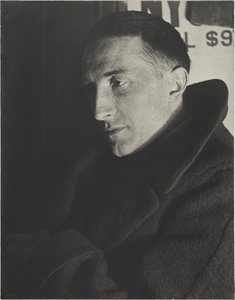
Biografija umetnika
Marcel Dušan je revolucionarni umetnik koji je postavio temelje konceptualne umetnosti sa radovima poput 'Fountains' i 'L.H.O.O.Q.'. Istražite njegov inovativni stil i uticaj na modernu umetnost!
§ 3Komentar
After love
Marcel Duchamp’s “After love” presents a deceptively simple visual statement—a pair of figures embracing—yet it encapsulates profound ideas about intimacy, vulnerability, and the very essence of artistic expression. Executed in 1968, this drawing exemplifies Duchamp's signature minimalist style, prioritizing essential forms conveyed through delicate linework on textured paper.
- Composition: The image centers around the intertwined bodies, positioned slightly off-center to create a dynamic balance. Negative space amplifies the connection between the figures while subtly demarcating their isolation—a deliberate tactic mirroring Duchamp’s exploration of spatial relationships and perceptual experience.
- Color Palette: Stripped bare of vibrant hues, the artwork utilizes shades of beige/cream for the paper background and black ink for precise linework. This restrained palette underscores the emotional core of the piece, prioritizing form over color to heighten its impact.
- Use of Lines: The drawing’s strength lies in its meticulous execution—fine, continuous lines define the contours of the figures with remarkable fluidity. Rejecting shading or cross-hatching, Duchamp achieves a textural effect that mimics the subtle nuances of human anatomy and embodies his commitment to capturing form through pure line.
Historical Context: Created in the twilight years of Duchamp’s career, “After love” reflects the artist's ongoing preoccupation with conceptual art—a movement that questioned traditional artistic conventions by elevating ideas over visual representation. It stands as a testament to Duchamp’s unwavering belief that art could transcend mere aesthetic pleasure and engage viewers on an intellectual level.
Symbolic Significance: The artwork speaks volumes about human connection and emotional vulnerability. Its minimalist style—a hallmark of Duchamp's oeuvre—amplifies the feeling of quiet intimacy, inviting contemplation on themes of affection and tenderness. Like many of his works, “After love” eschews explicit narrative, allowing viewers to interpret its symbolism through their own experiences.
Style & Technique: Duchamp’s approach aligns perfectly with the principles of Conceptual Art—a movement he profoundly influenced. The drawing technique prioritizes capturing fundamental forms with effortless lines, mirroring his fascination with geometric abstraction and challenging notions of artistic skill. It's a deliberate rejection of representational art in favor of exploring conceptual ideas.
Materials Used: Crafted from handmade or textured paper and black ink, “After love” exemplifies Duchamp’s dedication to utilizing readily available materials—a characteristic that underscores the artwork’s simplicity and its grounding in tangible reality. This understated materiality contributes to the piece's contemplative mood.
Pitanja i odgovori
Kako mogu da nabavim digitalni prikaz dela „After love”, autor Марсел Дјушан?
Digitalnu sliku dela „After love”, autor Марсел Дјушан možete kupiti na njegovoj stranici za Digitalna slika u visokoj rezoluciji: preuzimanje digitalne slike visoke rezolucije.
Šta predstavlja delo "After love"?
Motivi dela "After love" su embrace, minimalism, line drawing, texture, abstraction, relationship, quiet intimacy.
Da li je delo "After love" autora Марсел Дјушан u javnom vlasništvu i zašto?
"After love" autora Марсел Дјушан je u i dalje je zaštićeno autorskim pravima. Autorska prava se računaju od godine smrti umetnika, a Марсел Дјушан je preminuo/la 1968.


 Pređi na štampu


 Za umetnička dela ili reprodukcije čija je bilo koja strana veća od 105 cm (približno 41 inč), okvir će biti isporučen u obliku rastavljenog seta za sklapanje. Ovaj metod osigurava bezbednu dostavu i sprečava oštećenja tokom transporta.


