

Acrylic On Canvas.

§ 1Catalogue data

Ovo umetničko delo je zaštićeno autorskim pravima
Umetničko delo prikazano na ovoj stranici zaštićeno je autorskim pravima, što znači da zakonski nismo u mogućnosti da kreiramo niti prodajemo identičnu reprodukciju. Ova zaštita se sprovodi u skladu sa međunarodnim sporazumima kao što su Bernska konvencija i nacionalnim zakonima, uključujući i one koji su definisani u Američki zakon o autorskom pravu – Naslov 17.
Kao poštovana i legalna alternativa, nudimo prilagođene, ručno oslikane umetničke radove inspirisane originalom. Naši stručni i profesionalni umetnici pažljivo proučavaju stil, ambijent i umetničku suštinu originala kako bi kreirali novo, unikatno delo koje budi istu emociju – ostajući pritom potpuno autentično stvaranje.
Ovaj metod je u potpunosti usklađen sa regulativama o autorskim pravima jer ne podrazumeva kopiranje ili dupliranje zaštićenih umetničkih dela. Umesto toga, reč je o kreativnoj reinterpretaciji – novom slikarskom delu koje je inspirisano originalom, ali nije identično njemu.
 Pročitajte više
§ 2Abstract
Opis predmeta
Biografija umetnika
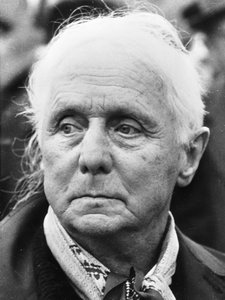
Otkrijte svet Maks Ernsta (1891-1976), pionira Dadaizma i nadrealizma! Istražite njegove inovativne tehnike kao što su frotaža i kolaž, i snovidžene slike sa pticama, pejzažima i psihološkim temama. Ključni umetnik 20. veka!
§ 3Commentary
Oiseau vert: A Surrealist Echo of Childhood Loss
Max Ernst’s “Oiseau vert,” a deceptively simple etching and aquatint depicting a bird adorned with spiraling patterns, transcends mere visual representation. It embodies the core tenets of Surrealism—a deliberate confrontation with the subconscious mind and an exploration of dreamlike imagery—and stands as a poignant testament to Ernst’s personal history.
- Subject Matter: The bird itself is rendered in shades of blue, immediately establishing a connection to themes of serenity and contemplation. However, its dominant feature – the intricate spiral design – isn't merely decorative; it symbolizes regeneration, cyclical time, and the transformative power of imagination. Spirals are found throughout Ernst’s oeuvre, representing journeys inward and outward, mirroring the artist’s own intellectual quest.
- Style & Technique: Ernst’s masterful execution showcases his signature frottage technique—a method he discovered serendipitously during a rainy afternoon in Pornic, France. As documented in Bukowskis auction records, Ernst described how rubbing a pencil across textured surfaces like burlap or wood unlocked unexpected visual impulses. This process deliberately disrupts conventional artistic conventions, prioritizing spontaneity and intuition over meticulous planning.
- Historical Context: Created in 1965, “Oiseau vert” emerged from the fertile ground of Surrealism’s heyday—a movement born out of Dada’s rejection of rationality during World War I. Ernst's exploration of psychological landscapes aligns perfectly with Surrealist artists like Yves Tanguy and Urs Fischer who sought to capture the elusive realm of dreams and unconscious desires.
- Symbolism: The bird, as a recurring motif in Ernst’s work, represents freedom—a concept deeply intertwined with his childhood experience. Ernst recounted how the death of his beloved parrot Hornebom coincided with his sister Loni's birth, triggering an imaginative leap where he envisioned Loni as Hornebom’s reincarnation. This narrative informs Lop Lop, Ernst’s alter ego – a mystical bird embodying liberation born from mortality—and underscores the artist’s preoccupation with confronting existential anxieties.
- Emotional Impact: “Oiseau vert” invites viewers to contemplate themes of loss and rebirth. The delicate etching captures a moment of quiet contemplation, mirroring Ernst's own introspective approach to artmaking. Its understated beauty speaks volumes about the power of Surrealism to evoke profound emotional responses and stimulate imaginative thought.
Further exploration into Max Ernst’s artistic journey can be found on Max Ernst’s Artist Database, where you can discover his groundbreaking contributions to Surrealism and Dada. Also, consider examining similar artworks by Ruan Zude (Ruan Zude’s Artist Database) or Urs Fischer (Yves Tanguy & Urs Fischer Artists Database), artists who share Ernst's fascination with dreamlike imagery and unconventional techniques.
Pitanja i odgovori
U kojoj prostoriji bi se najbolje uklopilo delo "Oiseau vert", s obzirom na njegovu paletu boja?
S obzirom na svoju Neutrals paletu boja, predlaže se da "Oiseau vert" stoji u Living Room.
Za šta se predlaže upotreba dela „Oiseau vert”, autor Макс Ернст?
Reprodukcija dela „Oiseau vert”, autor Макс Ернст preporučuje se za Accent. Ovaj predlog proizilazi iz teme, raspoloženja i boja samog dela.
Gde mogu pronaći statistiku o delu „Oiseau vert”, autor Макс Ернст?
Postoji Statistika stranica za „Oiseau vert“. Ona prikazuje mesečne posete ovom umetničkom delu i drugim delima ovog umetnika, uz detaljnu analizu po državama i jezicima.


 Pređi na štampu


 Za umetnička dela ili reprodukcije čija je bilo koja strana veća od 105 cm (približno 41 inč), okvir će biti isporučen u obliku rastavljenog seta za sklapanje. Ovaj metod osigurava bezbednu dostavu i sprečava oštećenja tokom transporta.


