


 Pregledaj u prostoru
 Podeli
 Podeli
 Detalji
 Vodič
Vodič

 Preuzmi sliku
 Slični predmeti
 Rendgenski snimak
 Automatska prezentacija
 Statistika
Kaa
 Abstract Expressionism
 1994
1994 1469.0 x 1666.0 cm
 Nacionalni muzej u Singapuru
 Pročitaj više
Umetničko delo prikazano na ovoj stranici zaštićeno je autorskim pravima, što znači da zakonski nismo u mogućnosti da kreiramo niti prodajemo identičnu reprodukciju. Ova zaštita se sprovodi u skladu sa međunarodnim sporazumima kao što su Bernska konvencija i nacionalnim zakonima, uključujući i one koji su definisani u Američki zakon o autorskom pravu – Naslov 17.
Ovaj metod je u potpunosti usklađen sa regulativama o autorskim pravima jer ne podrazumeva kopiranje ili dupliranje zaštićenih umetničkih dela. Umesto toga, reč je o kreativnoj reinterpretaciji – novom slikarskom delu koje je inspirisano originalom, ali nije identično njemu.
Giclee štampa / Umetnički otisak
Giclée štampa ili print na platnu muzejskog kvaliteta uz brzu izradu i raznovrsne opcije završne obrade. ( Naručite ručno oslikano reprodukciju Pređi na prodaju digitalnih slika)




































Izaberite jednu od naših unapred definisanih veličina koje odgovaraju originalnim proporcijama umetničkog dela.

Unesite širinu i visinu koja vam je potrebna, kako bi se uklopili u vaš ram ili na vaš zid. Štampa se može samo iseći, nikada ne može biti veća od originalne slike, stoga format sa drugačijim proporcijama gubi deo slike. Poslaćemo vam digitalni prikaz radi potvrde pre nego što započnemo štampu. Slika prikazana na ovoj stranici ne pokazuje stvarni rez — to pokazuje samo digitalni prikaz.
Dostava širom sveta () za 2 nedelje umesto uobičajenih 4/5 nedelja. (26 октобар)

Besplatna ekspresna dostava širom sveta

Visokokvalitetno laneno platno

Sveobuhvatno osiguranje transporta

Garancija povraćaja carine i uvoznih dažbina

Garancija vernosti boja i autentičnosti pri reprodukciji

Politika povraćaja u roku od 100 dana (samo u slučaju nedostataka)

Garancija povrata 100% novca

Popust pri većoj količini
 Opcija sa staklom dostupna je samo za dimenzije manje od 110 cm

Kaa
Giclee štampa / Umetnički otisak
Veličina reprodukcije
-


Ukupna cena
дин 6599
A Fragmented Vision: Exploring Mohammad Din Mohammad's "Kaa"
Mohammad Din Mohammad’s “Kaa,” created in 1994, is a captivating work of abstract expressionism that transcends mere representation. This large-scale piece (1469 x 1666 cm) presents a fragmented and abstracted depiction of what appears to be a traditional dwelling or structure. Rather than offering a clear, realistic portrayal, Mohammad utilizes an expressive, gestural style to evoke a powerful emotional response in the viewer. The skewed perspective and dynamic composition create a sense of movement and instability, drawing the eye across the canvas and inviting contemplation. It's a testament to his unique ability to fuse Western artistic techniques with deeply rooted cultural and spiritual influences.Style & Technique: A Synthesis of East and West
Mohammad Din Mohammad’s artistic journey was shaped by his training at the Nanyang Academy of Fine Arts, where he studied Western painting. However, he masterfully integrated these learnings with his profound understanding of Sufi mysticism and Malay cultural heritage. "Kaa" exemplifies this synthesis. The artwork is executed primarily using a wet-on-wet technique, allowing for the blending and layering of oil paints directly on the canvas. This results in rich textures created through thick impasto and loose brushwork – a hallmark of abstract expressionism. The visible brushstrokes contribute to the painting's tactile quality and convey a sense of raw energy. The color palette, dominated by greens and yellows contrasted with browns and grays, further enhances the emotional depth of the piece.Sufi Mysticism & Symbolic Language
Central to Mohammad Din Mohammad’s artistic practice was his devotion to Sufism, a mystical branch of Islam emphasizing inner spiritual experience. "Kaa" is imbued with subtle symbolic elements reflecting this profound influence. The fragmented structure itself can be interpreted as representing decay, vulnerability, or a disrupted sense of place – themes often explored within the context of Sufi thought concerning impermanence and the search for transcendence. While not overtly literal, the composition suggests a journey through a landscape of the soul, hinting at the complexities of faith and human existence. His frequent incorporation of calligraphic elements, though absent in this particular work, is characteristic of his broader oeuvre and served as a signature element connecting his artistic and spiritual pursuits.Emotional Resonance & Lasting Impact
"Kaa" evokes a palpable sense of melancholy and unease. The chaotic composition, muted color scheme, and fragmented forms contribute to an atmosphere of introspection and quiet contemplation. It’s not a painting that offers easy answers; instead, it invites the viewer to engage with their own emotions and interpretations. Mohammad Din Mohammad's work continues to resonate with audiences today due to its powerful emotional honesty and its unique blend of cultural and spiritual influences. Owning a reproduction of "Kaa" is an opportunity to bring this evocative piece into your space, sparking conversation and inspiring reflection.Pitanja i odgovori
Na koji način se "Kaa" uklapa u teme i stil umetnika Mohammad Din Mohammad?
„Kaa“ deli sa ostalim delima umetnika Mohammad Din Mohammad svoj Abstract Expressionism stil i prepoznatljive teme: western painting techniques, abstract expressionism influence, sufi mysticism & islamic art, representative of his mature style, consistent with sufi-inspired themes, demonstrates blending east & west, features symbolic and calligraphic elements, spiritual exploration through art.
Koji nacionalni poreklom stoji iza Abstract Expressionism dela "Kaa"?
Delo u stilu Abstract Expressionism, "Kaa", delo je umetnika rođenog u Malaysia.
Mogu li da vidim „Kaa”, Mohammad Din Mohammad na svom zidu pre kupovine?
Stranica AR pregled za delo „Kaa”, Mohammad Din Mohammad koristi proširenu stvarnost kako bi vam prikazala umetničko delo u vašem sopstvenom prostoru, pomoću kompatibilnog uređaja.
Srodna umetnička dela


Biografija umetnika
A Tapestry of Spirit and Tradition
The life of Mohammad Din Mohammad was a profound journey through the intersections of the physical and the metaphysical. Born in Kampung Gangsa, Malaysia, his early years were marked by a migration to Singapore at the age of two, a transition that would eventually shape a perspective uniquely poised between different worlds. His artistic soul began to stir in childhood, manifesting in simple experiments with ceramics and the molding of clay cups. This innate curiosity for form and texture laid the foundation for a career that would later transcend mere visual representation, becoming a vessel for deep spiritual exploration.
His formal training at the Nanyang Academy of Fine Arts provided him with a rigorous command of Western techniques. Majoring in Western painting from 1973 to 1976, he initially embraced the disciplined approach of Realist portraiture. This period of his life was characterized by a direct engagement with the human form, even spending years at old Bugis Street capturing the likenesses of travelers and tourists. However, as his practice matured, the literal became secondary to the symbolic, and his work began to evolve into a complex synthesis of Western abstract expressionism and the profound depths of his Malay heritage.
The Synthesis of Mysticism and Movement
What truly distinguishes the work of Mohammad Din Mohammad is the seamless integration of Sufi mysticism with the rhythmic energy of silat, the traditional Malay martial art. He was not merely a painter but a practitioner of many ancient disciplines; he was a writer, a collector of Southeast Asian objects, and a bomoh, or traditional healer. This multifaceted identity breathed life into his canvases, allowing him to use Islamic calligraphy and symbolic icons to convey complex philosophical truths. His art became a spiritual practice in itself, where the act of painting mirrored the search for inner enlightenment.
In masterpieces such as Kaa, one can witness this extraordinary fusion. Utilizing a wet-on-wet technique and thick impasto, he created textures that felt alive with movement and instability. His compositions often utilized skewed perspectives to evoke emotional responses, drawing the viewer into a fragmented vision of reality. The influence of his devotion to silat is palpable in the gestural, energetic brushwork that suggests the controlled power and fluid motion of martial combat. Through his use of color—often blending earthy tones with vibrant yellows and greens—he captured the very essence of spiritual energy.
A Legacy of Cultural Convergence
The historical significance of Mohammad Din Mohammad lies in his ability to act as a bridge between disparate traditions. He refused to see a conflict between the Western academic training he received and the deeply rooted cultural and spiritual beliefs he practiced. His work stands as a testament to the possibility of a modern art form that remains authentically connected to its ancestral roots. By weaving together elements of assemblage, painting, and calligraphy, he created a visual language that spoke of both the local and the universal.
His life was marked by resilience and an unwavering commitment to his path. Even after facing severe physical hardship following a motorcycle accident, he turned to traditional healing and his silat master to find recovery, further deepening his connection to Malay medicinal traditions. This lived experience of healing and spiritual endurance is etched into the very fabric of his art, leaving behind a legacy that continues to invite contemplation on the nature of identity, faith, and the enduring power of cultural heritage.

Mohammad Din Mohammad
1955 - 2007 , Malaysia
Brzi pregled
- Artistic Movement Or Style: Abstract expressionism, Sufi mysticism
- Full Name: Mohammad Din Mohammad
- Nationality: Singaporean Malay
- Notable Artworks:
- Kaa
- Burning Desire Four
- Spiritual Energy
- Place Of Birth: Kampung Gangsa, Malaysia
- Date Of Birth: 1955
- Date Of Death: 2007
Srodni članci

Verdant Visions: Exploring the Symbolism & Aesthetic Impact of Green in Art History
Explore the rich history & symbolism of green in art! Discover iconic paintings, techniques, and how to bring verdant harmony into your home with AllPaintingsStore's expert guide.

Abstraktni Ekspresionizam: 10 Remek Dela Koja Su Definisala Pokret
Otkrijte 10 remek dela koja su definisala apstraktni ekspresionizam! Istražite dela Pola Krausa, Džejson Poloka i drugih. Saznajte priče iza umetnosti i inspirisanje za dekoraciju doma. Eksplorirajte kolekciju na AllPaintingsStore.com!

Kandinsky's Masterpieces: 25 Paintings That Define Abstract Art | AllPaintingsStore
Journey through Wassily Kandinsky's 25 most iconic abstract paintings. Explore his revolutionary use of color, form & spiritual expressionism. Find museum-quality Kandinsky reproductions and elevate your home decor with AllPaintingsStore.com. Discover all masterpieces on AllPaintingsStore.com!
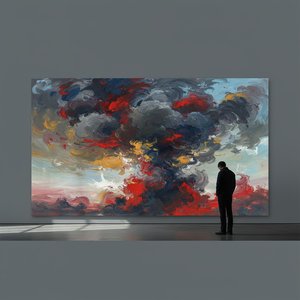
Beyond Representation: Exploring the Emotional Landscape of Abstract Expressionism
Explore the profound emotional world of Abstract Expressionism with AllPaintingsStore. Discover key artists like Pollock & Rothko, learn about collecting, and find museum-quality reproductions to inspire your space.

The Soul of Color: A Journey into the Emotional Resonance of Lyrical Abstraction
Embark on a cultural journey through Lyrical Abstraction. Explore how masters like Kandinsky used color and motion to translate emotion into visual poetry. Discover the profound beauty of abstract expressionism and learn to curate emotional resonance in your own art collection.

