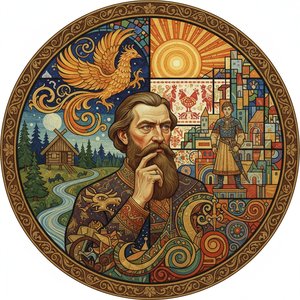
1912. Akril na platnu, 23.0 x 16.0 cm.

§ 1Catalogue data

- 23.0 x 16.0 cm


§ 2Abstract
Opis predmeta
Овај слика је Никола Роериха у стилу Ар Нуво и приказује пастира на планини, симболишући мир и везу са природом. Откријте дивље лепоће Хималаја у овом изузетном делу!
 Pročitaj više
Biografija umetnika
Nikola Roerić (1874-1947) – ruski slikar, pisac i arheolog čiji su dela kombinovala simbolizam, himalajske pejzaže i duhovne teme. Poznat po dizajnima za Balet Rus i zalaganju za očuvanje kulture.
§ 3Commentary
Nicholas Roerich’s Shepherd – A Vision of Himalayan Serenity
“Shepherd,” painted in 1912 by Nicholas Roerich, stands as a testament to the artist's profound engagement with Symbolism and Art Nouveau influences. This relatively modest canvas (23 x 16 cm) encapsulates a contemplative mood, transporting viewers to the rugged beauty of the Himalayan mountains – a landscape that would become central to Roerich’s artistic vision.
Composition & Style: Simplified Forms Reflecting Spiritual Depth
The painting's vertical orientation immediately draws attention to the figure of the shepherd himself. Positioned centrally against a subtly textured, snowy backdrop, he exudes quiet dignity. Roerich eschews elaborate detail, favoring simplified geometric shapes and muted color palettes characteristic of Art Nouveau’s aesthetic principles. This deliberate stylistic choice isn’t merely decorative; it serves to heighten the painting's spiritual resonance.
Color Palette & Texture: Earthy Tones Convey Resilience
Dominating the visual experience is a palette rooted in earthy hues – browns, whites, and muted reds—reflecting the harsh realities of Himalayan life yet imbued with an underlying sense of peace. The artist skillfully employs layering techniques to create texture, particularly noticeable in the depiction of the shepherd’s fur coat and boots. These areas appear rough and layered, mirroring the resilience required to endure challenging conditions – a visual metaphor for Roerich's own unwavering belief in the transformative power of art.
Symbolism & Context: Guiding Light Amidst Isolation
The shepherd figure itself carries significant symbolic weight. Traditionally representing guidance, protection, and connection to nature’s rhythms, he embodies Roerich’s fascination with shamanic traditions and his exploration of universal spiritual themes. The staff symbolizes strength and wisdom, while the pouch suggests a contemplative solitude—a deliberate contrast to the bustling urban landscapes of Roerich's time.
Technique & Impression: Diffusion of Light Enhances Dreamlike Quality
Roerich’s technique relies on careful brushwork and layering to achieve depth and luminosity. The diffused lighting contributes to a dreamlike atmosphere, softening contours and minimizing harsh shadows. This understated approach underscores Roerich's commitment to conveying emotion rather than documenting reality—a hallmark of Symbolist art that anticipates the Surrealist movement.
- Artist: Nicholas Roerich
- Year: 1912
- Style: Art Nouveau
- Medium: Oil Paint
- Dimensions: 23 x 16 cm
A reproduction of “Shepherd” offers a captivating glimpse into Roerich’s artistic universe—a world where beauty and spirituality intertwine to inspire contemplation and evoke the grandeur of the Himalayan wilderness.
Pitanja i odgovori
Kome se pripisuje delo "Пастир"?
Delo "Пастир" pripisuje se umetniku Nikola Roerić.
Kakav osećaj izazivaju boje dela „Пастир”, autor Nikola Roerić?
„Пастир”, autor Nikola Roerić spaja Neutralne boje paletu boja sa Spokojno tonom.
Kako se opisuje raspoloženje dela „Пастир”, autor Nikola Roerić?
„Пастир”, autor Nikola Roerić se opisuje kao delo Spokojno raspoloženja. Ovakva klasifikacija može pomoći u uklapanju dela u određeni ambijent.


 Pređi na štampu


 Za umetnička dela ili reprodukcije čija je bilo koja strana veća od 105 cm (približno 41 inč), okvir će biti isporučen u obliku rastavljenog seta za sklapanje. Ovaj metod osigurava bezbednu dostavu i sprečava oštećenja tokom transporta.