


 Pregledaj u prostoru
 Podeli
 Podeli
 Detalji
 Vodič
Vodič

 Preuzmi sliku
 Slični predmeti
 Rendgenski snimak
 Automatska prezentacija
 Statistika
The Risen Christ
 30.0 x 14.0 cm
 National Trust
 Pročitaj više
Ručno rađena uljana reprodukcija
Ručno oslikano uljanim bojama na platnu u dimenzijama i okviru po vašem izboru, izrađeno po porudžbini od strane naših umetnika. ( Pređi na prodaju štampanih primeraka Pređi na prodaju digitalnih slika)




































Izaberite jednu od naših unapred definisanih veličina koje odgovaraju originalnim proporcijama umetničkog dela.

Unesite širinu i visinu koja vam je potrebna, kako bi se uklopili u vaš ram ili zid. Pošto je ovo ručno oslikano delo, umetnik može naslikati malo više prostora oko slike ili malo skratiti ivice za dimenzije drugačijeg oblika — izbor je na vama. Pre početka rada, poslaćemo vam digitalni prikaz radi potvrde. Slika prikazana na ovoj stranici ne predstavlja konačan rezultat — samo digitalni prikaz pokazuje stvarnu sliku.
Nakon narudžbine, tim AllPaintingsStore.com će klijentu putem e-pošte poslati uputstva i dostaviti prikaz predloženog rešenja
Svetska isporuka () za 3/4 nedelje umesto uobičajenih 5 nedelja. (22 октобар). Bez kompromisa po pitanju kvaliteta.

Besplatna ekspresna dostava širom sveta

Visokokvalitetno laneno platno

Sveobuhvatno osiguranje transporta

Garancija povraćaja carine i uvoznih dažbina

Garancija vernosti boja i autentičnosti pri reprodukciji

Politika povraćaja u roku od 100 dana (samo u slučaju nedostataka)

Garancija povrata 100% novca

Popust pri većoj količini
 Opcija sa staklom dostupna je samo za dimenzije manje od 110 cm

The Risen Christ
Tehnika izrade reprodukcije
Veličina reprodukcije
-


Ukupna cena
дин 26531
Srodna umetnička dela


Biografija umetnika
The Luminous Shadows of Orazio Samacchini
In the vibrant, intellectually charged atmosphere of late 16th-century Italy, few artists captured the tension between classical grace and Mannerist drama as effectively as Orazio Samacchino. Born in Bologna in 1532, Samacchini emerged from a city steeped in humanist tradition, a background that would later inform the profound allegorical depth of his compositions. His early years were defined by a rigorous apprenticeship under the celebrated Pellegrino Tibaldi, a master whose expressive use of color and emotional intensity provided the foundational blueprint for Samacchini’s burgeoning style. Through Tibaldi, the young artist learned to move beyond mere representation, seeking instead to infuse the human form with a palpable, often restless, vitality.
The trajectory of Samacchini’s career took a transformative turn in 1563 when he journeyed to Rome. This relocation placed him at the very epicenter of the artistic world during the transformative reign of Pope Pius IV. In the hallowed halls of the Vatican, Samacchini engaged in monumental collaborations that would cement his reputation among the elite. Working alongside the Zuccari brothers—Taddeo and Giovanni Battista—he contributed to the breathtaking decoration of the Vatican Belvedere and the Sala Regia. It was during this Roman period that his work began to absorb the sophisticated nuances of Venetian Mannerism, integrating a more luminous palette and a sense of compositional dynamism that echoed the influence of Titian.
A Mastery of Myth and Emotion
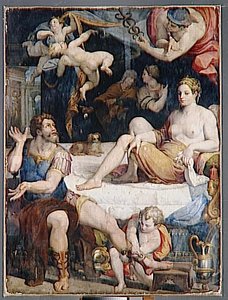
As Samacchini’s style matured, it became a captivating study in contrasts. He possessed a singular ability to manipulate light and shadow, creating chiaroscuro effects that lent his figures a sculptural presence and an almost theatrical weight. His subject matter frequently drifted between the sacred and the profane, navigating the complex narratives of classical mythology and profound religious devotion with equal fervor. In works such as Hercules and Antaeus, one can witness the raw power and muscular tension characteristic of the late Renaissance, while his mythological dramas, like the poignant Mercure ordonne à Énée d’abandonner Didon, showcase a sophisticated command of psychological tension and fate.
The artist's technical repertoire was as diverse as his inspirations. Whether executing grand-scale frescoes or more intimate panel paintings, Samacchini utilized intricate ornamentation and deliberately distorted figures to evoke the "maniera"—the stylized elegance that defined the era. His later works in Bologna and Parma reflect a synthesis of his various influences:
- The expressive, emotive brushwork inherited from Tibaldi.
- The grand, narrative scale required by papal commissions in Rome.
- The rich, atmospheric color palettes inspired by the Venetian school.
Legacy within the Mannerist Tradition
Though history often remembers the titans of the era like Michelangelo or Raphael, Orazio Samacchini remains a vital figure for understanding the transition of Italian art. His life, though tragically short—ending in 1577 at the age of forty-five—was marked by an unrelenting pursuit of artistic innovation. By blending the intellectual rigor of Bolognese humanism with the visual splendor of Roman and Venetian traditions, he helped cultivate a stylistic language that celebrated complexity, movement, and drama. His contributions to the churches of Bologna and the great palaces of Italy serve as enduring testaments to a master who could turn paint into poetry, capturing the fleeting beauty and the eternal struggles of the human condition.
Orazio Samacchini
1532 - 1577 , Italy
Brzi pregled
- Full Name: Orazio Samacchini
- Nationality: Italian
- Date Of Birth: 1532
- Date Of Death: 1577
- Place Of Birth: Bologna, Italy
- Notable Artworks:
- Hercules & Antaeus
- Allegory of Wisdom
- Mercure Ordonne A Enée D'Abandonner Didon
- Artistic Movement Or Style: Late Renaissance & Mannerist
- Artists Who Influenced This Artist: ['Pellegrino Tibaldi']
- Artists Or Movements Influenced By This Artist: ['Raphael']

