

1884. Acrylic On Canvas.

§ 1Katalog podaci


§ 2Apstraktno
Opis predmeta
 Pročitaj više
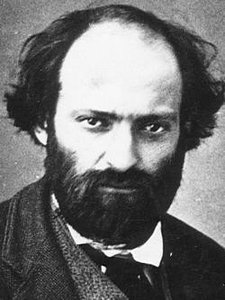
Biografija umetnika
Постимпресионистички мајстор Паул Сезан повезао је импресионизам и кубизам кроз Mont Sainte-Victoire. Истражите његова револуционарна дела већ данас.
§ 3Komentar
A Silent Symphony of Form and Color: Exploring Cézanne’s “Trees”
Paul Cézanne's "Trees," painted in 1884, transcends mere depiction; it embodies a revolutionary vision that fundamentally reshaped the landscape of modern art. Initially dismissed by critics as amateurish and lacking artistic merit, this deceptively simple composition—a field strewn with trees against a hazy backdrop of a modest house—became Cézanne’s cornerstone work, establishing his distinctive approach to capturing the essence of nature.
- Subject Matter: The painting focuses on a tranquil rural scene – a meadow populated by mature trees. Cézanne meticulously observes these subjects, prioritizing their underlying structure over fleeting impressions of light and color, a hallmark of Impressionism.
- Style: Cézanne firmly rooted himself in Post-Impressionism, rejecting the optical realism championed by Monet and Renoir. Instead, he employed geometric forms—cylinders, cones, and planes—to represent the contours of the trees and their relationship to space. This deliberate fragmentation anticipates Cubism’s radical departure from traditional perspective.
- Technique: Cézanne utilized thick impasto brushstrokes – applying paint in layers with considerable texture – to convey solidity and volume. The muted palette—dominated by greens, browns, and ochres—further enhances the painting's atmosphere of stillness and solitude. He painstakingly built up color through multiple applications, creating a palpable sense of depth.
Historical Context: Cézanne’s Pursuit of Artistic Truth
Painted during Cézanne’s formative years in Aix-en-Provence, “Trees” reflects his growing dissatisfaction with Impressionism's preoccupation with capturing atmospheric effects. Influenced by Japanese prints—particularly those depicting landscapes—Cézanne sought to distill nature into its fundamental geometric components, mirroring the aesthetic principles of Japonisme.
His rejection of conventional artistic conventions wasn’t driven by cynicism but by a profound conviction that art should strive for intellectual rigor and emotional resonance. Cézanne believed that artists had a responsibility to represent reality accurately, albeit in a way that transcends mere visual representation—a sentiment echoed in his lifelong dedication to exploring the complexities of perception.
Symbolism & Emotional Impact: Beyond Representation
"Trees," like many of Cézanne’s works, operates on multiple levels. The solitary trees symbolize resilience and permanence amidst the transient beauty of the natural world. Their stark forms convey a sense of quiet contemplation and introspection—inviting viewers to contemplate the profound connection between humanity and nature.
More importantly, Cézanne's painting represents a pivotal moment in artistic history: it signaled the decisive break from Impressionism’s optical idealism toward a more conceptual approach. It paved the way for subsequent movements like Cubism and Expressionism, establishing Cézanne as one of the most influential artists of the late 19th century.
A Legacy Enduring Inspiration
Today, “Trees” continues to captivate audiences with its understated elegance and masterful execution. Its enduring appeal lies in its ability to communicate a powerful emotional truth—a celebration of beauty found not in fleeting impressions but in the unwavering solidity of form and color. Reproductions of this iconic artwork offer an opportunity to experience Cézanne’s visionary aesthetic firsthand, bringing his profound understanding of nature into any interior space.
Pitanja i odgovori
Koliko je godina imao/la Пол Сезан kada je kreirao/la "Trees" 1884. godine?
Пол Сезан je imao/la 45 godina kada je kreirao/la "Trees" u 1884. Godina je izračunata na osnovu godine rođenja umetnika, 1839.
Kako mogu da preuzmem sliku dela „Trees”, autor Пол Сезан?
„Trees”, autor Пол Сезан možete preuzeti na stranici za Preuzimanje digitalnog prikaza ovog dela, kao preuzimanje digitalne slike visoke rezolucije.
Koji umetnički pravac obuhvata „Trees”, autor Пол Сезан?
„Trees“ je delo Post-Impressionism pokreta. Ovaj pokret označava umetničku tradiciju kojoj je delo pripada.


 Pređi na štampu


 Za umetnička dela ili reprodukcije čija je bilo koja strana veća od 105 cm (približno 41 inč), okvir će biti isporučen u obliku rastavljenog seta za sklapanje. Ovaj metod osigurava bezbednu dostavu i sprečava oštećenja tokom transporta.


