


 Pregledaj u prostoru
 Pošalji
 Podeli
 Detalji o delu

 Преузми
 Slični predmeti
 Rendgenski snimak
 Slajdovi
Basin (underside)

 Pročitaj više
Giclee štampa / Umetnički otisak
Giclée štampa ili print na platnu muzejskog kvaliteta uz brzu proizvodnju i fleksibilne opcije završne obrade. ( Kupi ručno naslikanu sliku Kupi digitalnu sliku)




































Izaberite jednu od naših unapred definisanih veličina koje odgovaraju originalnim proporcijama umetničkog dela.

Možete uneti sopstvene dimenzije kako biste umetničko delo prilagodili specifičnom okviru ili prostoru. Ako odabrani format ne odgovara proporcijama originalne slike, mi ćemo ili iscrtati deo dela ili proširiti sliku pomoću ogledane ivice ili jednobojnog popunjavanja. Digitalni prikaz će vam biti poslat na odobrenje pre početka proizvodnje.
Imajte na umu da pregled na ekranu ne odražava stvarno iscrtavanje ili proširivanje. Samo će prikaz (mockup) precizno pokazati finalnu kompoziciju.
Iako su prilagođene dimenzije dostupne, preporučujemo da odaberete dimenziju sa unapred definisane liste kako biste očuvali originalne proporcije.
Dostava širom sveta () za 2 nedelje umesto uobičajenih 4/5 nedelja. (22 август)

Besplatna ekspresna dostava širom sveta

Visokokvalitetno laneno platno

Kompletno osiguranje transporta

Garancija povraćaja carine i uvoznih dažbina

Garancija vernosti boja

Politika povrata u roku od 60 dana (samo u slučaju nedostataka)

Garancija povrata novca od 100%

Popust pri grupnoj kupovini
 Opcija sa staklom dostupna je samo za dimenzije manje od 110 cm

Basin (underside)
Giclee štampa / Umetnički otisak
Dimenzije reprodukcije
-


Konačna cena
$ 64
Srodna umetnička dela


Biografija umetnika
The Silver Alchemist of the Baroque: The Life of Paulus van Vianen
In the luminous dawn of the Dutch Golden Age, a period defined by unparalleled artistic flourishing, few names resonate with the tactile elegance of Paulus van Vianen. Born in Utrecht in 1570, Paulus was not merely an artist but a master of substance, a silversmith and sculptor whose hands breathed life into precious metals. He emerged from a lineage of profound craftsmanship; his father, Willem, and his brother, Adam, were both titans of the silversmithing trade. This familial immersion in the fine arts provided Paulus with more than just technical training—it bequeathed to him a profound understanding of how light, texture, and form could coalesce to tell a story. His early years were steeped in the stylized, often dramatic language of Northern Mannerism, a style that emphasized elongated forms and complex compositions, setting the stage for his later, more fluid innovations.
The trajectory of Paulus’s career took a transformative turn when he moved toward the imperial splendor of Prague. Under the prestigious patronage of Holy Roman Emperor Rudolf II, Paulus became a vital participant in the Prague School of art. It was within this cosmopolitan and intellectually vibrant court that his artistic identity truly crystallized. Alongside his brother Adam, he played a foundational role in developing the Baroque auricular style—a breathtakingly intricate technique characterized by chased and hammered silver surfaces that mimicked organic, ear-like, or fluid shapes. This style bridged the gap between the rigid structures of Mannerism and the emotive, flowing energy of the Baroque, creating works that seemed to pulse with a life of their own.
Mastery of Form and the Auricular Legacy
To behold a work by Paulus van Vianen is to witness a masterclass in sculptural relief. His ability to manipulate silver was nothing short of alchemical, turning cold metal into scenes of profound emotional depth and movement. While his repertoire included various mediums such as landscape drawings and medallions, it is his mastery of the silver plaquette and bowl that remains etched in art history. One cannot discuss his achievements without mentioning the Diana and Actaeon bowl, a work that stands as a testament to the era's fascination with mythological narrative and technical virtuosity.
His most celebrated achievement, however, lies in the monumental silver plaquette titled “The Adoration of the Shepherds” (1607). In this masterpiece, currently held in the Rijksmuseum, Paulus achieved a rare feat of sculptural storytelling. The work depicts Mary cradling the Christ child amidst a celestial gathering of angels and humble shepherds. Through the skillful application of the auricular technique, the figures appear to emerge from the very surface of the metal, creating a sense of three-dimensional vitality that captivates the viewer. The piece exemplifies the Baroque penchant for dramatic narrative and emotional intensity, yet it retains a certain serene reverence that speaks to his humanist sensibilities.
The significance of Paulus van Vianen’s contribution to the art world can be summarized through several key pillars of his legacy:
- Innovation of Style: His pivotal role in refining the auricular style, which redefined ornamental metalwork in Europe.
- Technical Brilliance: The seamless integration of Mannerist precision with Baroque fluidity and emotional depth.
- Cultural Bridge: Acting as a vital link between the Dutch artistic traditions of Utrecht and the imperial grandeur of the Prague School.
- Lasting Influence: Establishing a standard of excellence in silversmithing that influenced generations of Northern European craftsmen.
Though his life was tragically short, ending in 1614, the impact of Paulus van Vianen remains undiminished. He did not merely decorate objects; he transformed them into vessels of myth and devotion. Through his hands, silver became a medium for the sublime, leaving behind a legacy that continues to inspire awe in the halls of the world's greatest museums.

Paulus van Vianen
1570 - 1614 , Netherlands
Osnovne informacije
- Artistic Movement Or Style: Baroque Auricular Style; Mannerism
- Artists Or Movements Influenced By This Artist: ['Neoclassical']
- Artists Who Influenced This Artist: ['Rudolf II']
- Date Of Birth: Utrecht, Netherlands (1570)
- Date Of Death: 1614
- Full Name: Paulus Willemsz van Vianen
- Nationality: Dutch
- Notable Artworks:
- Diana & Actaeon Bowl
- The Adoration of the Shepherds
- Rest on the Flight into Egypt
- Place Of Birth: Utrecht
Povezani članci
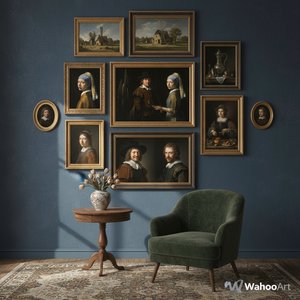
Dutch Baroque Masters: 10 Paintings That Shaped an Era | AllPaintingsStore
Journey through the Golden Age with our guide to the Top 10 Dutch Baroque masterpieces! Explore iconic paintings by Rembrandt, Vermeer & Frans Hals. Find museum-quality art reproductions and elevate your home decor at AllPaintingsStore.com.
Rembrandt van Rijn: 25 Majstorstava Svetla i Senke za Vaš Dom | AllPaintingsStore
Uronite u svet Rembrandta van Rijna! Otkrijte 25 najlepših dela holandskog majstora – portrete, istorijske scene i biblijska platna. Kvalitetne reprodukcije slika za dekoraciju enterijera dostupne na AllPaintingsStore.com.

Chiaroscuro and Character: A Definitive Guide to Light and Shadow in the Dutch Baroque Era
Explore the dramatic mastery of the Dutch Baroque era. Discover how masters like Rembrandt used chiaroscuro to transform everyday life into timeless art. An expert guide for collectors and enthusiasts seeking to understand the profound interplay of light and shadow.

Cornelis van Poelenburch: Bridging Mannerism & the Dutch Baroque Landscape
Discover Cornelis van Poelenburch, a pivotal Dutch Baroque landscape painter bridging Mannerism & Italianate styles. Explore his life, key works, and lasting influence on 17th-century art with AllPaintingsStore.
Golden Age Reflections: Dutch Baroque Painting & Cultural Innovation
Explore the Dutch Golden Age of painting! Discover key artists like Vermeer & ter Borch, their innovative techniques, and the rich cultural context behind these Baroque masterpieces. Learn about collecting & appreciating this iconic art period.


