Garancija povraćaja novca · 100 dana Besplatna dostava širom sveta
449.587umetnička dela 30.613umetnici 4.660muzeji 32jezici
Catalogue entry

Proverbs

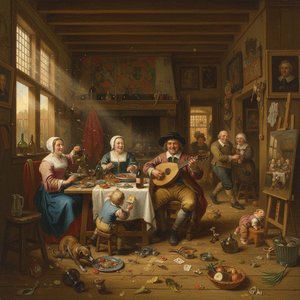
1559. Ulje na platnu.

Fig. 1. Пијетр Бругел Старији, Proverbs, 1559. Shown as the reproduction you are specifying: , .

§ 1Catalogue data

§ 2Abstract

Opis predmeta

Bruegel's "Dutch Proverbs" is a vibrant village scene teeming with over 100 proverbs depicted through everyday actions, offering a witty commentary on human nature.

Biografija umetnika

Pieter Bruegel stariji (c. 1525-1569): Belgijski renaissanceski slikar poznat po detaljnim pejzažima i živim scenama ruralnog života. otkrijte njegove ikoniske slike!

§ 3Commentary

A Village Chronicle: Pieter Bruegel's "The Peasant Wedding"

Pieter Bruegel the Elder’s “The Peasant Wedding,” painted around 1567-1568, is a monumental canvas offering an unparalleled glimpse into 16th-century rural life in the Netherlands. More than just a depiction of a festive occasion, it's a complex social commentary and a masterful display of Bruegel’s observational skills and narrative prowess.

Subject Matter & Composition

The painting portrays a boisterous wedding feast taking place within a rustic farmhouse. The scene is teeming with activity: guests are seated at long tables laden with food, musicians play lively tunes, and various individuals engage in conversations or amusements. Bruegel’s composition is remarkably intricate, filled with numerous figures and details that create a sense of bustling realism. The central focus is on the newly married couple, seated prominently at the head table, though their expressions are somewhat enigmatic. The overall impression is one of joyous celebration tempered by an underlying sense of social complexity.

Style & Technique

Bruegel’s style in “The Peasant Wedding” exemplifies his unique blend of Renaissance realism and Northern European detail. He employs a meticulous technique, rendering each figure and object with remarkable precision. His use of color is earthy and muted, reflecting the rustic setting and the clothing of the peasants. The painting's scale (approximately 117 cm x 162 cm) contributes to its immersive quality, drawing the viewer into the heart of the scene. Bruegel’s mastery lies in his ability to capture not just the physical appearance of his subjects but also their individual personalities and social roles.

Symbolism & Historical Context

Beyond its surface-level depiction of a wedding feast, “The Peasant Wedding” is rich in symbolism. Bruegel subtly critiques aspects of peasant society, highlighting both its joys and its flaws. The abundance of food suggests prosperity, but also potential gluttony. Certain figures appear to be engaged in questionable activities, hinting at moral ambiguities within the community. Historically, the painting reflects a period of social change in the Netherlands, as rural populations gained increasing economic importance. Bruegel’s work provides valuable insights into the lives and customs of ordinary people during this transformative era.

Emotional Impact & Legacy

“The Peasant Wedding” evokes a complex range of emotions in the viewer. It's simultaneously joyous, humorous, and thought-provoking. The painting’s enduring appeal lies in its ability to connect with audiences across centuries, offering a timeless portrait of human nature. Bruegel’s masterpiece remains one of the most celebrated works of Northern Renaissance art, influencing generations of artists and continuing to inspire awe and admiration.

Pitanja i odgovori

Sa kojim osećanjem je povezano "Proverbs"?

Emocionalni ton zabeležen za „Proverbs”, autor Пијетр Бругел Старији je Reflektivna, što sažima osećaj koji ovo delo izražava.

U kojoj periodi karijere umetnika Пијетр Бругел Старији pripada delo "Proverbs"?

„Proverbs“ pripada Mature Period u karijeri umetnika Пијетр Бругел Старији. Ova klasifikacija povezuje delo sa razvojem samog umetnika.

Kolika je bojno ujednačena kompozicija dela „Proverbs”, autor Пијетр Бругел Старији?

Harmonija boja dela "Proverbs" opisana je kao Snažno kolorističko jedinstvo.
§ 4The artist

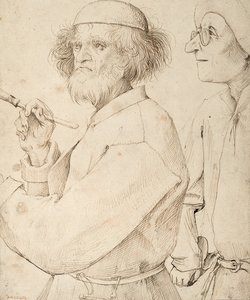
Пијетр Бругел Старији

Пијетр Бругел Старији

1525 - 1569, Није спецификовано

Quick facts about Пијетр Бругел Старији

  • Artistic Movement Or Style: Renaissance painting
  • Artists Who Influenced This Artist: ['Hieronymus Bosch']
  • Date Of Birth: c. 1525
  • Date Of Death: 1569
  • Full Name: Pieter Bruegel the Elder
  • Nationality: Flemish
  • Notable Artworks:
    • Landscape with the Flight into Egypt
    • The Triumph of Death
    • Peasant Wedding
    • Hunters in the Snow
    • The Tower of Babel
  • Place Of Birth: Breda, Netherlands

Biografija umetnika

Pieter Bruegel the Elder (c. 1525-1569): Renaissance Master of Landscapes & Peasant Life

Pieter Bruegel the Elder emerged during a period of profound change, a time when the artistic landscape of Europe was shifting from the High Renaissance ideals of Italy towards the burgeoning complexities of Northern European expression. Born sometime between 1525 and 1530, likely in Breda – though details surrounding his early life remain somewhat elusive – Bruegel’s formative years unfolded amidst religious upheaval and a flourishing merchant culture. He began his artistic journey around 1545 as an apprentice to Pieter Coecke van Aelst, a respected Antwerp painter known for both his artistry and his designs for tapestries. This apprenticeship provided Bruegel with a solid grounding in the technical skills of oil painting and drawing, but perhaps more importantly, it exposed him to the humanist currents that were beginning to permeate intellectual circles. Van Aelst’s workshop was not merely a place of artistic instruction; it was a crucible where traditional techniques met new ideas, shaping Bruegel's future vision.

Early Influences & Artistic Training

Bruegel’s initial artistic training took place under the tutelage of Pieter Coecke van Aelst, a figure who embodied the spirit of Antwerp’s artistic dynamism during this transitional era. Van Aelst’s workshop wasn’t simply focused on mastering painting; it fostered an environment where artists wrestled with emerging humanist philosophies and experimented with innovative compositional strategies. This exposure to humanist thought – particularly the emphasis on observation and rational analysis – would profoundly influence Bruegel's subsequent artistic endeavors. Furthermore, he honed his skills in drawing and etching, disciplines that complemented his painting practice and broadened his artistic repertoire. The Antwerp Guild of Saint Luke recognized Bruegel’s talent early on, granting him admittance as a free master in 1553 – a pivotal moment signifying his professional independence and establishing him as a respected artist within the city's thriving artistic community.

Travels & Transformation: Exploring Diverse Cultures

Following his apprenticeship, Bruegel embarked on extensive travels that would irrevocably shape his artistic worldview. Between 1551 and 1553, he ventured into France, Switzerland, and Italy – journeys undertaken not merely for pleasure but as expeditions of intellectual and sensory exploration. These explorations yielded invaluable insights into the artistic traditions of other European nations, particularly Italy, where he encountered the monumental works of Leonardo da Vinci and Michelangelo. However, Bruegel’s artistic temperament remained distinctly Northern European; he didn't simply emulate Italian styles but rather absorbed their influence while retaining his own unique sensibility. The Alps captivated him with their dramatic grandeur, informing the compositional structure and atmospheric perspective found in many of his later landscapes. He meticulously documented these vistas, capturing both their beauty and their inherent complexity—a characteristic that would define his artistic legacy.

A Revolutionary Vision: Landscapes Beyond Imitation

What distinguished Bruegel from his contemporaries was his audacious departure from prevailing artistic conventions. While Renaissance painters often idealized nature – striving to represent it in an aesthetically pleasing manner – Bruegel confronted it head-on, portraying it with unflinching realism and a keen awareness of its inherent contradictions. He rejected the notion that art should merely reflect beauty; instead, he sought to illuminate truth—often uncomfortable truths—about human existence and the natural world. His landscapes weren’t simply decorative backgrounds; they were active participants in the narrative, imbued with symbolic meaning and reflecting a deep understanding of nature's power and vulnerability. Consider Landscape with the Flight into Egypt: Bruegel doesn’t depict the biblical scene as a serene pilgrimage but rather presents it as a perilous journey through wintry terrain—a subtle commentary on the challenges faced by pilgrims throughout history.

Iconic Masterpieces & Enduring Influence

Bruegel's artistic output produced some of the most recognizable and influential images of the sixteenth century. Paintings like The Triumph of Death – a terrifying depiction of mortality populated by grotesque figures—and Peasant Wedding – a vibrant celebration of rural life brimming with detail and humor—remain enduring symbols of Northern Renaissance art. These works stand apart from many of their contemporaries due to Bruegel’s masterful use of chiaroscuro—the dramatic interplay of light and shadow—which lends depth, realism, and emotional resonance to his compositions. His scenes weren't necessarily didactic; they were honest observations, capturing both the joys and sorrows inherent in human experience. Furthermore, Bruegel’s influence extended far beyond painting, inspiring artists across disciplines – including printmakers and filmmakers – who sought to capture the spirit of his time. He cemented his place as one of the foremost figures in art history—a testament to his unwavering commitment to artistic innovation and his profound understanding of the human condition.

§ 5Comparanda

§ 6Questions

§ 7Cite this entry

AllPaintingsStore.com, “Пијетр Бругел Старији, Proverbs (1559)”, https://allpaintingsstore.com/sr/art/pieter-bruegel-the-elder-proverbs-D3W4W8-en/ArtistReproduction/ (accessed 3 октобар 2026).

§ 8The reproduction

Ručno rađena uljana reprodukcija

Ručno oslikano uljanim bojama na platnu u dimenzijama i okviru po vašem izboru, izrađeno po porudžbini od strane naših umetnika. ( Pređi na štampu Pređi na digitalnu sliku)

It is specified on the order sheet in the margin; the present state of that sheet reads as follows.

Proverbs

Tehnika reprodukcije

Dimenzije reprodukcije

-

Vrhunski maestri umetnosti

Više detalja, prefinjenosti i dodatnog vremena za izradu

-

Okvir za reprodukciju

-

-

Za umetnička dela ili reprodukcije čija je bilo koja strana veća od 105 cm (približno 41 inč), okvir će biti isporučen u obliku rastavljenog seta za sklapanje. Ovaj metod osigurava bezbednu dostavu i sprečava oštećenja tokom transporta.

Potrebna je profesionalna montaža – ovo nije proizvod namenjen samostalnoj izradi.
Set mora sastaviti i platno zategnuti iskusni profesionalni ramitelj, koristeći drveni lepak (nije uključen u set), hvataljku za zatezanje platna i stege kako bi se održao prav ugao okvira dok se lepak suši. Nepravilno sklapanje ili neravnomerno zategnuto platno mogu trajno oštetiti umetničko delo, što nije pokriveno našom garancijom.

  • Sve šipke od masivnog drveta su uključene, precizno isečene po veličini.

  • Montira se pomoću priloženih šrafova, uz dodatno korišćenje lepka za drvo za spojeve u uglovima, koji nije uključen u set i koji vaš čuvar okvira mora obezbediti.

  • Potreban je profesionalni alat koji nije uključen u set: klešta za zatezanje platna (zatezač) i stege za održavanje pravih uglova letvica tokom sušenja lepka.

Važno:
Za spojeve u uglovima neophodan je lepak za drvo, šipke se moraju pričvrstiti stezgama dok lepak potpuno ne osuši, a za zatezanje platna na sklopljenom ramu potrebne su hvataljke za zatezanje platna. Nijedan od ovih alata nije uključen u komplet. Pre naručivanja ove veličine, molimo Vas da unapred obezbedite iskusnog profesionalca za ramačenje.

Kratki opis natpisa

-

-

Zaštitni lak

Sjajni lak (pojačava intenzitet boja, štiti od svetlosti i vlage)

-

Personalizujte svoje umetničko delo

Primeri mogućnosti izmene: Zamena lica fotografijom kupca; Dodavanje ljubimca (npr. zamena mačke psom); Uključivanje skrivene poruke u pozadini; Promena pejzaža ili elemenata pozadine.

-

Hitna dostava

Svetska isporuka () za 3/4 nedelje umesto uobičajenih 5 nedelja. (31 октобар). Bez kompromisa po pitanju kvaliteta.

-

Brza dostava

Dostava širom sveta () u roku od 5 nedelja. (7 новембар).

Uključeno u cenu

Ukupna cena

дин 26887

Included with every order

  • Besplatna ekspresna dostava širom sveta
  • Visokokvalitetno laneno platno
  • Potpuno osiguranje transporta
  • Garancija povraćaja carine i uvoznih dažbina
  • Garancija vernosti boja
  • Politika povraćaja u roku od 100 dana (samo u slučaju nedostataka)
  • Garancija povrata 100% novca
  • Popust na više proizvoda
Order sheet