


 Podeli
 Podeli
 Detalji
 Vodič
Vodič

 Preuzmi sliku
 Slični predmeti
 Automatska prezentacija
 Statistika
Neptune


 Pročitaj više
Ručno rađena uljana reprodukcija
Ručno oslikano uljanim bojama na platnu u dimenzijama i okviru po vašem izboru, izrađeno po porudžbini od strane naših umetnika. ( Pređi na prodaju štampanih primeraka Pređi na prodaju digitalnih slika)




































Izaberite jednu od naših unapred definisanih veličina koje odgovaraju originalnim proporcijama umetničkog dela.

Unesite širinu i visinu koja vam je potrebna, kako bi se uklopili u vaš ram ili zid. Pošto je ovo ručno oslikano delo, umetnik može naslikati malo više prostora oko slike ili malo skratiti ivice za dimenzije drugačijeg oblika — izbor je na vama. Pre početka rada, poslaćemo vam digitalni prikaz radi potvrde. Slika prikazana na ovoj stranici ne predstavlja konačan rezultat — samo digitalni prikaz pokazuje stvarnu sliku.
Nakon narudžbine, tim AllPaintingsStore.com će klijentu putem e-pošte poslati uputstva i dostaviti prikaz predloženog rešenja
Svetska isporuka () za 3/4 nedelje umesto uobičajenih 5 nedelja. (25 октобар). Bez kompromisa po pitanju kvaliteta.

Besplatna ekspresna dostava širom sveta

Visokokvalitetno laneno platno

Sveobuhvatno osiguranje transporta

Garancija povraćaja carine i uvoznih dažbina

Garancija vernosti boja i autentičnosti pri reprodukciji

Politika povraćaja u roku od 100 dana (samo u slučaju nedostataka)

Garancija povrata 100% novca

Popust pri većoj količini
 Opcija sa staklom dostupna je samo za dimenzije manje od 110 cm

Neptune
Tehnika izrade reprodukcije
Veličina reprodukcije
-


Ukupna cena
дин 26601
Introduction
Pietro Bracci was an Italian sculptor working in the Late Baroque manner. He is best known for carving the marble sculpture of Oceanus at the center of Rome's Trevi Fountain, based on a plaster modello by Giovanni Battista Maini. In this article, we will explore the artist, the title of the work, the medium used, and its location.Artist: Pietro Bracci
Pietro Bracci was born in Rome and became a student of Giuseppe Bartolomeo Chiari and Camillo Rusconi. His most familiar works are the colossal Oceanus or Neptune of the Trevi Fountain, Rome, after a modello by Giovanni Battista Maini, and four prominent tomb monuments in Rome. He sculpted the figures for the tomb of Benedict XIII (1734) in Santa Maria sopra Minerva, Rome, which was designed by the architect Carlo Marchionni, and for the tomb of Benedict XIV (1763–1770) in the Basilica of Saint Peter, completed with the help of his pupil Gaspare Sibilia.Title of the Work: Oceanus or Neptune
The title of the work is Oceanus or Neptune, which is located at the center of Rome's Trevi Fountain. The sculpture was created after a plaster modello by Giovanni Battista Maini, who died before he could execute the marble. Bracci executed the Oceanus and the tritons when he took over work on the fountain.Medium Used: Marble
The medium used for this masterpiece is marble, which was a popular choice for sculptors during the Baroque period due to its durability and ability to capture fine details. The use of marble in this work highlights Bracci's exceptional skills as a sculptor.Location: Trevi Fountain, Rome
The location of this magnificent sculpture is at the center of Rome's Trevi Fountain, which is one of the most famous fountains in the world. The fountain was built in front of Luigi Vanvitelli’s Palazzo Poli and attracts millions of visitors each year.Conclusion
Pietro Bracci's Oceanus or Neptune is a masterpiece that showcases the artist's exceptional skills as a sculptor. The use of marble, the medium used, adds to the beauty and durability of this work. Visitors to Rome can admire this magnificent sculpture at the Trevi Fountain, which is one of the city's most famous landmarks.Related Links
Pitanja i odgovori
Da li je dostupno preuzimanje "Neptune" u visokoj rezoluciji?
Digitalnu sliku dela „Neptune”, Pietro Bracci možete kupiti na njegovoj stranici za Digitalna slika: preuzimanje digitalne slike visoke rezolucije.
Koju emociju prenosi delo Baroque pokreta "Neptune"?
Calm emocija dela "Neptune" prati njegov Baroque stil.
Koji nacionalni poreklom stoji iza Baroque dela "Neptune"?
"Neptune" povezuje pokret Baroque sa Italy preko rodnog mesta svog tvorca.
Srodna umetnička dela


Biografija umetnika
The Shadow of Europe: Theodore de Bry and the Genesis of American Art
Theodore de Bry’s name might not immediately conjure images of a revolutionary artistic movement, yet his contribution to the nascent visual culture of Colonial America was profoundly significant. Born in 1642 in Schaffhausen, Switzerland, de Bry wasn't an artist in the traditional sense – he was a prolific engraver and publisher, a master of disseminating knowledge through meticulously crafted prints. His work, particularly his series of engravings depicting the Americas based on accounts from early explorers and colonists, acted as a crucial bridge between Europe and its newly claimed territories, shaping perceptions and establishing a visual narrative that often reinforced European dominance. De Bry’s influence extends far beyond simple documentation; he essentially invented “America” for a European audience, crafting an idealized and often biased representation of the continent's landscapes, peoples, and customs.Early Life and Rise to Prominence
De Bry’s career began in Basel, Switzerland, where he apprenticed under the renowned printmaker Hans Rottenhammer. This early training instilled in him a deep understanding of engraving techniques and a commitment to accuracy – qualities that would later define his work on the Americas. He quickly gained recognition for his detailed depictions of historical events, portraits, and allegorical scenes. However, it was his commission by Jean de la Fontaine, Governor-General of New France (Canada), in 1678 to produce a series of engravings documenting the French expedition led by Samuel de Champlain that catapulted him to international fame. This monumental project, *Les voyages de Champlain*, became the cornerstone of his American output and established his reputation as the foremost visual chronicler of colonial exploration.The Champlain Series: A Window into Colonial America
De Bry’s *Voyages de Champlain* wasn't merely a record of events; it was a carefully constructed narrative designed to legitimize French claims to North America. The engravings, executed with remarkable precision and attention to detail, presented a sanitized version of colonial life, often omitting the brutal realities of conflict with Indigenous populations and the devastating impact of European diseases. The depictions of Native Americans were particularly noteworthy – frequently portraying them as passive observers or even caricatures, reinforcing the European perception of their inferiority. Landscapes were rendered in a manner that emphasized the vastness and wilderness of the continent, subtly suggesting its potential for settlement and resource extraction. The series also included detailed illustrations of flora and fauna, showcasing the natural wealth of the Americas – resources eagerly sought by European colonists. Crucially, de Bry’s engravings served as a powerful tool for propaganda, shaping public opinion in Europe and justifying colonial expansion.Influences and Artistic Style
De Bry's style was deeply rooted in the traditions of Northern Mannerism, characterized by its emphasis on detail, clarity, and a somewhat stylized approach to representation. He drew heavily upon classical motifs and Renaissance artistic conventions, adapting them to depict scenes from colonial America. His engravings were not simply copies of earlier works; he synthesized various influences – including his training under Rottenhammer, contemporary Dutch prints, and the accounts he received from Champlain’s expedition – to create a distinctive visual language. The use of cross-hatching and shading created a sense of depth and realism, while carefully rendered costumes and accessories provided valuable insights into colonial life. Furthermore, de Bry's work demonstrates an early engagement with perspective, though it wasn't always perfectly executed, reflecting the challenges of translating three-dimensional scenes onto a two-dimensional surface.Legacy and Historical Significance
Theodore de Bry’s engravings played a pivotal role in shaping the visual representation of America during its formative years. While undeniably biased and often romanticized, they provided Europeans with their first sustained and detailed images of the continent – images that profoundly influenced perceptions and fueled colonial ambitions. His work stands as a testament to the power of printmaking to shape historical narratives and solidify cultural identities. Today, de Bry’s engravings are studied not only for their artistic merit but also for their historical significance, offering valuable insights into the complex dynamics between Europe and its American colonies. They serve as a crucial reminder that visual representations are rarely objective; they are always shaped by the perspectives and agendas of those who create them. The legacy of de Bry’s work continues to resonate today, prompting us to critically examine how images have been used to construct and perpetuate historical narratives.
Pietro Bracci
1700 - 1773 , Italy
Brzi pregled
- Full Name: Jeong Seon (Gyeomjae)
- Nationality: Korean
- Date Of Birth: 1700
- Date Of Death: 1773
- Place Of Birth: Rome, Italy
- Notable Artworks: ['Landscape Paintings']
- Artistic Movement Or Style: True-View Painting (Joseon Period)
Srodni članci
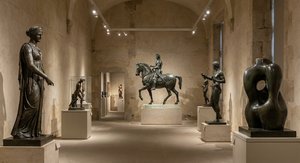
Bronze Sculptures That Defined Art History | AllPaintingsStore
Journey through art history with our Top 10 bronze sculptures! Explore masterpieces by Rodin, Michelangelo & more. Discover stories behind iconic statues and find museum-quality reproductions for your home decor at AllPaintingsStore.com.

Giclée Prints: Archival Quality & Aesthetic Nuances for the Discerning Collector
Explore the world of giclée prints with AllPaintingsStore. Learn about archival quality, aesthetic nuances & investment potential. Expert guidance for discerning art collectors seeking museum-quality reproductions and lasting value.

Bronze Age to Modern Masters: 10 Sculptures That Redefined Art | AllPaintingsStore
Journey through art history with 10 legendary bronze sculptures – from Michelangelo's David to Rodin’s Thinker. Explore the stories, techniques & timeless beauty of these masterpieces. Find museum-quality reproductions & elevate your home decor on AllPaintingsStore.com.

The Enduring Form: Exploring Themes & Techniques in Sculpture Across Historical Periods
Explore the rich history of sculpture from ancient masterpieces to contemporary innovations. Discover key techniques, influential artists & investment potential for discerning art collectors.

The Enduring Form: Sculpture Across History, Technique & Emotional Resonance
Explore the rich history of sculpture with AllPaintingsStore. Discover key techniques, influential artists & investment potential for discerning collectors. Expert insights into valuing and collecting timeless masterpieces.

