


 Pregledaj u prostoru
 Pošalji
 Podeli
 Detalji o delu
 Vodič
Vodič

 Preuzmi
 Slični predmeti
 Rendgenski snimak
 Automatska prezentacija
 Statistika
Collage

 Pročitaj više
Umetničko delo prikazano na ovoj stranici zaštićeno je autorskim pravima, što znači da zakonski nismo u mogućnosti da kreiramo niti prodajemo identičnu reprodukciju. Ova zaštita se sprovodi u skladu sa međunarodnim sporazumima kao što su Bernska konvencija i nacionalnim zakonima, uključujući i one koji su definisani u Američki zakon o autorskom pravu – Naslov 17.
Ovaj metod je u potpunosti usklađen sa regulativama o autorskim pravima jer ne podrazumeva kopiranje ili dupliranje zaštićenih umetničkih dela. Umesto toga, reč je o kreativnoj reinterpretaciji – novom slikarskom delu koje je inspirisano originalom, ali nije identično njemu.
Giclee štampa / Umetnički otisak
Giclée štampa ili print na platnu muzejskog kvaliteta uz brzu izradu i raznovrsne opcije završne obrade. ( Kupite ručno oslikano delo Pređi na digitalnu sliku)




P118B дин10

P118H дин10

P118W дин10

P438Z дин10

P508JH дин12

P508YH дин12

P805H дин10

P805Z дин10

P919BZ дин10

P919G дин10

P919XJ дин10

P959ZH дин10

P968JZ дин12

W106C дин8

W218G дин10

W218JH дин8

W218Y дин10

W307PJ дин10

W316G дин10

W316PJ дин8

W316Y дин10

W398PJ дин8

W4111J дин10

W500HY дин15

W500JH дин15

W692G дин12

W849H дин8

W940BG дин15

W953PJ дин8




Izaberite jednu od naših unapred definisanih veličina koje odgovaraju originalnim proporcijama umetničkog dela.

Unesite željenu širinu i visinu kako bi se štampa uklopila u vaš ram ili zid. Štampu je moguće samo iseći, ali nikada povećati iznad dimenzija originalne slike, stoga format sa drugačijim proporcijama uzrokuje gubitak dela slike. Pre početka štampe, poslaćemo vam digitalni prikaz radi potvrde. Slika prikazana na ovoj stranici ne predstavlja stvarni isrez — to pokazuje samo digitalni prikaz.
Dostava širom sveta () za 2 nedelje umesto uobičajenih 4/5 nedelja. (28 октобар)

Besplatna ekspresna dostava širom sveta

Visokokvalitetno laneno platno

Potpuno osiguranje transporta

Garancija povraćaja carine i uvoznih dažbina

Garancija vernosti boja

Politika povraćaja u roku od 100 dana (samo u slučaju nedostataka)

Garancija povrata 100% novca

Popust na više proizvoda
 Opcija sa staklom dostupna je samo za dimenzije manje od 110 cm

Collage
Giclee štampa / Umetnički otisak
Dimenzije reprodukcije
-


Ukupna cena
дин 6613
A Surreal Still Life: Exploring Magritte’s Collage
René Magritte's "Collage" stands as a deceptively simple yet profoundly unsettling exploration of perception and reality—a hallmark characteristic of Surrealist art. Painted around 1962, this artwork embodies the core tenets of Surrealism, championed by André Breton and his circle, who sought to liberate the subconscious mind from rational constraints. The painting presents a stark tableau: three objects arranged against a muted backdrop – a yellow hand resting on a surface, an orange ball hovering above it, and a crimson curtain draped in the background—figures that appear commonplace yet simultaneously imbued with an inexplicable tension.Style and Technique: Precision Within Illusion
Magritte’s meticulous technique distinguishes him from many of his contemporaries who embraced spontaneous expression. Unlike Dali's melting clocks or Ernst’s biomorphic abstractions, Magritte employed a precise realism to depict these seemingly banal items. However, this careful rendering serves not to reinforce the observable world but rather to heighten its strangeness. The artist utilized oil paint on canvas with meticulous attention to detail, achieving a velvety surface texture that contrasts subtly with the flatness of the composition. This deliberate control over materiality underscores Magritte’s intention: to present familiar objects in an unfamiliar context, forcing viewers to question their assumptions about how they perceive and interpret visual information.Historical Context: Breton's Manifesto and Beyond
“Collage” emerged during a period marked by intense intellectual ferment—the aftermath of World War II and the burgeoning influence of psychoanalysis spearheaded by Sigmund Freud. Surrealism arose as a reaction against the anxieties of postwar Europe, fueled by disillusionment with traditional artistic conventions and philosophical ideologies. Breton’s 1929 Manifesto for Surrealist Painting declared that art should be “psychic automatism in its purest form,” bypassing conscious thought and tapping into the realm of dreams and irrational impulses. Magritte embraced this ethos, mirroring Freud's exploration of unconscious desires and anxieties—a preoccupation with hidden meanings and destabilizing accepted notions of reality.Symbolism: The Hand, The Ball, And The Curtain – Layers of Meaning
The objects within “Collage” are laden with symbolic significance. The yellow hand represents vulnerability and exposure; its upward palm suggests a yearning for connection or perhaps an attempt to grasp something elusive. Simultaneously, it embodies the artist’s own preoccupation with representation—the hand itself is depicted as a solid form despite being rendered in paint, highlighting Magritte's awareness of the illusionistic nature of art. The orange ball symbolizes optimism and aspiration, hovering above the hand like a beacon of hope amidst uncertainty. However, its position also disrupts the expected hierarchy of visual elements, mirroring the Surrealist desire to subvert conventional order. Finally, the crimson curtain serves as a barrier—a symbol of concealment and repression—yet it’s equally suggestive of protection and concealment. Its color evokes associations with blood and passion, hinting at repressed emotions and unresolved conflicts.Emotional Impact: A Quiet Disquiet
Despite its understated aesthetic, “Collage” possesses a palpable emotional resonance. The painting doesn't provoke immediate shock or melodrama; rather, it instills a subtle sense of unease—a feeling that something is amiss beneath the surface tranquility. Magritte’s masterful manipulation of visual cues compels viewers to confront their own perceptions and assumptions about reality. Like many Surrealist artworks, “Collage” invites contemplation and encourages us to consider alternative interpretations, prompting us to question what we see and what lies beyond our conscious awareness. It remains a testament to Magritte's ability to distill profound philosophical ideas into deceptively simple visual forms—a captivating piece that continues to fascinate audiences today.Pitanja i odgovori
Da li je "Collage" tipično za ono što je Рене Магрит obično stvarao?
"Collage" prikazuje dreamscape, symbolism, surrealism, object representation, illusion, mystery, color palette, dok su dokumentovane teme umetnika Рене Магрит zapravo influenced by dada, exploring reality; philosophical reflection, symbolic imagery; iconic surrealist piece. Poređenje ova dva elementa pokazuje kako se ovo delo povezuje sa uobičajenim motivima ovog umetnika.
Kojoj tonaciji teži "Collage"?
Dominantna nijansa dela „Collage”, autor Рене Магрит je Amber to Saffron. Ova nijansa predstavlja osnovni ton palete.
Koji emocionalni ton prati stil Surrealist Movement u delu "Collage"?
U okviru pokreta Surrealist Movement, delo "Collage" je prikazano sa Mysterious tonom.
Srodna umetnička dela


Biografija umetnika
Early Life and the Seeds of Surrealism
René Magritte, geboren René François Ghislain Magritte am 21. November 1898 in Lessines, Belgien, trat in eine Welt ein, die sein enigmatisches künstlerisches Sehen tiefgreifend prägen würde. Sein frühes Leben war geprägt von einem erschütternden Ereignis – dem Selbstmord seiner Mutter als er nur dreizehn Jahre alt war. Das Bild ihrer Leiche beim Wiederaufbau durch den Sambre Fluss mit ihrem Kleid, das ihr Gesicht verdeckte, wurde ein obsessives Motiv, das sich subtil in seinen späteren Arbeiten widerspiegelte und eine kontinuierliche Erforschung verborgener Realitäten zum Ausdruck brachte. Dieses frühe Trauma instillte ihm eine Faszination für Mysterium, Verlust und die erschreckende Macht dessen, was nicht gesehen wird. Obwohl Einzelheiten seines Kindeslebens nur schwer zu finden sind, ist klar, dass diese formative Erfahrung seinen lebenslangen Zweifel an Wahrnehmung und Darstellung begründete. Er begann mit Zeichnungen im Alter von zehn Jahren und offenbarte eine natürliche Neigung zum visuellen Ausdruck, erkundete aber zunächst Impressionismus bevor er einen Weg einschlug, der ihn dazu führte, einer der bedeutendsten Figuren in der Surrealistischen Kunst zu werden.
Artistic Development and Influences
Magrittes künstlerische Reise war nicht unmittelbar oder einfachweg erfolgreich. Er studierte an der Académie Royale des Beaux-Arts in Brüssel und fand ihre traditionellen Methoden erstickend. Sein frühes Werk experimentierte mit Futurismus und Kubismus und ließ sich Elemente dieser Avantgarde Bewegungen aufnehmen, lehnte aber deren ausschließlich formale Interessen ab. Es gelang ihm nicht bis zum Begegnen mit Giorgio de Chiricos Gemälde *Die Melodie der Liebe* im Jahr 1922, dass Magritte eine Resonanz entdeckte, die seinen künstlerischen Kurs für immer veränderte. De Chiricos traumhafte Landschaften und verstörende Kombinationen öffneten ihm einen neuen Blick – eine Welt, in der das Bekannte fremd erscheinen konnte und das Gewöhnliche tiefgreifende Mysterium aufnehmen konnte. Dieses Erlebnis entfachte sein Engagement für Surrealismus, obwohl er oft eine einzigartige Distanz zu seinen ausgeprägtesten psychologischen oder automatischen Ansätzen bewahrte. Er bevorzugte eine präzise Technik, um reale Szenarien darzustellen und ließ sich nicht von anderen Mitgliedern der Bewegung beeinflussen.
The Heart of Surrealism: Challenging Reality
Bis 1926 hatte Magritte sich vollständig dem Wesen des Surrealismus verschrieben und schuf *Le Jockey Perdu (Der Verlorene Jockey)*, das allgemein als sein erstes wirklich surrealistisches Werk angesehen wird. Allerdings war seine Art von Surrealismus einzigartig. Er interessierte sich nicht für die Erkundung des Unterbewusstseins durch frei assoziative oder traumhafte Bilder wie einige seiner Zeitgenossen. Stattdessen suchte Magritte nach einer neuen Möglichkeit zu sehen – eine Welt, in der das Bekannte fremd erscheinen konnte und das Gewöhnliche tiefgreifende Mysterium aufnehmen konnte. Er war nicht daran interessiert, die Oberfläche von Objekten zu erforschen oder eine bestimmte Perspektive einzunehmen wie andere Künstler seiner Zeit. Magritte konzentrierte sich darauf, die Wahrnehmung von Realität herauszufordern, indem er alltägliche Objekte in unerwarteten Kontexten präsentierte und damit dazu aufforderte, eigene Annahmen über die Welt um uns herum zu hinterfragen.
Iconic Works: Paradoxes of Perception
Magritte’s oeuvre is marked by a distinctive preoccupation with paradoxes – visual illusions that disrupt our understanding of reality and invite contemplation. *Les Amants (Die Liebenden)*, geschaffen zwischen 1927 und 1928, zeigt zwei Figuren hinter einem Vorhang, deren Gesichter verdeckt sind und somit eine zentrale Frage aufwirft: Wie können wir wirklich sehen? Diese berühmte Darstellung wird oft als ein Echo des frühen Traumas von Magrittes Mutter interpretiert – einer Figur, die sowohl eine Faszination für Geheimnis und Intimität als auch eine Reflexion über Verlust und Verbergenheit zum Ausdruck bringt. *The Treachery of Images (Dieses Bild ist kein Rohr)* (1929) ist ein Meisterwerk der Surrealistischen Kunst und stellt einen klassischen Fall von Dekonstruktion dar: Ein Bild wird nicht das Ding selbst, sondern lediglich eine Darstellung davon. Magritte nutzt eine hohe technische Präzision und eine sorgfältige Auswahl von Materialien, um diese paradoxe Aussage zu verstärken und uns daran zu erinnern, dass eine Repräsentation niemals die Sache ist.
Legacy and Influence
Despite initial difficulties in gaining recognition, Magritte’s work gradually gained prominence, insbesondere in den Vereinigten Staaten mit Ausstellungen im Jahr 1936 und später retrospektiven Veranstaltungen beim Museum of Modern Art (1965) und dem Metropolitan Museum of Art (1992). Er blieb politisch engagiert und setzte sich für künstlerische Autonomie ein. Er entwickelte weiterhin seinen unverwechselbaren Stil und erkundete Themen wie Wiederholung, Täuschung und die Macht der Sprache in Gemälden, die sowohl intellektuell anregend als auch visuell beeindruckend sind. Magritte starb am 15. August 1967 und hinterließ ein Werkkörper, das weiterhin Publikum weltweit fasziniert und herausfordert. Sein Einfluss reicht weit über die Malerei hinaus und umfasst Pop Art, Minimalismus und Konzeptkunst.
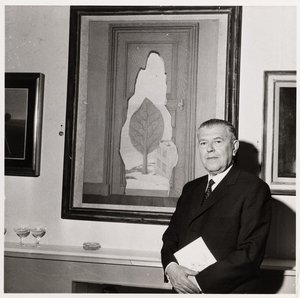
Рене Магрит
1898 - 1967 , Belgija
Osnovne informacije
- Artistic Movement Or Style: Surrealizam
- Artists Who Influenced This Artist: ['Žorž De Čiriko']
- Date Of Birth: 21 novembra 1898
- Date Of Death: 15 augusta 1967
- Full Name: René François Ghislain Magritte
- Nationality: Belgijac
- Notable Artworks:
- Les Amants
- Trešcarenj ulaga
- Vreme zamrzeno
- Čovečanstvo
- Place Of Birth: Lesennes, Belgiju
Povezani članci

Abstraktni Ekspresionizam: 10 Remek Dela Koja Su Definisala Pokret
Otkrijte 10 remek dela koja su definisala apstraktni ekspresionizam! Istražite dela Pola Krausa, Džejson Poloka i drugih. Saznajte priče iza umetnosti i inspirisanje za dekoraciju doma. Eksplorirajte kolekciju na AllPaintingsStore.com!

Surrealizam u Umima Majstora: Top 10 Delo Koja Su Definisala Pokret
Uronite u svet surrealizma! Otkrijte Top 10 remek-dela Dalija, Magrita i drugih majstora. Analiza umetnosti, inspiracija za dekoraciju doma i vrhunske reprodukcije na AllPaintingsStore.com. Istražite podsvest i snovi kroz umetnost!

The Soul of Color: A Journey into the Emotional Resonance of Lyrical Abstraction
Embark on a cultural journey through Lyrical Abstraction. Explore how masters like Kandinsky used color and motion to translate emotion into visual poetry. Discover the profound beauty of abstract expressionism and learn to curate emotional resonance in your own art collection.

Top 10 dela geometrijske apstrakcije koje morate videti | AllPaintingsStore.com
Istražite 10 remek-dela geometrijske apstrakcije – Mondrian, Malevič i Kandinski. Otkrijte priče iza ovih ikoničnih slika i pronađite inspiraciju za dekoraciju enterijera sa AllPaintingsStore.com! Reprodukcije vrhunskog kvaliteta.

The Treachery of Images: Decoding René Magritte’s Surrealist Philosophy and the Paradox of Representation
Explore the profound mystery of René Magritte’s 'The Treachery of Images.' Dive into an expert analysis of his Surrealist philosophy, the paradox of representation, and how he challenged reality through the interplay of language and visual perception.


