


 Pregledaj u prostoru
 Podeli
 Podeli
 Detalji
 Vodič
Vodič

 Preuzmi sliku
 Slični predmeti
 Rendgenski snimak
 Automatska prezentacija
 Statistika
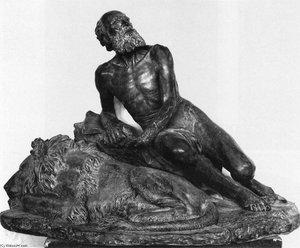
David


 Pročitaj više
Umetničko delo prikazano na ovoj stranici zaštićeno je autorskim pravima, što znači da zakonski nismo u mogućnosti da kreiramo niti prodajemo identičnu reprodukciju. Ova zaštita se sprovodi u skladu sa međunarodnim sporazumima kao što su Bernska konvencija i nacionalnim zakonima, uključujući i one koji su definisani u Američki zakon o autorskom pravu – Naslov 17.
Kao poštovana i legalna alternativa, nudimo prilagođene, ručno oslikane umetničke radove inspirisane originalom. Naši stručni i profesionalni umetnici pažljivo proučavaju stil, ambijent i umetničku suštinu originala kako bi kreirali novo, unikatno delo koje budi istu emociju – ostajući pritom potpuno autentično stvaranje.
Ovaj metod je u potpunosti usklađen sa regulativama o autorskim pravima jer ne podrazumeva kopiranje ili dupliranje zaštićenih umetničkih dela. Umesto toga, reč je o kreativnoj reinterpretaciji – novom slikarskom delu koje je inspirisano originalom, ali nije identično njemu.
Ručno rađena uljana reprodukcija
Ručno oslikano uljanim bojama na platnu u dimenzijama i okviru po vašem izboru, izrađeno po porudžbini od strane naših umetnika. ( Pređi na prodaju štampanih primeraka Pređi na prodaju digitalnih slika)




































Izaberite jednu od naših unapred definisanih veličina koje odgovaraju originalnim proporcijama umetničkog dela.

Unesite širinu i visinu koja vam je potrebna, kako bi se uklopili u vaš ram ili zid. Pošto je ovo ručno oslikano delo, umetnik može naslikati malo više prostora oko slike ili malo skratiti ivice za dimenzije drugačijeg oblika — izbor je na vama. Pre početka rada, poslaćemo vam digitalni prikaz radi potvrde. Slika prikazana na ovoj stranici ne predstavlja konačan rezultat — samo digitalni prikaz pokazuje stvarnu sliku.
Nakon narudžbine, tim AllPaintingsStore.com će klijentu putem e-pošte poslati uputstva i dostaviti prikaz predloženog rešenja
Svetska isporuka () za 3/4 nedelje umesto uobičajenih 5 nedelja. (25 октобар). Bez kompromisa po pitanju kvaliteta.

Besplatna ekspresna dostava širom sveta

Visokokvalitetno laneno platno

Sveobuhvatno osiguranje transporta

Garancija povraćaja carine i uvoznih dažbina

Garancija vernosti boja i autentičnosti pri reprodukciji

Politika povraćaja u roku od 100 dana (samo u slučaju nedostataka)

Garancija povrata 100% novca

Popust pri većoj količini
 Opcija sa staklom dostupna je samo za dimenzije manje od 110 cm

David
Tehnika izrade reprodukcije
Veličina reprodukcije
-


Ukupna cena
дин 26599
Srodna umetnička dela



![Buckle [center-right]\ncompact Cases [upper]\ncompact Cases [lower]\ncompact Cases [center-left] — Jules John Dunand, Art Deco](/media/artworks/images-thumb/82/23/8223c28adcb3bc55cd4d8a7b0b618026.jpg)


Biografija umetnika
A Life Forged in Clay and Myth: The Singular Vision of Stanisław Szukalski
Stanisław Szukalski, a name resonating with increasing force within the annals of 20th-century art, was an artist whose life mirrored the tumultuous currents of his time. Born in 1893 in Warta, Poland, young Stanisław displayed an astonishing aptitude for sculpting from a remarkably early age—an anecdote about a perfectly carved pencil figure captivating local attention speaks volumes about the innate talent that would define his path. This gift propelled him towards formal training, yet Szukalski’s artistic journey was destined to be anything but conventional. In 1907, he immigrated with his mother and stepfather to Chicago, a city poised to become both a crucible and a catalyst for his unique aesthetic development. While briefly enrolled at the School of the Art Institute of Chicago, Szukalski largely remained self-taught, forging an intensely personal style that defied easy categorization. He wasn’t merely learning technique; he was constructing a worldview, one deeply rooted in ancient civilizations and fueled by a restless imagination.Bent Classicism and the Echoes of Antiquity
Szukalski's artistic fingerprint is immediately recognizable: a style dubbed “Bent Classicism.” This wasn’t simply a revival of classical forms; it was a deliberate distortion, a dynamic reimagining that imbued traditional figures with an unsettling energy. His sculptures and paintings alike feature powerfully muscled bodies contorted in dramatic poses, often set against fragmented architectural backdrops or swirling, chaotic landscapes. The influences informing this distinctive vision were remarkably diverse. He drew inspiration from the monumental grandeur of Egyptian art, the intricate symbolism of Slavic folklore, and the raw power of Aztec sculpture. These ancient sources weren’t merely stylistic touchstones; they fed into a broader fascination with origins, with the search for a primal source of human culture. He absorbed elements of Art Nouveau's flowing lines and early 20th-century European movements like Cubism, Expressionism, and Futurism, yet synthesized them into something wholly his own. He frequently approached painting *through* sculpture, imbuing his two-dimensional works with a palpable sense of volume and physicality—a testament to his foundational training as a sculptor.The Chicago Renaissance and the Seeds of Zermatism
During the 1920s and 30s, Szukalski became a central figure in the vibrant artistic community known as the Chicago Renaissance. He was lauded by his peers—artists like Ruth Van Sickle Ford and Edgar Miller recognized the originality and power of his work—and even hailed as Poland’s “greatest living artist.” This period saw significant recognition for Szukalski, with solo exhibitions at the Art Institute of Chicago and widespread critical acclaim. However, it was also during this time that he began to develop *Zermatism*, a complex and idiosyncratic theory that would come to dominate his later work. Zermatism posited that all human culture originated from post-deluge Easter Island, and that humanity was locked in an eternal struggle against the “Sons of Yeti” (Yetinsyny), monstrous offspring of Yetis and humans. While undeniably pseudoscientific, this theory wasn’t merely a fantastical construct; it provided Szukalski with a framework for interpreting history, mythology, and the human condition. It became the lens through which he viewed the world, shaping his artistic themes and iconography in profound ways.Obscurity, Rediscovery, and Lasting Legacy
Despite the initial acclaim, Szukalski’s career experienced periods of relative obscurity. Following a return to Poland in the 1930s—a journey tragically interrupted by the outbreak of World War II and the subsequent loss of much of his early work—he eventually settled in California, where he lived a largely reclusive life. He continued to create art prolifically, driven by his unwavering belief in Zermatism, but struggled for recognition. It wasn’t until recent years that there has been a significant resurgence of interest in his work, fueled in part by the 2018 documentary *Struggle: The Life and Lost Art of Szukalski*. This renewed attention has brought his unique vision to a wider audience, revealing an artist who was far ahead of his time. Szukalski’s influence can now be seen in contemporary artists exploring themes of mythology, folklore, and alternative histories. His art continues to challenge viewers, prompting us to question our assumptions about cultural origins and the very nature of human existence. He remains a compelling figure—a visionary whose work transcends categorization, leaving an indelible mark on the landscape of 20th-century art. His legacy is not merely one of artistic innovation, but of unwavering conviction in the power of imagination.
Stanisław Szukalski
1893 - 1987 , Poland
Brzi pregled
- Artistic Movement Or Style: Bent Classicism
- Artists Or Movements Influenced By This Artist: ['Contemporary artists']
- Artists Who Influenced This Artist:
- Egyptian art
- Slavic cultures
- Aztec civilizations
- Art Nouveau
- Date Of Birth: 1893
- Date Of Death: 1987
- Full Name: Stanisław Szukalski
- Nationality: Polish-American
- Notable Artworks:
- Defense
- Longing
- Place Of Birth: Warta, Poland

