


 Pregledaj u prostoru
 Podeli
 Podeli
 Detalji
 Vodič
Vodič

 Preuzmi sliku
 Slični predmeti
 Rendgenski snimak
 Automatska prezentacija
 Statistika
The Tempest


 Pročitaj više
Giclee štampa / Umetnički otisak
Giclée štampa ili print na platnu muzejskog kvaliteta uz brzu izradu i raznovrsne opcije završne obrade. ( Naručite ručno oslikano reprodukciju Pređi na prodaju digitalnih slika)




P118B дин10

P118H дин10

P118W дин10

P438Z дин10

P508JH дин12

P508YH дин12

P805H дин10

P805Z дин10

P919BZ дин10

P919G дин10

P919XJ дин10

P959ZH дин10

P968JZ дин12

W106C дин8

W218G дин10

W218JH дин8

W218Y дин10

W307PJ дин10

W316G дин10

W316PJ дин8

W316Y дин10

W398PJ дин8

W4111J дин10

W500HY дин15

W500JH дин15

W692G дин12

W849H дин8

W940BG дин15

W953PJ дин8




Izaberite jednu od naših unapred definisanih veličina koje odgovaraju originalnim proporcijama umetničkog dela.

Unesite širinu i visinu koja vam je potrebna, kako bi se uklopili u vaš ram ili na vaš zid. Štampa se može samo iseći, nikada ne može biti veća od originalne slike, stoga format sa drugačijim proporcijama gubi deo slike. Poslaćemo vam digitalni prikaz radi potvrde pre nego što započnemo štampu. Slika prikazana na ovoj stranici ne pokazuje stvarni rez — to pokazuje samo digitalni prikaz.
Dostava širom sveta () za 2 nedelje umesto uobičajenih 4/5 nedelja. (24 октобар)

Besplatna ekspresna dostava širom sveta

Visokokvalitetno laneno platno

Sveobuhvatno osiguranje transporta

Garancija povraćaja carine i uvoznih dažbina

Garancija vernosti boja i autentičnosti pri reprodukciji

Politika povraćaja u roku od 100 dana (samo u slučaju nedostataka)

Garancija povrata 100% novca

Popust pri većoj količini
 Opcija sa staklom dostupna je samo za dimenzije manje od 110 cm

The Tempest
Giclee štampa / Umetnički otisak
Veličina reprodukcije
-


Ukupna cena
дин 6611
The Tempest by Thomas Cole: A Vision of American Romanticism
Thomas Cole’s “The Tempest,” painted in 1825, isn't merely a landscape; it’s a profound meditation on the relationship between humanity and nature, a cornerstone of the Hudson River School movement, and a hauntingly beautiful embodiment of early American Romanticism. More than two centuries after its creation, this oil-on-panel masterpiece continues to resonate with viewers, inviting contemplation on themes of power, vulnerability, and the sublime—the awe-inspiring grandeur that simultaneously terrifies and elevates the human spirit.
The painting depicts a dramatic, almost apocalyptic scene set within the Catskill Mountains. A brooding sky, choked with swirling clouds and illuminated by flashes of lightning, dominates the composition. Below, a small clearing reveals two figures—a man and a woman—standing on a rocky outcrop, gazing out at an unseen horizon. The landscape itself is rendered with meticulous detail: ancient trees twisted by wind and weather, a turbulent river rushing through a narrow gorge, and distant peaks shrouded in mist. Cole’s masterful use of chiaroscuro – the dramatic contrast between light and dark – intensifies the scene's emotional impact, creating a palpable sense of tension and foreboding.
A Synthesis of European Tradition and American Identity
Cole, born in Bolton le Moors, England, in 1801, brought with him a deep appreciation for European artistic traditions, particularly those of the Romantic movement. However, he quickly developed a distinctly American sensibility, rejecting the prevalent historical and mythological subjects favored by his European counterparts. Instead, Cole turned his gaze to the untamed wilderness of his adopted homeland, seeking to capture its raw beauty and spiritual significance. “The Tempest” exemplifies this shift—it’s not a depiction of a biblical scene or a classical allegory, but rather an intensely personal response to the grandeur of the American landscape.
The painting's composition is deliberately ambiguous, inviting multiple interpretations. The figures in the foreground are dwarfed by the immensity of nature, suggesting humanity’s vulnerability and insignificance in the face of the sublime. Yet, their gaze—directed towards something beyond the viewer’s sight—hints at a deeper connection to the natural world, a yearning for transcendence. Cole skillfully employs symbolism throughout the work: the storm represents chaos and uncertainty, while the distant peaks symbolize aspiration and hope. The horse and birds scattered across the scene further emphasize the dynamism and energy of the natural world.
Symbolism and the Concept of the Sublime
Central to understanding “The Tempest” is Cole’s concept of the sublime—a term popularized by Edmund Burke in his 1757 treatise *A Philosophical Enquiry into the Origin of Our Ideas of Beauty*. The sublime, as Cole understood it, wasn't simply about beauty; it was about an overwhelming experience that evoked both terror and delight. It was a feeling triggered by encountering something vast, powerful, and beyond human comprehension—something that simultaneously threatened to overwhelm us and inspire awe.
The storm in “The Tempest” is a prime example of this concept. The sheer scale of the clouds, the ferocity of the wind, and the potential for destruction all contribute to a sense of overwhelming power. Yet, within this chaos, there’s also a strange beauty—a raw, untamed energy that captivates the viewer's imagination. Cole masterfully captures this duality, creating an image that is both terrifying and exhilarating.
A Legacy in Reproduction
Today, “The Tempest” remains one of Thomas Cole’s most celebrated works, housed at the High Museum of Art in Atlanta. High-quality reproductions allow art lovers to experience the painting's power and beauty firsthand, bringing its evocative imagery into their homes or offices. The meticulous detail, dramatic lighting, and profound symbolism continue to inspire admiration and contemplation. Reproductions are available through AllPaintingsStore.com, offering a tangible connection to this pivotal moment in American art history.
Beyond its aesthetic appeal, “The Tempest” serves as a reminder of the enduring power of nature—and our own place within it. It’s an invitation to pause, reflect, and appreciate the sublime beauty that surrounds us, even amidst the storms of life.
Pitanja i odgovori
Da li je "The Tempest" u javnom vlasništvu?
Što se tiče autorskih prava, "The Tempest" je u javnom vlasništvu – autorska prava su istekla.
Preporučena veličina štampe za delo "The Tempest" je?
Preporučena veličina štampe za „The Tempest”, Томас Коле je Medium.
Koja veličina je preporučena za "The Tempest" u prostoriji tipa Living Room?
Za Living Room, preporučena veličina štampe dela „The Tempest”, Томас Коле je Medium.
Srodna umetnička dela


Biografija umetnika
A Pioneer of American Landscape Painting
Thomas Cole, a name synonymous with the birth of distinctly American art, stands as a pivotal figure in 19th-century painting. Born in Bolton le Moors, Lancashire, England, in 1801, his early life offered little indication of the profound impact he would have on the artistic landscape. Emigrating to the United States with his family in 1818 and settling in Ohio, Cole’s journey was one of self-discovery and artistic awakening. Initially working as an itinerant portrait painter—a common trade at the time—he soon found himself captivated by the untamed beauty of the American wilderness. This shift wasn't merely a change in subject matter; it represented a fundamental divergence from European artistic traditions, which often prioritized historical or mythological narratives. Cole’s landscapes weren’t simply depictions of scenery; they were imbued with a spiritual and allegorical depth that resonated deeply with a nation forging its own identity. His move to Catskill, New York, in 1825 proved transformative, providing him with both inspiration and a permanent base from which to explore the surrounding Hudson River Valley—a region destined to become inextricably linked with his artistic legacy.The Hudson River School and Romantic Ideals
Cole is rightfully regarded as the founder of the Hudson River School, an art movement characterized by its romantic portrayal of the American landscape. However, labeling him solely a “landscape painter” feels inadequate. His work transcended mere representation; it was profoundly philosophical, frequently delving into themes of humanity’s relationship with nature, the passage of time, and the rise and fall of civilizations. Influenced by European Romanticism—particularly the canvases of Claude Lorrain and J.M.W. Turner—Cole adapted these sensibilities to an American context. Where European Romantics often depicted dramatic, sublime landscapes as reflections of inner turmoil, Cole’s paintings frequently conveyed a sense of optimism and divine presence within the natural world. He perceived in the vastness of the American wilderness a symbol of national potential and spiritual renewal. The Oxbow (1836), arguably his most iconic work, exemplifies this perfectly—a sweeping vista that juxtaposes the wild, untamed river valley with cultivated farmlands, representing both promise and challenge during westward expansion. This masterful composition demonstrates Cole’s meticulous attention to detail and his ability to capture the essence of a particular moment in time.Allegory and The Course of Empire
Beyond realistic landscape painting, Cole possessed an ambitious artistic vision extending into allegory—a technique designed to convey complex moral and philosophical ideas through symbolic imagery. This is powerfully articulated in his monumental series The Course of Empire, initiated between 1833 and 1836. Comprising five canvases—"Savage State," "Pastoral State," "Arcadian State," "Consummation," and “Destruction”—the series chronicles the cyclical history of civilization from its primal origins to inevitable decline. The paintings aren’t merely historical narratives; they serve as cautionary tales about unchecked ambition and the fragility of human achievement. Cole's masterful use of color, light, and composition—particularly in "Consummation"—creates a breathtaking spectacle that embodies grandeur and divine judgment. This series cemented Cole’s reputation as a visionary artist capable of addressing profound societal concerns through his art.Major Achievements and Artistic Development
Cole’s artistic development progressed steadily throughout his life, marked by experimentation with various techniques and styles. Initially focused on portraiture—a skill honed during his itinerant years—he gradually transitioned to landscape painting, establishing Catskill as his creative home and cultivating a distinctive visual language rooted in Romantic ideals. His early works demonstrate an acute sensitivity to tonal variation and atmospheric perspective—elements he skillfully employed to convey the grandeur and sublimity of nature. As Cole matured, he embraced bolder brushstrokes and more expressive color palettes, reflecting his deepening engagement with philosophical concepts. He meticulously studied geological formations and botanical specimens, incorporating scientific observation into his artistic practice—a testament to his intellectual curiosity and commitment to accuracy.Legacy and Enduring Influence
Thomas Cole’s untimely death in 1848 at the age of 47 curtailed his prolific creative output but solidified his place as a cornerstone of American art history. He directly mentored Frederic Edwin Church, who would become one of the foremost figures of the second generation of Hudson River School painters—carrying forward Cole's legacy of Romantic idealism and artistic innovation. Cole’s unwavering belief in observation from nature combined with profound philosophical reflection continues to inspire artists, scholars, and naturalists alike, ensuring that his contribution to American culture will endure for generations to come. His paintings remain treasured masterpieces, prompting viewers to contemplate their own connection to the natural world and grappling with enduring questions about humanity's role within it. Cole’s influence extends beyond painting; he championed a broader aesthetic sensibility—one prioritizing beauty, truth, and spiritual contemplation—a vision that resonates powerfully even today.- Cole’s works are prominently displayed in museums across the United States, including the New-York Historical Society, the National Gallery of Art in Washington D.C., and the Smithsonian American Art Museum
- His paintings continue to captivate audiences with their evocative depictions of American wilderness and their profound exploration of philosophical themes
- The Thomas Cole National Historic Site in Catskill, NY, preserves his home and studio—providing visitors a unique opportunity to experience the life and artistic process of this influential artist

Томас Коле
1801 - 1848 , Ujedinjeno Kraljevstvo
Brzi pregled
- Artistic Movement Or Style: Hudisonjska škola
- Artists Or Movements Influenced By This Artist: ['Frederic Edwin Church']
- Date Of Birth: Feb 1, 1801
- Date Of Death: Feb 11, 1848
- Full Name: Thomas Cole
- Nationality: Američki
- Notable Artworks:
- Putovanje života
- Oksbow
- Kraj Velike države
- Place Of Birth: Bolton, UK
Srodni članci

Robert Spencer: Luminism, Narrative & the American Landscape Tradition
Explore the captivating world of Luminism & the Hudson River School with our expert analysis. Discover the history, artists, and enduring beauty of 19th-century American landscape painting. Find museum-quality reproductions at AllPaintingsStore.

Wild & Untamed: The High-Impact Energy of American Romanticism and the Hudson River School
Experience the raw power of American Romanticism. Explore the high-impact energy of the Hudson River School through premium, hand-painted oil reproductions that capture the sublime beauty and untamed spirit of the American wilderness for discerning collectors.

Top 10 Remek Dela Koja Su Definisala Hudson River School: Majstorski Priori Za Vaš Dom
Otkrijte 10 remek dela koja su definisala Hudson River School! Uronite u priče o Thomas Cole-u, Frederic Church-u i veličanstvenim pejzažima Amerike. Inspiracija za vaš dom – vrhunske reprodukcije na AllPaintingsStore.com!
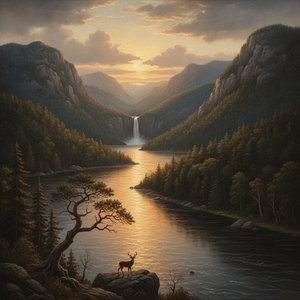
Epic Landscapes & Wild Nature: The Power of the Hudson River School's Sublime Artistry
Explore the breathtaking power of the Hudson River School. Journey through epic American landscapes, from Thomas Cole's sublime vistas to Luminist light, and discover how these timeless masterpieces continue to inspire modern collectors and art lovers worldwide.

The Sublime Landscape: Exploring the Hudson River School Movement
Explore the captivating world of the Hudson River School! Discover the history, artists, and defining characteristics of this iconic American art movement. Learn about Romanticism's influence & find inspiration for your collection.


