

6th Lord Byron (Tomas Filips)
Oil On Canvas.

Platna i umetničke štampane kopije od дин4687 za 36 x 28 cm
Ručno slikana uljana reprodukcija od дин19919
- Besplatna međunarodna dostava za 3 do 4 nedelje
- Rok isporuke za štampane postere u tubi je od 3 do 4 nedelje
- Povraćaj novca u roku od 100 dana
- Ocena 4.9/5 na osnovu 241 recenzija kupaca na ArtShopReviews.com
§ 1Katalog podaci


§ 2Apstraktno
6th Lord Byron od Tomas Filips, opis slike
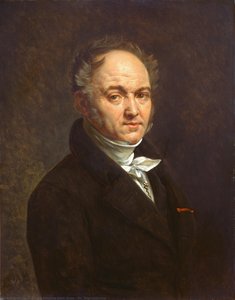
A somber oil portrait of a man in a dark coat and white cravat, rendered with soft blending and dramatic chiaroscuro lighting.
 Pročitajte celokupan opis dela 6th Lord Byron autora Tomas Filips
Tomas Filips: biografija
Otkrijte Thomasa Phillipsa (1770-1845), britanskog portretistu i istoričara slikarstva poznatog po detaljnom realizmu i prikazivanju Lorda Bajrona. #BritanskaUmetnost #PortretnoSlikarstvo
§ 3Komentar
The Portrait of the 6th Lord Byron
In this portrait, titled 6th Lord Byron, the English painter Thomas Phillips captures the likeness of George Gordon Byron, 6th Baron Byron. The work presents a formal study of the man, focusing on his upper body and his steady, serious gaze. Phillips, who was born in Dudley, United Kingdom, in 1770, brings a meticulous attention to the subject's features and the textures of his attire. The sitter is positioned slightly off-center, looking toward his left, which lends a sense of quiet introspection to the composition.
The artist, who passed away in London on 20 April 1845, utilizes a dark, receding background to ensure the viewer's attention remains fixed upon the subject. This choice of lighting creates a chiaroscuro effect, highlighting the contours of the face and the white of the shirt against the darker tones of the coat. There is a palpable sense of dignity in the subject's expression, a quality Phillips often sought when portraying the prominent figures of his era. The painting remains a significant example of the artist's ability to render both physical presence and character through oil on canvas.
Composition and Visual Elements
The composition focuses on the subject's upper body, with the figure cropped just below the waist. He is positioned slightly off-center, gazing toward his left with a serious expression that suggests a sense of dignity and status. This deliberate placement avoids a static, frontal view, lending a quiet gravity to his presence. The dark background recedes into obscurity, which serves to emphasize the figure and create a palpable sense of depth within the frame.
Lighting is used with precision, concentrated primarily on the man's face and upper body. This creates a chiaroscuro effect, where strong contrasts between light and shadow define his features and the folds of his attire. The interplay of light and dark provides a sculptural quality to the portrait, pulling the viewer's attention toward the sitter's contemplative gaze and the subtle textures of his clothing.
Technique and Artistic Style
Executed in oil on canvas, this portrait adheres closely to the formal traditions of the late 18th and early 19th centuries. The artist employs a meticulous realism, focusing on the precise rendering of the subject's features and the specific textures of his attire. Through a disciplined application of paint, the work achieves a smooth finish where brushstrokes remain largely invisible to the eye. This controlled approach allows the viewer to focus entirely on the character and presence of the sitter rather than the hand of the painter.
The technical proficiency is most evident in the handling of light and material. There is a sophisticated contrast between the surfaces depicted; the artist has successfully captured the subtle sheen of the white shirt against the matte quality of the dark coat. This interplay of light and shadow, achieved through careful blending and the layering of paint, provides the figure with a tangible, three-dimensional presence. The result is a portrait that prioritizes a quiet, dignified accuracy over dramatic flourish.
Related Works by Thomas Phillips
The artist's engagement with the Romantic era is perhaps most visible through his various depictions of the poet. In 1813, he produced Lord Byron in Albanian Dress, a work that captures the subject in traditional costume. This particular theme was revisited in a 1835 version of Lord Byron in Albanian Dress, which is currently held in the National Portrait Gallery, London. He also completed a Portrait of Lord Byron in 1814, offering a different perspective on the same figure.
Beyond his portraits of literary figures, Phillips demonstrated a keen ability to render the likenesses of significant intellectuals and professionals. His 1807 portrait of William Blake remains a notable example of his skill. He continued this practice into the following decades, producing a portrait of Sir Francis Chantrey in 1818 and a work featuring George Crabbe in 1819.
Pitanja i odgovori
Da li je ova reprodukcija dela 6th Lord Byron ručno oslikana ili odštampana?
Štampa: 6th Lord Byron je reprodukovan kao giclée print na pamučnom platnu ili na Epson arhivskom papiru za platno.
Koju veličinu treba da odaberem za 6th Lord Byron?
Dimenzije se kreću od 35.9 x 27.9 cm (дин4687) do 245.4 x 190.7 cm (дин46762); tabela na ovoj stranici navodi glavne korake i njihove cene.
Koliko se dugo čeka na isporuku?
Štampa u tubi stiže besplatno običnom poštom za 3 do 4 nedelje; štampa na platnu ili u ramu stiže za 4 do 5 nedelja. Kurirska dostava dostupna je samo uz plaćenu opciju brze dostave (Express Delivery) koja se nudi na ovoj stranici. Proizvod možete vratiti u roku od 100 dana uz pun povraćaj novca, bez ikakvih uslova.
Koji je medij koristio/la Tomas Filips za delo 6th Lord Byron?
Oil On Canvas




 Slika uljanim bojama


 Za umetnička dela ili reprodukcije čija je bilo koja strana veća od 105 cm (približno 41 inč), okvir će biti isporučen u obliku rastavljenog seta za sklapanje. Ovaj metod osigurava bezbednu dostavu i sprečava oštećenja tokom transporta.


