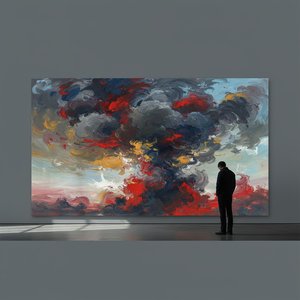
1971. Lithograph, 103.0 x 72.0 cm.

§ 1Katalog podaci

- 103.0 x 72.0 cm


Ovo umetničko delo je zaštićeno autorskim pravima
Umetničko delo prikazano na ovoj stranici zaštićeno je autorskim pravima, što znači da zakonski nismo u mogućnosti da kreiramo niti prodajemo identičnu reprodukciju. Ova zaštita se sprovodi u skladu sa međunarodnim sporazumima kao što su Bernska konvencija i nacionalnim zakonima, uključujući i one koji su definisani u Američki zakon o autorskom pravu – Naslov 17.
Kao poštovana i legalna alternativa, nudimo prilagođene, ručno oslikane umetničke radove inspirisane originalom. Naši stručni i profesionalni umetnici pažljivo proučavaju stil, ambijent i umetničku suštinu originala kako bi kreirali novo, unikatno delo koje budi istu emociju – ostajući pritom potpuno autentično stvaranje.
Ovaj metod je u potpunosti usklađen sa regulativama o autorskim pravima jer ne podrazumeva kopiranje ili dupliranje zaštićenih umetničkih dela. Umesto toga, reč je o kreativnoj reinterpretaciji – novom slikarskom delu koje je inspirisano originalom, ali nije identično njemu.
 Pročitajte više
§ 2Apstraktno
Opis predmeta
Explore 'The Marshes' by Willem de Kooning – an iconic abstract expressionist lithograph capturing raw emotion and dynamism through bold brushstrokes and a monochromatic palette. Discover its influence on the New York School.
Biografija umetnika
Vilem de Kuning, holandsko-američki umetnik i ključna figura ekspresionizma. Istražite njegove ikonične slike iz serije 'Žena' i dinamična dela poznata po hrabrom potezu kista i uticaju na Njujoršku školu.
§ 3Komentar
The Marshes: An Exploration of Abstract Expressionist Emotion
Willem de Kooning’s “The Marshes,” painted in 1971, stands as a cornerstone of American Abstract Expressionism—a movement defined by its rejection of representational art and its fervent pursuit of spontaneous emotion. Produced by Hollander Graphic Workshop and published by MOMA, this lithograph captures the essence of de Kooning’s distinctive style: bold brushstrokes, dynamic composition, and an unsettling exploration of psychological depth.
The artwork presents a landscape devoid of conventional perspective or recognizable forms—a marsh environment rendered in shades of black, grey, and white. Rather than depicting a specific scene, it prioritizes conveying feeling over visual accuracy. The image’s grainy texture speaks to the lithographic process itself, highlighting the materiality of the print medium and adding to its textural richness.
De Kooning's approach aligns perfectly with the broader tenets of Abstract Expressionism, which emerged in New York City after World War II as artists sought new ways to express trauma and anxiety. Influenced by Surrealist techniques—particularly automatism—the artist deliberately abandons control over his brushstrokes, allowing them to generate an energetic dance across the surface of the paper.
The composition is deliberately chaotic; overlapping shapes and lines intertwine without discernible hierarchy. This lack of focal point isn’t a weakness but rather a strategic choice designed to immerse the viewer in a sensory experience mirroring the turbulent emotions at play. The artist's intention was not to depict reality, but to capture the visceral impact of inner turmoil.
Further research into Willem de Kooning reveals his formative years spent grappling with familial discord and his early departure from formal schooling—experiences that undoubtedly fueled his artistic restlessness. His apprenticeship with a commercial art firm provided technical grounding while simultaneously nurturing a desire for creative liberation. Moving to America in 1926, he embraced the ethos of an outsider artist, forging a path toward groundbreaking innovation.
The lithograph medium itself contributes significantly to the artwork’s aesthetic qualities. The process involves transferring ink from a stone matrix onto paper, resulting in precise tonal gradations and subtle variations in texture—elements that amplify the painting's expressive power. Examining “The Marshes” alongside other works by de Kooning—particularly his ‘Woman’ series—offers valuable insight into the artist’s ongoing exploration of psychological complexity.
Considered alongside similar pieces from Stedelijk Museum De Lakenhal and complemented by biographical information on Willem van de Velde the Elder and Younger, “The Marshes” exemplifies the artistic fervor of the Dutch Golden Age. Its enduring appeal lies in its ability to evoke profound emotional responses—a testament to de Kooning’s mastery of Abstract Expressionist technique and his unwavering commitment to conveying raw feeling.
Pitanja i odgovori
Da li je „The Marshes”, autor Вилјем Де Кунинг među traženim delima Abstract Expressionism pokreta?
„The Marshes“ je zabeležen/a kao Iconic među delima Abstract Expressionism pokreta u katalogu.
Za koju prostoriju se preporučuje „The Marshes”, autor Вилјем Де Кунинг?
Preporučeni prostor za „The Marshes”, autor Вилјем Де Кунинг je Living Room. Ovaj predlog se, naravno, može prilagoditi vašem enterijeru.
U kojoj godini je nastalo "The Marshes"?
„The Marshes“ potiče iz 1971. Ovaj datum smešta delo u okviru karijere umetnika Вилјем Де Кунинг i same ere.


 Pređi na štampu


 Za umetnička dela ili reprodukcije čija je bilo koja strana veća od 105 cm (približno 41 inč), okvir će biti isporučen u obliku rastavljenog seta za sklapanje. Ovaj metod osigurava bezbednu dostavu i sprečava oštećenja tokom transporta.