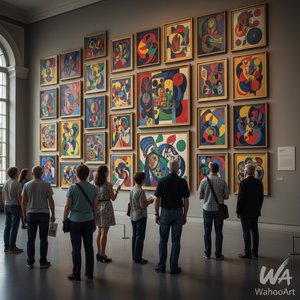
1968. Acrylic On Canvas.

§ 1Katalog podaci


Ovo umetničko delo je zaštićeno autorskim pravima
Umetničko delo prikazano na ovoj stranici zaštićeno je autorskim pravima, što znači da zakonski nismo u mogućnosti da kreiramo niti prodajemo identičnu reprodukciju. Ova zaštita se sprovodi u skladu sa međunarodnim sporazumima kao što su Bernska konvencija i nacionalnim zakonima, uključujući i one koji su definisani u Američki zakon o autorskom pravu – Naslov 17.
Kao poštovana i legalna alternativa, nudimo prilagođene, ručno oslikane umetničke radove inspirisane originalom. Naši stručni i profesionalni umetnici pažljivo proučavaju stil, ambijent i umetničku suštinu originala kako bi kreirali novo, unikatno delo koje budi istu emociju – ostajući pritom potpuno autentično stvaranje.
Ovaj metod je u potpunosti usklađen sa regulativama o autorskim pravima jer ne podrazumeva kopiranje ili dupliranje zaštićenih umetničkih dela. Umesto toga, reč je o kreativnoj reinterpretaciji – novom slikarskom delu koje je inspirisano originalom, ali nije identično njemu.
 Pročitajte više
§ 2Apstraktno
Opis predmeta
Biografija umetnika
Pionir apstraktnog ekspresionizma poznat po seriji Žena. Istražite njegove snažne i vizeralne slike već danas.
§ 3Komentar
A Tempestuous Vision of Female Power: Examining Willem de Kooning’s Untitled (23)
The photograph captures a striking monochrome depiction of “Untitled (23),” a seminal work by Willem de Kooning, completed in 1968. This painting embodies the core tenets of Abstract Expressionism – raw emotion, dynamic gesture, and an uncompromising exploration of form—making it a cornerstone of American art history. The image itself is deliberately muted, prioritizing textural detail over vibrant color, mirroring the artist’s stylistic preference for conveying psychological intensity rather than literal representation.Subject Matter: Embodied Femininity
At its heart lies a woman figure dominating the canvas. De Kooning famously eschewed traditional portraiture conventions, opting instead to depict women as fragmented, turbulent entities—a deliberate rejection of idealized femininity prevalent in earlier artistic movements. The woman’s posture is defiant, her limbs outstretched and intertwined, conveying a palpable sense of struggle and vulnerability simultaneously. Her face remains largely obscured, furthering the ambiguity surrounding her identity and emphasizing the painting's focus on emotional experience rather than visual accuracy. Surrounding her are amorphous shapes—suggestive of drapery or perhaps even swirling currents—creating an atmosphere of dynamism and instability that reflects the artist’s inner turmoil.Style & Technique: Bold Brushwork and Energetic Gestures
De Kooning’s technique is instantly recognizable through its aggressive brushstrokes – thick, impasto layers of paint applied with forceful movements. This method wasn't merely about applying pigment; it was a deliberate attempt to capture the physicality of emotion itself. The artist utilized a palette knife extensively, pushing paint across the canvas with palpable energy, resulting in textured surfaces that pulsate with movement and contribute significantly to the painting’s expressive power. The absence of color reinforces this tactile quality, allowing viewers to engage directly with the artist's hand—a hallmark of Abstract Expressionism.Historical Context: The Crucible of Postwar Art
“Untitled (23)” emerged during a period of profound artistic upheaval following World War II. The postwar era witnessed a dramatic shift away from representational art towards abstraction, fueled by anxieties about societal change and a desire to express subjective experience in ways that bypassed rational thought. De Kooning’s work aligns perfectly with this movement's ethos, reacting against the perceived constraints of academic tradition and embracing spontaneity as a vehicle for conveying psychological depth. It stands alongside other iconic paintings from the period—such as Jackson Pollock’s drip canvases—establishing a visual vocabulary that continues to resonate today.Symbolism: Fragmentation and Resilience
The fragmented form of the woman figure speaks to broader themes of trauma and resilience. De Kooning's deliberate disruption of conventional compositional structures mirrors the psychological fragmentation experienced by individuals confronting existential crises. However, despite her apparent vulnerability, the woman’s posture exudes strength—a testament to the human spirit’s capacity for enduring hardship and maintaining inner integrity. The surrounding amorphous shapes symbolize the uncontrollable forces shaping our lives, while simultaneously suggesting an underlying order beneath the surface chaos.Emotional Impact: Confronting Darkness
Ultimately, “Untitled (23)” compels viewers to confront uncomfortable truths about the human condition. It eschews comforting illusions of beauty or harmony, presenting instead a visceral depiction of emotional struggle—a courageous assertion of feeling in defiance of artistic conventions. The painting’s enduring power lies in its ability to provoke contemplation and elicit responses rooted in personal experience—a testament to De Kooning's mastery of conveying profound psychological resonance through visual language.Pitanja i odgovori
Gde mogu pronaći vodič za "Untitled (23)"?
Vodič za "Untitled (23)" je stranica Vodič za učenike za ovo umetničko delo – štampani informativni list koji prikazuje delo sa njegovim opisom, podacima o autorstvu i identifikacionom tabelom (umetnik, datumi, tehnika, originalna veličina, kolekcija).
Na koji način se "Untitled (23)" uklapa u teme i stil umetnika Вилем Де Кунинг?
„Untitled (23)“ deli sa ostalim delima umetnika Вилем Де Кунинг svoj Abstract Expressionism stil i prepoznatljive teme: bold brushwork, expressionist style, psychological exploration, emotion, iconic woman series impact, american art heritage legacy.
Da li je delo „Untitled (23)”, autor Вилем Де Кунинг u javnom vlasništvu?
Status autorskih prava za „Untitled (23)”, autor Вилем Де Кунинг: delo je i dalje je zaštićeno autorskim pravima. Ovo određuje da li se reprodukcije slike mogu slobodno izrađivati.


 Pređi na štampu


 Za umetnička dela ili reprodukcije čija je bilo koja strana veća od 105 cm (približno 41 inč), okvir će biti isporučen u obliku rastavljenog seta za sklapanje. Ovaj metod osigurava bezbednu dostavu i sprečava oštećenja tokom transporta.