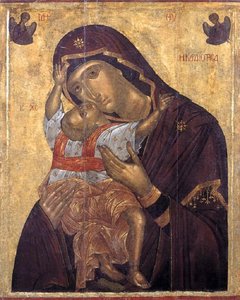
Angelos Akotantos: A Pioneer of Cretan Icon Painting
Life and Origins
- Born in Crete, Greece around 1390, Angelos Akotantos emerged as a significant figure during a period of transition for Byzantine art.
- He lived and worked primarily in Heraklion (then known as Candia), which was under the rule of the Republic of Venice at the time.
- Information about his life is largely derived from his will, dated 1436, preserved in the State Archives of Venice.
- He died around 1450, leaving behind a legacy that would shape the future of Cretan painting.
Artistic Development and Style
- Akotantos was a highly skilled hagiographer – an icon painter specializing in religious imagery.
- His style represents a fascinating blend of traditional Byzantine techniques with emerging Venetian influences, reflecting Crete’s unique cultural position.
- He is renowned for his meticulous attention to detail, vibrant use of color (particularly gold), and expressive figures.
- A defining characteristic of his work is the practice of signing his icons with the phrase “χειρ αγγέλου” (“by hand of Angelos”), a groundbreaking act for the time.
Major Works and Themes
- Approximately 50 works are attributed to Akotantos, with around 30 being securely signed.
- Common themes in his iconography include depictions of the Virgin Mary (such as *The Virgin Cardiotissa*), saints – notably Saint Phanourios often shown slaying a dragon similar to Saint George – and scenes from the lives of Christ and other biblical figures.
- His icons were highly sought after, supplying churches and monasteries not only in Crete but also on islands like Patmos and Rhodes.
- Examples include *Icon of the Mother of God and Infant Christ*, *St George on Horseback, Slaying The Dragon* and *The Congregation of the Archangels*.
Historical Significance and Influence
- Akotantos is considered a key figure in the transition of Byzantine art from Constantinople to Crete following the city’s fall in 1453.
- He effectively established what became known as the Cretan School of icon painting, which flourished for centuries afterward.
- His innovative approach to signing his work set a precedent for other artists and contributed to a growing sense of artistic individuality.
- He influenced subsequent generations of Cretan painters, including Nikolaos Tzafouris, who further developed the stylistic characteristics established by Akotantos.
- His work represents a vital link between the Byzantine tradition and the evolving artistic landscape of Renaissance Europe.
Legacy
- Angelos Akotantos’s icons continue to be revered for their beauty, spiritual depth, and historical importance.
- His contributions helped preserve Byzantine artistic traditions during a period of significant upheaval.
- He remains a celebrated figure in Greek art history, embodying the creative spirit of Venetian Crete.
Pitanja i odgovori
Koja raspoloženja izražavaju dela umetnika Angelos Akotantos?
Soba raspoloženja umetnika Angelos Akotantos je stranica koja prikazuje umetnikova dela raspoređena prema raspoloženju.
Koji dela umetnika Angelos Akotantos imaju najviše pregleda?
Stranica Statistika umetnika Angelos Akotantos prikazuje statistiku izračunatu na osnovu umetničkih dela tog autora koja su navedena na ovaj veb-sajt.
Mogu li da pregledam dela umetnika Angelos Akotantos prema umetničkom pravcu?
Radove umetnika Angelos Akotantos možete pregledati prema umetničkom pravcu na Svi pravci stranici umetnika.