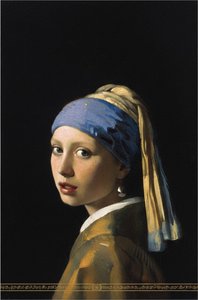
1621. Oil On Canvas, 80.0 x 65.0 cm. Rijksmuseum.

§ 1Catalogue data
 Oil On Canvas
- WallArt
- Baroque
 1621
1621 80.0 x 65.0 cm
 Rijksmuseum
§ 2Abstract
Beskrivning av samlarobjekt
Admire Abraham de Vries’ 1621 Self-Portrait – a dynamic Dutch Golden Age masterpiece! Explore chiaroscuro lighting, rich textures & symbolic details in this captivating Baroque portrait.
 Visa mer
Konstnärens biografi
Abraham de Vries (1590-1650): Holländsk konstnär som förenade holländsk realism med flamländsk dynamik i sina porträtt. Upptäck hans liv och verk!
§ 3Commentary
Abraham de Vries’s “Self-Portrait”: A Window into the Dutch Golden Age
Abraham de Vries’s 1621 “Self-Portrait” is more than just a likeness; it's a meticulously crafted window into the intellectual and artistic currents of the Dutch Golden Age. Painted during a period of unprecedented prosperity and burgeoning self-awareness, this work embodies the era’s fascination with portraiture as both a formal exercise in skill and a profound exploration of individual identity. De Vries, a peripatetic artist who traversed Europe, masterfully blended influences from Flemish dynamism with the emerging realism of his native Netherlands, creating a compelling synthesis that speaks to his own restless artistic spirit.
The painting immediately draws the eye with its dramatic chiaroscuro lighting – a technique borrowed heavily from Caravaggio and Rembrandt. Deep shadows envelop much of the figure’s form, emphasizing the textures of his clothing and the subtle contours of his face. This masterful use of light not only creates a sense of depth and volume but also imbues the portrait with an air of solemnity and introspection. The artist himself is depicted in a three-quarter pose, a common convention at the time, yet de Vries avoids mere replication; he presents a carefully constructed image of scholarly sophistication.
A Scholar’s Attire: Symbolism and Status
The details of the portrait are laden with symbolic significance. De Vries is clad in an elaborate, dark robe adorned with intricate embroidery – a clear indication of his status and wealth. The voluminous sleeves and high collar, reminiscent of Renaissance attire, speak to his intellectual pursuits and connection to humanist learning. Notably, he holds a quill pen and several open books, suggesting his role as a learned man, perhaps a scholar or even an artist deeply engaged in the study of art and its principles. The inclusion of musical instruments – a lute and a recorder – further reinforces this association with intellect and refinement; music was considered a liberal art during this period.
The background is deliberately muted, a dark brown that serves to isolate the subject and draw attention to his features. This simplicity allows the viewer to focus entirely on de Vries’s face, which is rendered with remarkable precision and psychological insight. His gaze is direct and slightly melancholic, hinting at the complexities of the artist's life and perhaps reflecting upon his own artistic journey.
Technique and Artistic Influences
The painting is executed in oil on canvas, a medium that allowed for the rich textures and subtle gradations of tone characteristic of de Vries’s style. The brushwork is smooth and controlled, demonstrating a mastery of technique honed through years of practice. While undeniably influenced by the Flemish tradition – particularly the dramatic lighting and attention to detail evident in works by artists like Anthony van Dyck – de Vries also incorporates elements of Dutch realism, notably in his depiction of the subject’s face and hands. The subtle modeling of the skin, the delicate rendering of the wrinkles around his eyes, and the careful observation of anatomical details all testify to his skill as a portraitist.
A Legacy of Observation
Abraham de Vries's “Self-Portrait” stands as a testament to the artistic achievements of the Dutch Golden Age. It’s a work that invites contemplation, not just for its technical brilliance but also for its profound exploration of human identity and the complexities of self-representation. The painting’s enduring appeal lies in its ability to connect us with a specific moment in art history while simultaneously offering a timeless reflection on the nature of portraiture itself. It serves as a reminder that a portrait is not merely a likeness, but a carefully constructed narrative—a glimpse into the soul of the artist and the world he inhabited.
Frågor och svar
Hur förhåller sig "Self-Portrait" till Abraham de Vriess återkommande motiv?
"Self-Portrait" skildrar portrait, scholar, instruments, baroque, chiaroscuro, dutch art, self portrait, renaissance, medan Abraham de Vriess dokumenterade teman är self-representation, artistic identity, demonstrates technical mastery, van dyck's dynamism, rembrandt's realism, flemish portraiture, baroque ideals. En jämförelse mellan dessa visar hur verket förhåller sig till konstnärens vanliga motiv.
Vilken placering passar bäst för formatet på "Self-Portrait" av Abraham de Vries?
Med sin Portrait-form rekommenderas en reproduktion av "Self-Portrait" för ett Living Room.
Vilket rum rekommenderas "Self-Portrait" av Abraham de Vries för?
Det rekommenderade utrymmet för "Self-Portrait" av Abraham de Vries är ett Living Room. Förslaget kan naturligtvis anpassas efter din inredning.


 Byt till tryck


 För konstverk eller reproduktioner som är större än 105 cm (cirka 41 tum) på någon sida, levereras ramen som ett isärplockat kit. Denna metod säkerställer en trygg leverans och förhindrar skador under transport.