


 Visa i rummet
 Skicka
 Dela
Dela
 Detaljer
 Guide
Guide

 Ladda ner
 Liknande objekt
 Röntgen
 Bildspel
 Besökstatistik
Women outside the Church at Ruokolahti
 Oil On Canvas
- WallArt
- Contemporary Realism
 1887
1887 158.0 x 129.0 cm
 Ateneum konstmuseum
 Läs mer
Handgjord oljereproduktion
Handmålad olja på duk i din valda storlek och ram, tillverkad efter beställning av våra konstnärer. ( Byt till tryckta exemplar Byt till digital bildförsäljning)




P118B $10

P118H $10

P118W $10

P438Z $10

P508JH $12

P508YH $12

P805H $10

P805Z $10

P919BZ $10

P919G $10

P919XJ $10

P959ZH $10

P968JZ $12

W106C $8

W218G $10

W218JH $8

W218Y $10

W307PJ $10

W316G $10

W316PJ $8

W316Y $10

W398PJ $8

W4111J $10

W500HY $15

W500JH $15

W692G $12

W849H $8

W940BG $15

W953PJ $8




Välj bland våra förinställda storlekar som motsvarar konstverkets ursprungliga proportioner.

Du kan ange egna mått för att passa en specifik ram eller yta. Om den valda storleken inte matchar originalbildens proportioner kommer vi antingen att beskära konstverket eller utöka målningen med ytterligare handmålade element. En digital skiss skickas till dig för godkännande innan produktionen påbörjas.
Observera att förhandsvisningen på skärmen inte återspeglar den faktiska beskärningen eller utökningen. Endast skissen visar den slutgiltiga kompositionen korrekt.
Även om anpassade storlekar är möjliga, rekommenderar vi att du väljer en dimension från den fördefinierade listan för att bevara originalproportionerna.
Efter beställning kommer AllPaintingsStore.com team att mejla kunden för instruktioner och tillhandahålla en skissförhandsvisning
Leverans över hela världen () på 3–4 veckor istället för standard 5 veckor. (21 september). Inga kompromisser med kvaliteten.

Fri expressfrakt över hela världen

Högkvalitativ linnecanvas

Fullständig fraktförsäkring

Garantier för återbetalning av tullavgifter

Garantier för exakt färgåtergivning

100 dagars returrätt vid fabrikationsfel

100% pengarna tillbaka-garanti

Mängdrabatt erbjuds
 Glasalternativet är endast tillgängligt i storlekar under 110 cm.

Women outside the Church at Ruokolahti
Tryckteknik
Reproduktionsstorlek
-


Totalpris
$ 258
A Snapshot of Rural Finnish Life: Albert Edelfelt’s “Women Outside the Church at Ruokolahti”
Albert Edelfelt's "Women Outside the Church at Ruokolahti," painted in 1887, is more than just a depiction of a local gathering; it’s a poignant window into the heart of Finnish rural life during a pivotal period of national identity formation. The painting captures a moment of quiet community amidst the rolling hills of Uusimaa, offering a glimpse into the everyday lives and social fabric of a region that would soon become a cornerstone of modern Finland. Edelfelt, a master of Realism with subtle Impressionistic touches, skillfully rendered this scene not as a grand historical tableau, but as an intimate portrait of ordinary people – a deliberate choice that profoundly shaped his artistic legacy.
The canvas itself is dominated by a group of women assembled outside the Ruokolahti Church. Nine figures are present, ranging from young girls to older women, engaged in conversation and seemingly enjoying each other’s company. The composition isn't rigidly formal; instead, Edelfelt allows the scene to breathe with a naturalism that reflects his deep respect for his subjects. Notice how he captures their individual personalities – the animated discussion of the younger women, the thoughtful expression on the face of an older woman, and the subtle gestures that reveal their shared experience. The artist’s attention to detail extends beyond mere likeness; he imbues each figure with a sense of life and character.
Technically, Edelfelt employs a technique characterized by loose brushstrokes and a vibrant color palette. He utilizes broken color—small, distinct strokes of paint rather than smooth blends—to create a shimmering effect that captures the light filtering through the trees and illuminating the women’s faces. The use of warm earth tones – ochres, browns, and greens – grounds the scene in its rural setting, while touches of red (particularly in the scarf worn by one woman) provide visual interest and draw the eye. The painting's scale—measuring 158 x 129 cm—further enhances the sense of immersion, inviting the viewer to step into this intimate moment in time.
Contextualizing a Nation Forged in Observation
To fully appreciate “Women Outside the Church at Ruokolahti,” it’s crucial to understand Edelfelt's artistic philosophy and the historical context of his work. He famously declared that he found his entire nation within the landscapes and people of Uusimaa, a region just south of Helsinki. This belief stemmed from a conscious decision to move away from grand historical subjects favored by many of his contemporaries and instead focus on portraying the lives of ordinary Finns – a deliberate act of national representation at a time when Finland was striving for independence from Russia. The painting’s creation coincided with a period of intense nationalist sentiment, fueled by a desire to establish a distinct Finnish identity rooted in its own traditions and culture.
The Ruokolahti Church itself holds significance within this narrative. Built in 1752, it represents the enduring strength and continuity of local community life. Its presence serves as a focal point for the gathering, symbolizing faith, tradition, and social connection. The church’s architecture—a simple yet dignified timber structure—contrasts subtly with the more informal attire and relaxed demeanor of the women, highlighting the interplay between religious observance and everyday life.
Symbolism and Emotional Resonance
Beyond its straightforward depiction of a rural gathering, “Women Outside the Church at Ruokolahti” is rich in symbolic meaning. The act of conversation itself represents the transmission of knowledge, values, and traditions from one generation to the next. The women’s shared presence suggests a strong sense of community solidarity – a vital element for a nation forging its identity. Even the red scarf worn by one woman can be interpreted as a symbol of warmth, vitality, or perhaps even a touch of defiance against societal norms.
Perhaps most powerfully, the painting evokes a feeling of quiet contentment and belonging. There’s no drama or conflict in this scene; instead, it offers a glimpse into a world where simple pleasures – conversation, companionship, and connection with one's community – are valued above all else. The soft light, the relaxed postures, and the genuine expressions on the women’s faces combine to create an atmosphere of warmth and serenity—a testament to Edelfelt’s ability to capture the essence of human experience.
A Timeless Masterpiece: Reproduction and Legacy
Today, “Women Outside the Church at Ruokolahti” stands as a beloved icon of Finnish art. Reproductions of this captivating painting are highly sought after by collectors and interior designers alike, offering a chance to bring a piece of Finnish heritage into any space. When selecting a reproduction, consider the quality of materials used – a hand-painted reproduction will undoubtedly capture the nuances of Edelfelt’s brushwork and color palette far more effectively than a digital print. This remarkable artwork serves as a poignant reminder of Finland's rich cultural heritage and the enduring power of art to connect us to our past.
Liknande konstverk


Om konstnären
Early Life and Education
Albert Gustaf Aristides Edelfelt, a Finnish painter celebrated for his masterful depictions of rural landscapes and portraits imbued with humanist values, was born on July 21, 1854, in Porvoo, Finland. His parents, Carl Albert Edelfelt—a Swedish-speaking architect who had emigrated to Finland seeking artistic inspiration—and Alexandra Edelfeldt née Brandt—an amateur poet deeply attuned to the beauty of Finnish culture—established a household rooted in intellectual curiosity and artistic appreciation. From an early age, Edelfelt demonstrated a remarkable aptitude for drawing and painting, nurtured by his mother’s encouragement and fueled by a profound connection to the natural world surrounding his birthplace. He began his formal education at Svenska Normalyceum in Helsinki where he excelled as a student of Adolf von Becker, delving into the intricacies of history painting and honing his technical skills. This formative period instilled in him a disciplined approach to artistic practice and exposed him to influential pedagogical figures who championed realism and observation. Recognizing Edelfelt’s exceptional talent, the Finnish government awarded him a scholarship to pursue advanced studies at Saint Petersburg Academy of Fine Arts, where he immersed himself in Russian artistic traditions alongside Gunnar Berndtson—a fellow student who would become a lifelong collaborator. This experience broadened his artistic horizons and solidified his commitment to capturing the essence of human emotion and experience through meticulous detail.Artistic Journey
Edelfelt’s artistic trajectory unfolded against the backdrop of Finland's burgeoning cultural landscape, marked by a fervent desire to elevate Finnish art to international prominence. Driven by an unwavering belief in the power of plein air painting—the practice of capturing landscapes directly from nature—he embraced this revolutionary technique championed by Impressionists like Jules Bastien-Lepage and Gustave Courtois. His studio in Paris became a hub for artistic experimentation, fostering friendships with fellow artists who shared his passion for innovation and authenticity. He quickly gained recognition for his historical costume paintings, notably *Kuningatar Blanka*, which vividly portrayed the Swedish medieval Queen Bianca caring for her son Haakon Magnusson—a scene brimming with tenderness and symbolic resonance. This masterpiece earned him a prestigious medal at the Paris Universal Exposition of 1889, propelling him to the forefront of Finnish artistic achievement. Simultaneously, Edelfelt cultivated an enduring fascination with portraiture, capturing the dignity and complexity of his subjects with remarkable sensitivity and precision. His portraits of Louis Pasteur—a pioneering scientist whose groundbreaking discoveries revolutionized medicine—became iconic representations of intellectual brilliance and human compassion.Notable Works
Edelfelt’s oeuvre encompasses a diverse range of artistic expressions, reflecting his multifaceted engagement with both Finnish landscapes and humanist themes. Among his most celebrated paintings are *Young Woman in Her Boudoir*, which delicately portrays the intimacy of domestic life—a testament to Edelfelt's ability to convey subtle emotions through nuanced observation—and *Under the Birches*, a breathtaking depiction of Finnish birch forests bathed in ethereal sunlight—a quintessential example of plein air painting that captures the sublime beauty of the natural world. These works stand as enduring symbols of Finnish artistic identity and continue to inspire admiration for their masterful execution and profound emotional depth. Furthermore, Edelfelt’s contribution to Finnish cultural heritage extends beyond his paintings themselves. He served as an illustrator for Runeberg's poems—a role that cemented his reputation as a champion of Finnish literature and bolstered the nation's artistic legacy. His influence resonated throughout Finland’s artistic community, nurturing the talents of younger painters like Akseli Gallen-Kallela and Gunnar Berndtson—artists who would forge their own distinctive paths while honoring Edelfelt’s pioneering spirit.Legacy and Impact
Albert Edelfelt remains a towering figure in Finnish art history—a visionary artist whose unwavering commitment to realism and humanist values profoundly shaped the trajectory of Finnish artistic expression. His legacy transcends mere stylistic innovation; it embodies a deep appreciation for the natural world, an empathy for human experience, and a steadfast belief in the transformative power of art. As one of Finland’s foremost painters, Edelfelt secured his place among the nation's cultural icons—a testament to his enduring artistic brilliance and his indelible contribution to Finnish identity. His works continue to captivate audiences worldwide, serving as reminders of the beauty and dignity inherent in human existence and the profound significance of capturing the essence of our surroundings with unwavering honesty and compassion.
Albert Edelfelt
1854 - 1905 , Finland
Snabbfakta
- Artistic Movement Or Style: Realist
- Artists Or Movements Influenced By This Artist: ['Akseli Gallen-Kallela']
- Artists Who Influenced This Artist: ['Jean-Léon Gérôme']
- Date Of Birth: July 21, 1854
- Date Of Death: August 18, 1905
- Full Name: Albert Gustaf Aristides Edelfelt
- Nationality: Finnish
- Notable Artworks:
- Portrait of Louis Pasteur
- Young woman in her boudoir
- Under the birches
- Place Of Birth: Porvoo, Finland
Relaterade artiklar

Akseli Gallen-Kallela: Shaping Finnish Identity Through National Romanticism & Symbolism
Explore the captivating world of Akseli Gallen-Kallela, Finland's iconic National Romantic painter. Discover his symbolic landscapes, Kalevala illustrations & lasting impact on Finnish identity. Expert analysis & high-quality reproductions at AllPaintingsStore.

Albert Edelfelt: A Pioneer of Finnish Realism & International Impressionist Circles
Explore the life & work of Albert Edelfelt, a pioneering Finnish Realist painter who bridged Impressionism & national identity. Discover his masterpieces and lasting influence on art history.

The Enduring Muse: Women as Subject & Symbol in Art History
Explore the rich history of women in art – from archetypal representations to contemporary voices challenging norms. Discover iconic artists & movements, and learn about reclaiming female narratives through painting and beyond.

The Enduring Muse: Women as Subject & Symbol in Art History
Explore the rich history of women in art – from iconic muses to groundbreaking artists. Discover feminist movements, global perspectives & reclaim female narratives with AllPaintingsStore.
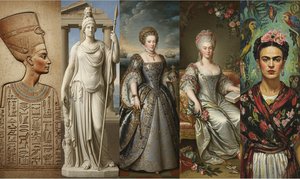
Portrayals of Power & Perception: A Historical Survey of Women in Art
Explore the rich history of women in art – from iconic muses to groundbreaking artists. Discover feminist movements & reclaim female narratives with AllPaintingsStore. Expert insights for discerning collectors.


