


 Visa i rummet
 Skicka
 Dela
Dela
 Detaljer
 Guide
Guide

 Ladda ner
 Liknande objekt
 Röntgen
 Bildspel
 Besökstatistik
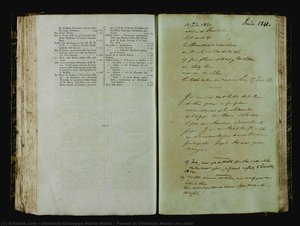
Liliana, original edition owned by Granados
 Manuscript
 19th Century
 5.0 x 48.0 cm
 Museu de la Música de Barcelona
 Läs mer
Handgjord oljereproduktion
Handmålad olja på duk i din valda storlek och ram, tillverkad efter beställning av våra konstnärer. ( Byt till tryckta exemplar Byt till digital bildförsäljning)




P118B $10

P118H $10

P118W $10

P438Z $10

P508JH $12

P508YH $12

P805H $10

P805Z $10

P919BZ $10

P919G $10

P919XJ $10

P959ZH $10

P968JZ $12

W106C $8

W218G $10

W218JH $8

W218Y $10

W307PJ $10

W316G $10

W316PJ $8

W316Y $10

W398PJ $8

W4111J $10

W500HY $15

W500JH $15

W692G $12

W849H $8

W940BG $15

W953PJ $8




Välj bland våra förinställda storlekar som motsvarar konstverkets ursprungliga proportioner.

Du kan ange egna mått för att passa en specifik ram eller yta. Om den valda storleken inte matchar originalbildens proportioner kommer vi antingen att beskära konstverket eller utöka målningen med ytterligare handmålade element. En digital skiss skickas till dig för godkännande innan produktionen påbörjas.
Observera att förhandsvisningen på skärmen inte återspeglar den faktiska beskärningen eller utökningen. Endast skissen visar den slutgiltiga kompositionen korrekt.
Även om anpassade storlekar är möjliga, rekommenderar vi att du väljer en dimension från den fördefinierade listan för att bevara originalproportionerna.
Efter beställning kommer AllPaintingsStore.com team att mejla kunden för instruktioner och tillhandahålla en skissförhandsvisning
Leverans över hela världen () på 3–4 veckor istället för standard 5 veckor. (21 september). Inga kompromisser med kvaliteten.

Fri expressfrakt över hela världen

Högkvalitativ linnecanvas

Fullständig fraktförsäkring

Garantier för återbetalning av tullavgifter

Garantier för exakt färgåtergivning

100 dagars returrätt vid fabrikationsfel

100% pengarna tillbaka-garanti

Mängdrabatt erbjuds
 Glasalternativet är endast tillgängligt i storlekar under 110 cm.

Liliana, original edition owned by Granados
Tryckteknik
Reproduktionsstorlek
-


Totalpris
$ 258
A Melodic Fragment of Catalan History
In the delicate, yellowed pages of Liliana, original edition owned by Granados, we find more than mere paper and ink; we encounter a profound intersection of literature, music, and history. This exquisite piece, an original edition once held in the prestigious collection of Granados, serves as a tactile window into the soul of late 19th-century Catalan culture. The artwork presents a close-up view of an open book, where the rhythmic dance of musical notes intertwines seamlessly with the lyrical grace of written poetry. Each note rests upon the aged parchment like a heartbeat, inviting the viewer to hear the silent echoes of a bygone era. It is a composition that transcends the visual, appealing to the auditory imagination and evoking the soft rustle of turning pages in a quiet, sunlit study.
The artistry of Apel·les Mestres i Oñós shines through in this multidisciplinary masterpiece. As an artist who moved fluidly between the worlds of poetry, theater, and graphic illustration, Mestres i Oñós possessed a unique ability to harmonize different forms of expression. In this work, the technique is one of intimate observation. The focus on the texture of the weathered paper and the precise placement of the musical notation creates an atmosphere of reverence. There is a profound sense of nostalgia embedded in the sepia tones and the organic decay of the edges, reminding us of the ephemeral nature of time even as the music remains eternally preserved within the ink.
Symbolism and the Harmony of the Arts
Beyond its surface beauty, this work serves as a powerful symbol of the Gesamtkunstwerk—the total work of art. By blending musical notation with poetic text, Mestres i Oñós celebrates the unity of the senses. The book acts as a vessel for human emotion, where the structure of music provides the rhythm for the narrative flow of the poem. For the collector or the interior designer, this piece offers a sophisticated layer of intellectual depth. It is not merely a decorative object but a conversation starter that speaks to themes of heritage, memory, and the enduring legacy of Catalan artistic excellence.
Integrating a high-quality reproduction of such a piece into a contemporary space can transform an environment. Whether placed in a library, a music room, or a refined living area, Liliana brings a sense of scholarly elegance and warmth. The muted, earthy palette of the aged pages complements both classical and modern decor, providing a focal point that is both calming and intellectually stimulating. It invites guests to linger, to look closer, and to lose themselves in the silent symphony of history and art.
Liknande konstverk



Om konstnären
A Renaissance Soul of Catalonia
In the vibrant, culturally surging atmosphere of late 19th-century Barcelona, few figures embodied the multidisciplinary spirit of the era as profoundly as Apel·les Mestres i Oñós. Born on October 28, 1854, to the esteemed architect Josep Oriol Mestres, Apel·les was destined to inhabit a world where art, architecture, and literature intertwined seamlessly. His life, which spanned until July 19, 1936, was not merely a career in fine arts but a lifelong devotion to the very essence of Catalan identity. He moved through the worlds of poetry, theater, music, and graphic illustration with a grace that suggested a singular, unified creative vision, making him a true polymath of the Modernisme movement.
Mestres i Oñós possessed a rare ability to translate emotion across vastly different mediums. While many artists of his time remained tethered to the canvas, he found rhythm in music, drama in his plays, and lyrical depth in his poetry. This versatility allowed him to become a cornerstone of the Catalan graphic arts, where his illustrations for books and magazines brought a sophisticated visual language to the public consciousness. His work was never isolated; it was part of a larger cultural dialogue aimed at celebrating and defining the unique spirit of Catalonia during a period of intense nationalistic pride and artistic renewal.
The Mastery of Graphic Expression and Modernisme
As a prominent figure in the Modernisme movement, Mestres i Oñós played a pivotal role in shaping the visual aesthetics of his generation. His approach to graphic design and illustration was characterized by an exquisite sensitivity to line and form, often blending the decorative elegance of the period with a profound narrative depth. He understood that the printed word and the drawn image could act as powerful vessels for cultural memory. Through his contributions to various publications, he helped cultivate a visual identity that was both modern in its execution and deeply rooted in local tradition.
The influence of his lineage and his environment is evident in the structural integrity of his compositions. Being the son of a renowned architect, he brought an inherent sense of balance and spatial awareness to his drawings and illustrations. This architectural foundation allowed him to navigate the complexities of graphic design with ease, creating works that were as structurally sound as they were aesthetically captivating. His legacy is not found solely in individual masterpieces but in the way he helped bridge the gap between high art and the burgeoning mass media of the late 19th and early 20th centuries.
Legacy and Enduring Significance
The historical significance of Apel·les Mestres i Oñós lies in his role as a cultural architect of the Catalan soul. His ability to influence contemporaries such as Santiago Rusiñol and Joaquim Mir Trinxet underscores his position within the upper echelons of the Modernisme movement. While these artists would go on to define the painting styles of the era, Mestres i Oñós provided the multidisciplinary framework that allowed such a diverse range of artistic expressions to flourish.
Today, much of his vital contribution is preserved within the hallowed halls of the Museu Nacional d'Art de Catalunya in Barcelona. This collection serves as a testament to a man who refused to be confined by a single medium, reminding us that true creativity knows no boundaries. To study his life is to study the heartbeat of Barcelona itself—a journey through color, sound, and word that continues to inspire those who seek the profound beauty of the Catalan heritage.

apel·les mestres i oñós
1854 - 1936 , Spain
Snabbfakta
- Artistic Movement Or Style: Modernisme
- Artists Or Movements Influenced By This Artist: ['Catalan Art']
- Artists Who Influenced This Artist:
- Santiago Rusinol
- Joaquim Mir Trinxet
- Date Of Birth: October 28, 1854
- Date Of Death: July 19, 1936
- Full Name: Apel·les Mestres i Oñós
- Nationality: Catalan
- Notable Artworks:
- Bosc d\.
- Untitled
- Place Of Birth: Barcelona, Spain
Relaterade artiklar

Topp 10 berömda målningar dominerade av ockragula toner – Konst & Inredning
Utforska 10 berömda målningar dominerade av ockragula toner! Från Van Gogh till Monet – upptäck historien, tekniken och skönheten i dessa tidlösa konstverk. Köp museumkvalitativa reproduktioner & inredningsidéer på AllPaintingsStore.com.

Harmonies on Canvas: Exploring the Visual Representation of Music in Art History
Explore the fascinating history of music's visual representation in art! From ancient symbolism to modern abstraction, discover how artists have captured sound and emotion on canvas. Expert insights & stunning examples.

The Golden Hue: Exploring Symbolism & Emotion in Yellow Art
Explore the rich symbolism & emotional power of yellow in art history! From Van Gogh to Kandinsky, discover how artists used this vibrant hue. Expert analysis & high-quality reproductions at AllPaintingsStore.
Topp 10 berömda målningar dominerade av 'kromgul': Konsthistoria för ditt hem
Utforska 10 ikoniska målningar dominerade av 'kromgul' – från Van Goghs solrosor till Monets ljusspel. Lär känna konsthistorien och hitta inspiration för ditt hem med AllPaintingsStore.coms exklusiva reproduktioner. Upptäck mästerverken online!

The Revival of Antiquity: Exploring Ideals of Beauty & Power in Neoclassical Portraiture
Explore the captivating world of Neoclassical portraiture! Discover the power & ideals behind masterpieces by David, Girodet & more. Expert analysis, custom reproductions & art appraisal at AllPaintingsStore.

