


 Visa i rummet
 Skicka
 Dela
Dela
 Detaljer
 Studentguide för konstverk

 Ladda ner
 Liknande objekt
 Röntgen
 Bildspel
 Besökstatistik
Saint Peter


 Läs mer
Handgjord oljereproduktion
Handmålad olja på duk i din valda storlek och ram, tillverkad efter beställning av våra konstnärer. ( Byt till tryckta exemplar Byt till digital bildförsäljning)




P118B Skr10

P118H Skr10

P118W Skr10

P438Z Skr10

P508JH Skr12

P508YH Skr12

P805H Skr10

P805Z Skr10

P919BZ Skr10

P919G Skr10

P919XJ Skr10

P959ZH Skr10

P968JZ Skr12

W106C Skr8

W218G Skr10

W218JH Skr8

W218Y Skr10

W307PJ Skr10

W316G Skr10

W316PJ Skr8

W316Y Skr10

W398PJ Skr8

W4111J Skr10

W500HY Skr15

W500JH Skr15

W692G Skr12

W849H Skr8

W940BG Skr15

W953PJ Skr8




Välj bland våra förinställda storlekar som motsvarar konstverkets ursprungliga proportioner.

Ange den bredd och höjd du behöver för att passa din ram eller din vägg. Eftersom detta är handmålat kan konstnären vid en annan form måla lite mer runt bilden eller beskära den något – du väljer själv. Vi skickar en digital mockup för godkännande innan målningen påbörjas. Bilden som visas på denna sida representerar inte det slutgiltiga resultatet — det är endast mockuppen som visar det.
Efter beställning kommer AllPaintingsStore.com team att mejla kunden för instruktioner och tillhandahålla en skissförhandsvisning
Leverans över hela världen () på 3–4 veckor istället för standard 5 veckor. (24 oktober). Inga kompromisser med kvaliteten.

Fri expressfrakt över hela världen

Högkvalitativ linnecanvas

Fullständig fraktförsäkring

Garantier för återbetalning av tullavgifter

Garantier för exakt färgåtergivning

100 dagars returrätt vid fabrikationsfel

100% pengarna tillbaka-garanti

Mängdrabatt erbjuds
 Glasalternativet är endast tillgängligt i storlekar under 110 cm.

Saint Peter
Tryckteknik
Reproduktionsstorlek
-


Totalpris
Skr 2557
A Visionary Encounter with the Divine
In the hauntingly beautiful portrait of Saint Peter, the master Doménikos Theotokópoulos, known eternally as El Greco, invites us into a realm where the boundaries between the earthly and the celestial dissolve. This work is not merely a depiction of a religious figure; it is an immersive experience of spiritual intensity. The subject, captured in a moment of profound gravity, emerges from a void of deep, impenetrable shadows, his presence defined by the brilliant, almost supernatural glow of his golden-yellow robes. As the viewer’s eye meets the weathered features and the contemplative gaze of the Saint, one feels the weight of history and the heavy mantle of faith that El Greco so masterfully rendered.
The composition is a masterclass in dramatic contrast, utilizing a technique that draws the soul toward the light. The figure of Saint Peter is anchored by the symbolic presence of the cross, a poignant reminder of his martyrdom and his foundational role in the Christian tradition. El Greco’s unique ability to manipulate light—not as a naturalistic tool, but as a spiritual messenger—creates a sense of movement within the stillness. The vibrant yellow of the hood and robe acts as a beacon against the dark, atmospheric background, ensuring that the focus remains entirely on the emotional truth of the Saint's countenance and the sacred symbols he holds.
The Alchemy of Color and Form
To behold this painting is to witness the pinnacle of El Greco’s revolutionary technique. Moving far beyond the rigid academic standards of his era, the artist employed a sophisticated glazing technique, layering thin, translucent veils of oil pigment over opaque undercoats. This method imbues the fabric of the Saint's attire with an ethereal luminosity, making the colors appear to glow from within rather than merely reflecting external light. His characteristic use of elongated forms and fluid, rhythmic lines lends the figure a sense of upward yearning, as if the very anatomy of the Saint is being stretched by the divine energy surrounding him.
For the discerning collector or interior designer, this piece offers more than just aesthetic beauty; it provides a profound focal point of intellectual and emotional depth. The painting’s stylistic rebellion—its rejection of perfect perspective in favor of raw, emotive impact—makes it a timeless addition to any curated space. Whether placed in a gallery setting or as a centerpiece in a sophisticated study, the work commands attention through its dramatic chiaroscuro and its ability to evoke a sense of mystery and reverence. It is a piece that does not just decorate a room; it transforms the atmosphere of an entire environment.
A Legacy of Spiritual Expression
The historical significance of this portrait lies in its synthesis of diverse traditions. Born in Crete and trained in the meticulous Byzantine style, El Greco infused his later Spanish works with a sense of cosmic drama that anticipated the emotional outbursts of modern Expressionism. In Saint Peter, we see the culmination of this journey—a fusion of Eastern iconographic precision and Western dramatic flair. The painting serves as a window into the late Renaissance's spiritual fervor, capturing a moment where art became a vessel for the intangible.
Owning a high-quality reproduction of such a masterpiece allows one to bring this piece of art history into the modern home. It serves as a constant reminder of the power of vision and the enduring strength of faith. The interplay of light and shadow, the bold use of color, and the profound psychological depth of the subject make this work an incomparable treasure for those who appreciate art that speaks directly to the human spirit.
Frågor och svar
Vilket medium är "Saint Peter" av El Greco utförd i?
El Greco använde tekniken Oil On Canvas för "Saint Peter". Tekniken definierar det ursprungliga verkets materiella karaktär.
Vad är luminansen i "Saint Peter" av El Greco?
Luminansen som registrerats för "Saint Peter" av El Greco är Gentle Luminance.
Var kan jag köpa en digital bild av "Saint Peter" av El Greco?
En digital bild av "Saint Peter" av El Greco kan köpas på dess Digital bild-sida: en högupplöst digital bildnedladdning.
Liknande konstverk


Om konstnären
Doménikos Theotokópoulos, Known As El Greco – A Life Forged in Faith and Fire
Doménikos Theotokópoulos, universally recognized as El Greco – “the Greek” – stands apart from his contemporaries as a painter whose life and artistic output defied easy categorization. Born in Crete, Greece, around 1541, during the Venetian dominion of the island, his artistic journey unfolded across Venice and Rome before ultimately finding its most profound expression within the spiritual landscape of Spain: Toledo. El Greco wasn’t merely shaped by these locations; he synthesized their diverse influences into a singular style—one that foreshadowed the emotive fervor of Expressionism and the fragmented forms characteristic of Cubism centuries ahead of time. His formative years immersed in Byzantine iconography instilled within him meticulous attention to detail and an instinctive grasp of religious symbolism, grounding his artistic endeavors. Yet, he refused to be confined by tradition; he boldly embraced innovation, propelling himself beyond established conventions. He signed his canvases with Greek lettering – “Krḗs” – signifying his Cretan heritage—a defiant assertion of identity as he ventured into uncharted artistic territories. The genesis of El Greco’s distinctive style wasn't solely rooted in technique but also nurtured by the fervent religious fervor permeating Crete and invigorated by the opulent artistry emanating from Venice.From Venetian Influence to Roman Exposure – A Transformation
Around 1567, El Greco relocated to Venice, initiating a pivotal phase of artistic maturation. Surrounded by luminaries like Titian, Tintoretto, and Veronese—masters who perfected color palettes, compositional strategies, and dramatic illumination—he absorbed their expertise with unwavering dedication. He deliberately loosened his brushstrokes, embracing the sensual richness of oil paint and injecting dynamism into his depictions of figures. This Venetian imprint is palpable in early works such as *St. Sebastian* (1600), where anatomical precision merges seamlessly with theatrical lighting, creating a mesmerizing visual experience. Subsequently, his sojourn in Rome exposed him to Mannerism—a stylistic movement characterized by elongated proportions, distorted perspectives, and sophisticated arrangements—though he struggled to gain widespread acclaim within the competitive Roman artistic milieu. Despite encountering challenges in establishing himself as a celebrated artist, El Greco’s exploration of Mannerist principles undeniably broadened his artistic horizons.A Singular Style – Long Lines and Intense Emotion
El Greco's artistic style is instantly recognizable—a stylistic hallmark that continues to resonate with audiences today. His figures are frequently rendered with elongated proportions, their bodies contorted in poses conveying profound spiritual ecstasy or agonizing sorrow. This isn’t mere stylistic embellishment; it’s a deliberate attempt to transcend the physical realm and portray intangible realities—the unseen forces shaping human experience. He skillfully manipulated color—often employing hues far removed from naturalistic representations—to amplify emotional impact, mirroring the fervor of his subject matter. Dramatic lighting—characterized by stark contrasts between illumination and darkness—creates a theatrical atmosphere, drawing viewers into the core of the depicted scene and intensifying its emotive power. *The Burial of the Count of Orgaz* (1586-1588), arguably El Greco’s magnum opus, exemplifies these stylistic elements flawlessly. This monumental painting portrays a miraculous event – the ascension of saints to bury a pious nobleman—with remarkable realism interwoven with ethereal figures embodying divine intervention. It stands as testament to his ability to fuse meticulous observation with visionary imagination.Toledo and Spiritual Depth
El Greco’s artistic trajectory culminated in his relocation to Toledo in 1577, coinciding with the ascendancy of the Counter-Reformation—a period marked by fervent religious devotion within Spain. This environment fostered both patronage and an atmosphere conducive to El Greco's deeply spiritual artistic endeavors. He channeled his convictions into canvases imbued with palpable emotion and symbolic resonance, reflecting a profound detachment from conventional aesthetic norms. His oeuvre expanded considerably during this time, producing iconic works that cemented his legacy as one of the foremost artists of his era.Legacy and Recognition – A Pioneer Ahead Of His Time
Despite encountering difficulties gaining widespread recognition during his lifetime—primarily due to stylistic divergences from prevailing artistic trends—El Greco’s genius was belatedly acknowledged in the 20th century. Artists like Picasso and Braque recognized him as a precursor to modern art, particularly Cubism, admiring his distorted forms and unconventional perspectives. His expressive style captivated Expressionists who sought to convey emotional intensity through bold colors and dramatic compositions. Today, El Greco is revered as one of the most influential figures in Western artistic history—a visionary painter whose work continues to inspire awe and provoke contemplation centuries after its creation. He remains a beacon of artistic innovation, demonstrating that true artistry transcends temporal boundaries and speaks directly to the human spirit’s yearning for transcendence.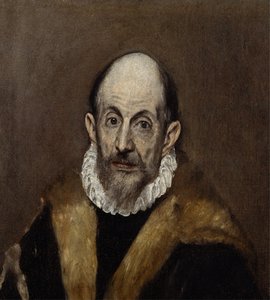
El Greco
1541 - 1614 , Griechenland
Snabbfakta
- Artistic Movement Or Style: Mannerism och Barock
- Artists Who Influenced This Artist:
- Titian
- Tintoretto
- Date Of Birth: 1541
- Date Of Death: 1614
- Full Name: Doménikos Theotokópoulos
- Nationality: Grekisk-Spansk
- Notable Artworks:
- Burial av räknaren Orgaz
- Vy över Toledo
- El Espolio
- Heliga Sebastian
- Place Of Birth: Crete, Greece
Relaterade artiklar

Byzantine Art Unveiled: The Divine Radiance of Golden Mosaics and Sacred Iconography
Journey through the luminous history of Byzantine art. Unveil the profound symbolism of sacred icons and the breathtaking brilliance of gold-leaf mosaics in this expert cultural retrospective. A soulful exploration for the discerning art lover.

El Greco: Spirituality, Style & Innovation – A Renaissance Master's Legacy
Explore the captivating world of El Greco! Discover his unique style, spiritual intensity, and lasting impact on art history. Learn about this Renaissance master's life, iconic paintings & legacy.

Sacred Narratives Embodied: A Comprehensive Exploration of Religious Iconography in Art History
Explore the rich history of religious iconography in art! Discover symbolism, movements & masterpieces from Byzantine to Renaissance periods. Expert insights for collectors and enthusiasts at AllPaintingsStore.
El Grecos 25 Mästerverk: En Konsthistorisk Resa för Hemmet & Själens Frid
Utforska El Grecos 25 mest ikoniska tavlor! Fördjupa dig i spansk renässanskonst, dramatik och sakrala motiv. Köp högkvalitativa konsttryck & inred med tidlösa mästerverk från AllPaintingsStore.com.

Mannerism Unveiled: The Dramatic Evolution of Renaissance Art and the Visionary Legacy of El Greco
Explore the dramatic transition from High Renaissance harmony to Mannerist tension. Discover how masters like El Greco redefined art through distortion and spiritual intensity. An expert guide for art enthusiasts seeking deep historical context and museum-quality inspiration.


