Pengarna tillbaka-garanti · 100 dagar Fri frakt i hela världen
449 587konstverk 30 613konstnärer 4 660museer 32språk
Valuta
    Språk
      Ateljé · Grundat 2015 · Paris, Frankrike
      AllPaintingsStore
      allpaintingsstore.com
      Catalogue entry

      The Risen Christ

      1595. Acrylic On Canvas. Hospital Tavera.

      Fig. 1. El Greco, The Risen Christ, 1595. Shown as the reproduction you are specifying: , .

      § 1Catalogue data

      § 2Abstract

      Beskrivning av samlarobjekt

      Experience El Greco's dramatic 'The Risen Christ,' a poignant Mannerist masterpiece capturing faith and vulnerability. Explore the artist’s unique style & Toledo’s art history.

      Konstnärens biografi

      Upptäck El Grecos dramatiska konstverk! Mästerverk från Mannerismen och religiösa scener med långa figurer. En pionjär inom expressionism och kubism – se hans ikoniska målningar!

      § 3Commentary

      A Moment of Transcendence: The Risen Christ

      Doménikos Theotokópoulos, universally known as El Greco – “the Greek” – possessed a singular ability to imbue his paintings with an almost unbearable intensity. His work wasn’t merely representation; it was a visceral experience, a direct conduit to the spiritual realm. “The Risen Christ,” created around 1595 and now housed within the Toledo Cathedral in Spain, stands as a prime example of this profound engagement. This monochromatic masterpiece isn't simply a depiction of resurrection; it’s an exploration of faith, vulnerability, and the yearning for divine grace – rendered with the raw emotion characteristic of El Greco’s Mannerist style.

      The photograph captures a wood sculpture, likely executed by El Greco himself or one of his workshop assistants. The figure is dramatically posed, arms raised in an expansive gesture that seems to reach towards the heavens. His face, etched with sorrow and a nascent hope, gazes upwards, inviting contemplation on the miracle he has witnessed. The stark black and white palette intensifies the emotional impact, stripping away any superfluous detail and focusing solely on the essential elements of this pivotal moment.

      Mannerist Roots and Spanish Influence

      El Greco’s artistic journey was a fascinating synthesis of influences. Born in Crete – a region steeped in Byzantine tradition – he initially trained within the meticulous conventions of that ancient art form, mastering the use of gold leaf and intricate iconography. However, his time in Venice and Rome exposed him to the burgeoning Renaissance ideals, while his eventual settlement in Toledo, Spain, profoundly shaped his distinctive style. Toledo, a city at the crossroads of cultures – Christian, Jewish, and Muslim – provided a rich tapestry of artistic traditions that he skillfully absorbed and reinterpreted.

      This sculpture reflects the core tenets of Mannerism, a movement characterized by elongated figures, distorted perspectives, and an emphasis on emotional expression. El Greco’s use of dramatic diagonals, heightened colors (though rendered in monochrome here), and a sense of dynamism anticipates later artistic movements like Expressionism and Cubism, demonstrating his remarkably prescient vision. The sculpture's scale is also significant; the height of Christ emphasizes his divine status and draws the viewer upwards, mirroring the gesture of his arms.

      Symbolism and Spiritual Depth

      The symbolism within “The Risen Christ” is layered and deeply resonant. The outstretched arms represent not only resurrection but also a plea for forgiveness and connection with God. The upward gaze signifies hope, faith, and the transcendence of earthly suffering. The stark simplicity of the composition – devoid of extraneous details – forces the viewer to confront the core essence of the event: the miracle of Christ’s return. The choice of wood as the medium further reinforces the sculpture's connection to both the earthly realm (the material itself) and the spiritual one (representing the body of Christ).

      A Legacy in Toledo

      El Greco’s work is inextricably linked to Toledo, a city he adopted as his artistic home. The Museo de El Greco, located within the city walls, houses an extensive collection of his paintings and sculptures, offering visitors a profound insight into the artist's life and creative process. The sculpture itself resides in the Hospital Tavera, a testament to its enduring significance. Exploring Toledo’s art scene – including Santo Domingo el Antiguo and The Royal Seat of San Lorenzo de El Escorial – provides further context for understanding El Greco’s place within the broader artistic landscape of Spain during the Spanish Golden Age. Reproductions of “The Risen Christ” offer a remarkable opportunity to bring this powerful work into any setting, allowing its emotional depth and spiritual resonance to be experienced anew.

      Frågor och svar

      Vilken känsla förmedlar "The Risen Christ" av El Greco?

      Stämningen i "The Risen Christ" av El Greco är Dramatic, och dess emotionella ton är Spiritual.

      Hur samverkar kontrast och harmoni i "The Risen Christ"?

      Färganalysen av "The Risen Christ" av El Greco uppvisar en Statement kontrast och en Strong Color Unity harmoni.

      Vilket medium är "The Risen Christ" av El Greco utförd i?

      El Greco använde tekniken Acrylic On Canvas för "The Risen Christ". Tekniken definierar det ursprungliga verkets materiella karaktär.
      § 4The artist

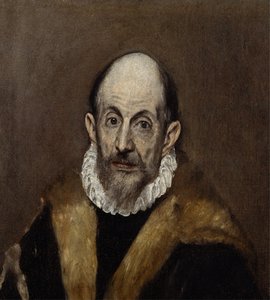
      El Greco

      El Greco

      1541 - 1614, Griechenland

      Quick facts about El Greco

      • Artistic Movement Or Style: Mannerism och Barock
      • Artists Who Influenced This Artist:
        • Titian
        • Tintoretto
      • Date Of Birth: 1541
      • Date Of Death: 1614
      • Full Name: Doménikos Theotokópoulos
      • Nationality: Grekisk-Spansk
      • Notable Artworks:
        • Burial av räknaren Orgaz
        • Vy över Toledo
        • El Espolio
        • Heliga Sebastian
      • Place Of Birth: Crete, Greece

      Konstnärsbiografi

      Doménikos Theotokópoulos, Known As El Greco – A Life Forged in Faith and Fire

      Doménikos Theotokópoulos, universally recognized as El Greco – “the Greek” – stands apart from his contemporaries as a painter whose life and artistic output defied easy categorization. Born in Crete, Greece, around 1541, during the Venetian dominion of the island, his artistic journey unfolded across Venice and Rome before ultimately finding its most profound expression within the spiritual landscape of Spain: Toledo. El Greco wasn’t merely shaped by these locations; he synthesized their diverse influences into a singular style—one that foreshadowed the emotive fervor of Expressionism and the fragmented forms characteristic of Cubism centuries ahead of time. His formative years immersed in Byzantine iconography instilled within him meticulous attention to detail and an instinctive grasp of religious symbolism, grounding his artistic endeavors. Yet, he refused to be confined by tradition; he boldly embraced innovation, propelling himself beyond established conventions. He signed his canvases with Greek lettering – “Krḗs” – signifying his Cretan heritage—a defiant assertion of identity as he ventured into uncharted artistic territories. The genesis of El Greco’s distinctive style wasn't solely rooted in technique but also nurtured by the fervent religious fervor permeating Crete and invigorated by the opulent artistry emanating from Venice.

      From Venetian Influence to Roman Exposure – A Transformation

      Around 1567, El Greco relocated to Venice, initiating a pivotal phase of artistic maturation. Surrounded by luminaries like Titian, Tintoretto, and Veronese—masters who perfected color palettes, compositional strategies, and dramatic illumination—he absorbed their expertise with unwavering dedication. He deliberately loosened his brushstrokes, embracing the sensual richness of oil paint and injecting dynamism into his depictions of figures. This Venetian imprint is palpable in early works such as *St. Sebastian* (1600), where anatomical precision merges seamlessly with theatrical lighting, creating a mesmerizing visual experience. Subsequently, his sojourn in Rome exposed him to Mannerism—a stylistic movement characterized by elongated proportions, distorted perspectives, and sophisticated arrangements—though he struggled to gain widespread acclaim within the competitive Roman artistic milieu. Despite encountering challenges in establishing himself as a celebrated artist, El Greco’s exploration of Mannerist principles undeniably broadened his artistic horizons.

      A Singular Style – Long Lines and Intense Emotion

      El Greco's artistic style is instantly recognizable—a stylistic hallmark that continues to resonate with audiences today. His figures are frequently rendered with elongated proportions, their bodies contorted in poses conveying profound spiritual ecstasy or agonizing sorrow. This isn’t mere stylistic embellishment; it’s a deliberate attempt to transcend the physical realm and portray intangible realities—the unseen forces shaping human experience. He skillfully manipulated color—often employing hues far removed from naturalistic representations—to amplify emotional impact, mirroring the fervor of his subject matter. Dramatic lighting—characterized by stark contrasts between illumination and darkness—creates a theatrical atmosphere, drawing viewers into the core of the depicted scene and intensifying its emotive power. *The Burial of the Count of Orgaz* (1586-1588), arguably El Greco’s magnum opus, exemplifies these stylistic elements flawlessly. This monumental painting portrays a miraculous event – the ascension of saints to bury a pious nobleman—with remarkable realism interwoven with ethereal figures embodying divine intervention. It stands as testament to his ability to fuse meticulous observation with visionary imagination.

      Toledo and Spiritual Depth

      El Greco’s artistic trajectory culminated in his relocation to Toledo in 1577, coinciding with the ascendancy of the Counter-Reformation—a period marked by fervent religious devotion within Spain. This environment fostered both patronage and an atmosphere conducive to El Greco's deeply spiritual artistic endeavors. He channeled his convictions into canvases imbued with palpable emotion and symbolic resonance, reflecting a profound detachment from conventional aesthetic norms. His oeuvre expanded considerably during this time, producing iconic works that cemented his legacy as one of the foremost artists of his era.

      Legacy and Recognition – A Pioneer Ahead Of His Time

      Despite encountering difficulties gaining widespread recognition during his lifetime—primarily due to stylistic divergences from prevailing artistic trends—El Greco’s genius was belatedly acknowledged in the 20th century. Artists like Picasso and Braque recognized him as a precursor to modern art, particularly Cubism, admiring his distorted forms and unconventional perspectives. His expressive style captivated Expressionists who sought to convey emotional intensity through bold colors and dramatic compositions. Today, El Greco is revered as one of the most influential figures in Western artistic history—a visionary painter whose work continues to inspire awe and provoke contemplation centuries after its creation. He remains a beacon of artistic innovation, demonstrating that true artistry transcends temporal boundaries and speaks directly to the human spirit’s yearning for transcendence.

      § 5Comparanda

      § 6Questions

      Kortfakta

      • Title: The Risen Christ
      • Location: Toledo Cathedral, Spain
      • Medium: Polychrome wood
      • Movement: Mannerism
      • Subject or theme: Resurrection of Christ
      • Artist: El Greco

      Konstquiz

      Det finns endast ett korrekt svar på varje fråga.

      Fråga 1:
      What is the primary subject depicted in El Greco’s ‘The Risen Christ’?
      Fråga 2:
      What artistic style is most closely associated with El Greco’s ‘The Risen Christ’?
      Fråga 3:
      Based on the image description, what material is the statue primarily constructed from?
      Fråga 4:
      In which city was El Greco born?
      Fråga 5:
      The image description highlights the statue's pose. What does this pose primarily symbolize?

      § 7Cite this entry

      AllPaintingsStore.com, “El Greco, The Risen Christ (1595)”, https://allpaintingsstore.com/sv/art/el-greco-the-risen-christ-8XZGKM-en/ (accessed 2 oktober 2026).

      § 8The reproduction

      Handgjord oljereproduktion

      Handmålad olja på duk i din valda storlek och ram, tillverkad efter beställning av våra konstnärer. ( Byt till tryck Byt till digital bild)

      It is specified on the order sheet in the margin; the present state of that sheet reads as follows.

      The Risen Christ

      Reproduktionsmetod

      Storlek på reproduktion

      -

      Elitkonstnär av högsta klass

      Mer detaljrikedom, finess och extra produktionstid

      -

      Inramning av reproduktion

      -

      -

      För konstverk eller reproduktioner som är större än 105 cm (cirka 41 tum) på någon sida, levereras ramen som ett isärplockat kit. Denna metod säkerställer en trygg leverans och förhindrar skador under transport.

      Professionell montering krävs – detta är inte en produkt för självmontering.
      Kitet måste monteras och duken spännas av en erfaren professionell inramare med hjälp av trälim (ingår ej), en spänntång för duk och klämmor för att hålla sargen rak medan limmet torkar. Felaktig montering eller ojämn spänning av duken kan orsaka permanenta skador på konstverket och täcks inte av vår garanti.

      • Alla massiva träribbor ingår, exakt tillkapade efter mått.

      • Monteras med de medföljande skruvarna, samt trälim för hörnfogarna, vilket inte ingår och måste anskaffas av din ramverkare.

      • Professionella verktyg krävs och ingår ej: en dukspännare och klämmor för att hålla listerna raka medan limmet torkar.

      Viktigt:
      Hörnjunctionerna kräver trälim, listerna måste hållas på plats med tvingar tills limmet har torkat helt, och för att spänna duken på den monterade ramen krävs en spänntång för duk. Inget av detta ingår i kitet. Vänligen kontakta en erfaren professionell rammakare innan du beställer denna storlek.

      Namnskylt

      -

      -

      Skyddande fernissa

      Glansig fernissa (förstärker färgerna, skyddar mot ljus och fukt)

      -

      Anpassa mitt konstverk

      Exempel på vad som kan ändras: Byt ut ansiktet mot ett foto från kunden; Lägg till ett husdjur (t.ex. byt ut en katt mot en hund); Inkludera ett dolt meddelande i bakgrunden; Ändra bakgrundens landskap eller detaljer.

      -

      Expressleverans

      Leverans över hela världen () inom 3–4 veckor istället för standardiserade 5 veckor. (30 oktober). Inga kompromisser med kvaliteten.

      -

      Expressleverans

      Leverans över hela världen () inom 5 veckor. (6 november).

      Ingår

      Slutgiltigt pris

      Skr 2592

      Included with every order

      • Fri expressfrakt över hela världen
      • Högkvalitativ linnecanvas
      • Fullständig fraktförsäkring
      • Garantier för återbetalning av tullavgifter
      • Garantier för exakt färgåtergivning
      • 100 dagars returrätt (endast vid fel)
      • 100% pengarna tillbaka-garanti
      • Mängdrabatt erbjuds
      Order sheet