

1944. Acrylic On Canvas.

§ 1Catalogue data


Detta konstverk är upphovsrättsligt skyddat
Konstverket som visas på denna sida skyddas av upphovsrättslagen, vilket innebär att vi inte lagligt kan skapa eller sälja en identisk reproduktion. Detta skydd upprätthålls genom internationella avtal såsom den Bernkonventionen och genom nationella lagar, inklusive de som fastställs av Amerikansk upphovsrättslag – Titel 17. Alla rättigheter förbehållna. Återgivning av konstverk är förbjuden utan skriftligt tillstånd från WahooArt.
Som ett respektfullt och lagligt alternativ erbjuder vi skräddarsydda, handmålade konstverk inspirerade av originalet. Våra skickliga och professionella konstnärer studerar noggrant originalets stil, stämning och konstnärliga essens för att skapa ett nytt, unikt verk som väcker samma känsla – samtidigt som det förblir en originell skapelse i egen rätt.
Denna metod följer fullt ut upphovsrättsliga regler eftersom den inte innebär kopiering eller duplicering av det skyddade konstverket. Istället är det en kreativ nytolkning – en ny målning som är influerad av originalet men inte identisk med det.
 Läs mer
§ 2Abstract
Beskrivning av samlarobjekt
Explore the wartime & portrait art of Rupert Shephard (1909-1992). English painter known for industrial scenes, portraits & Slade School training. Discover his work!
Konstnärens biografi
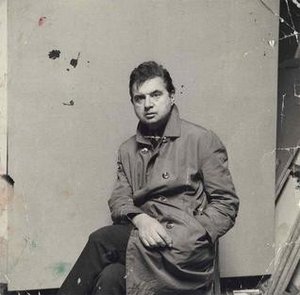
Utforska Francis Bacons (1909-1992) känslomässigt laddade figurativa målningar. Kända för deformerade former, existentiella teman och vågad expressionism. Upptäck nyckelverk och hans arv.
§ 3Commentary
A Descent into Anxiety: Examining Bacon’s ‘Second Version of Triptych 1944’
Francis Bacon's 'Second Version of Triptych,' completed in 1988, stands as a haunting testament to the artist’s unwavering exploration of psychological torment and existential dread. This monumental oil painting—a reworking of his earlier masterpiece—captures a visceral confrontation with fear and vulnerability, cementing Bacon’s reputation as one of the most influential figures in postwar British art. The artwork itself depicts a disconcerting tableau: three canvases interwoven to create a single image featuring a grotesque canine figure sprawled across what appears to be a brick wall or tabletop surface. Its gaping maw is open wide, conveying an unsettling blend of yawn and desperate vocalization—a gesture simultaneously comical and profoundly disturbing. The dominant hue is a searing crimson, applied with thick impasto strokes that lend the painting a palpable physicality. This bold color choice isn’t merely decorative; it serves as a conduit for emotional intensity, mirroring the turbulent inner landscape of Bacon's artistic vision. Contrasting sharply against this fiery backdrop are stark black lines delineating the dog’s form—a deliberate simplification that amplifies its grotesque presence and underscores its isolation within the composition. The artist eschewed traditional representational methods, favoring instead a style rooted in Expressionism, mirroring the anxieties prevalent during the period following World War II. Bacon's technique involved layering paint onto canvas with aggressive brushstrokes, creating textured surfaces that seem to pulsate with suppressed emotion. Delving deeper into the historical context reveals Bacon’s engagement with the pervasive atmosphere of uncertainty and disillusionment that characterized Europe after the devastation of the Second World War. Influenced by Surrealist ideas—particularly those championed by André Breton—Bacon sought to depict not merely what he saw but what he *felt*, channeling his own psychological struggles into artistic expression. The triptych format itself is significant, referencing religious iconography and suggesting a deliberate attempt to grapple with profound spiritual questions. However, Bacon’s intention wasn't pious contemplation; rather, it was an unflinching portrayal of human suffering—a refusal to sugarcoat the darker aspects of existence. Symbolically, the dog embodies vulnerability and primal instinct – qualities that resonate deeply within the artwork’s emotional core. Its open mouth symbolizes both exhaustion and a desperate yearning for connection, highlighting the inescapable loneliness inherent in confronting existential anxieties. The brick wall or tabletop surface serves as a barrier—a physical manifestation of psychological defenses against overwhelming emotion. Bacon's masterful manipulation of color and line compels viewers to confront uncomfortable truths about themselves and the human condition. Ultimately, ‘Second Version of Triptych’ transcends mere visual representation; it is an immersive experience designed to provoke contemplation and elicit visceral responses. It remains a cornerstone of Bacon’s oeuvre—a powerful reminder that art can serve as a conduit for confronting our deepest fears and grappling with the complexities of human emotion. Its enduring appeal lies in its uncompromising honesty and its ability to capture the unsettling beauty of psychological turmoil.Frågor och svar
Vilken är den övergripande stämningen i "second version of triptych 3" av Francis Bacon?
Den övergripande stämningen i "second version of triptych 3" av Francis Bacon är Dramatic. Stämningen beskriver verkets allmänna atmosfär.
Vilket stämningsläge uttrycker "second version of triptych 3" av Francis Bacon inom Expressionist Surrealism?
Inom Expressionist Surrealism-rörelsen är "second version of triptych 3" präglad av en Dramatic ton.
Hur förhåller sig stilen i "second version of triptych 3" till sin skapares epok?
"second version of triptych 3" av Francis Bacon tillhör Expressionist Surrealism-rörelsen och skapades under sin konstnärs Modernismen-era.


 Byt till tryck


 För konstverk eller reproduktioner som är större än 105 cm (cirka 41 tum) på någon sida, levereras ramen som ett isärplockat kit. Denna metod säkerställer en trygg leverans och förhindrar skador under transport.


