


 Förhandsvisa
 Skicka
 Dela
Dela
 Visa detaljer
 Guide
Guide

 Ladda ner
 Liknande objekt
 Röntgen
 Bildspel
 Statistik
Two Sheep


 Visa mer
Giclée / Konsttryck
Giclée- eller canvasprint av museumskvalitet med snabb produktion och flexibla ytbehandlingsalternativ. ( Beställ handmålad reproduktion Byt till digital bild)




P118B Skr10

P118H Skr10

P118W Skr10

P438Z Skr10

P508JH Skr12

P508YH Skr12

P805H Skr10

P805Z Skr10

P919BZ Skr10

P919G Skr10

P919XJ Skr10

P959ZH Skr10

P968JZ Skr12

W106C Skr8

W218G Skr10

W218JH Skr8

W218Y Skr10

W307PJ Skr10

W316G Skr10

W316PJ Skr8

W316Y Skr10

W398PJ Skr8

W4111J Skr10

W500HY Skr15

W500JH Skr15

W692G Skr12

W849H Skr8

W940BG Skr15

W953PJ Skr8




Välj bland våra förinställda storlekar som motsvarar konstverkets ursprungliga proportioner.

Ange den bredd och höjd du behöver för att passa din ram eller vägg. Ett tryck kan endast beskäras, aldrig göras större än originalbilden, vilket innebär att ett format med en annan proportion leder till att en del av bilden går förlorad. Vi skickar en digital mockup för godkännande innan vi påbörjar tryckningen. Bilden som visas på denna sida visar inte den faktiska beskärningen — det är endast mockuppen som gör det.
Leverans över hela världen () på 2 veckor istället för standard 4/5 veckor. (28 oktober)

Fri expressfrakt över hela världen

Högkvalitativ linnecanvas

Fullständig fraktförsäkring

Garantier för återbetalning av tullavgifter

Garantier för exakt färgåtergivning

100 dagars returrätt (endast vid fel)

100% pengarna tillbaka-garanti

Mängdrabatt erbjuds
 Glasalternativet är endast tillgängligt i storlekar under 110 cm.

Two Sheep
Giclée / Konsttryck
Storlek på reproduktion
-


Slutgiltigt pris
Skr 640
A Moment of Serene Intensity: Franz Marc's "Two Sheep"
Franz Marc’s “Two Sheep,” painted in 1913, isn’t merely a depiction of animals; it’s a profound exploration of the spiritual essence of life as perceived through the lens of early Expressionism. This work, rendered with Marc's signature vibrant palette and deeply emotive brushwork, transcends simple representation to become a meditation on instinct, connection, and the inherent beauty found within the natural world. The painting immediately draws the viewer in with its bold use of color – deep blues and greens dominate, punctuated by earthy browns and ochres—creating an atmosphere both tranquil and subtly charged.
The composition itself is deceptively simple. Two sheep stand side-by-side, their forms rendered with a loose, almost childlike quality that speaks to Marc’s desire to strip away the complexities of human perception and access a more primal understanding. They gaze outwards, seemingly lost in contemplation or perhaps anticipating an unseen event. The inclusion of a solitary figure in the background, partially obscured by the landscape, adds a layer of mystery – is this a shepherd observing his flock, or a representation of humanity’s relationship with nature? The sheep's posture and direct gaze invite us to share their silent awareness, fostering a sense of empathy and connection.
The Roots of Expressionism: Marc’s Spiritual Quest
Franz Marc’s artistic journey was deeply intertwined with his spiritual beliefs. Initially influenced by his father’s landscape painting, he later found himself grappling with questions of faith and existence, a period that profoundly shaped his work. His encounter with Vincent van Gogh's expressive use of color proved particularly transformative, igniting within him a desire to capture not just the appearance of things but also their underlying emotional resonance. Marc sought to translate this inner experience onto canvas, believing that art could serve as a conduit for spiritual insight – a way to access and communicate the fundamental truths of life.
The painting’s context within the broader artistic landscape is crucial to understanding its significance. “Two Sheep” was created during a period of intense experimentation and innovation in German art, particularly within the circle of Der Blaue Reiter (The Blue Rider). This group, comprised of artists like Wassily Kandinsky and August Macke, sought to break free from traditional academic conventions and explore new ways of representing the world. Marc’s work exemplifies this spirit of rebellion, prioritizing emotional expression over realistic depiction. The use of flattened perspective, simplified forms, and intense color harmonies are hallmarks of Expressionism, aiming to evoke a specific mood or feeling rather than simply mirroring reality.
Color as Soul: Marc's Palette and Technique
Marc’s mastery lies not just in his subject matter but also in his extraordinary command of color. He employed a technique known as “color-forms,” where shapes are defined primarily by their hue rather than precise outlines. This approach creates an almost dreamlike quality, blurring the boundaries between objects and imbuing them with symbolic weight. The blues and greens evoke feelings of serenity, introspection, and connection to nature – while the earthy tones ground the scene in a sense of earthly reality.
His brushwork is equally expressive, characterized by loose, gestural strokes that convey movement and energy. Marc wasn’t interested in meticulously rendering every detail; instead, he prioritized capturing the essence of his subjects—their spirit, their vitality. The painting feels alive, imbued with a sense of quiet intensity. The layering of colors creates depth and luminosity, drawing the viewer into the scene and inviting them to contemplate the sheep's silent world.
A Legacy of Spiritual Vision
“Two Sheep” remains a powerful testament to Franz Marc’s artistic vision. It is more than just a painting of animals; it’s an invitation to connect with the deeper rhythms of nature and to contemplate the mysteries of existence. Reproductions of this work, meticulously crafted by AllPaintingsStore.com, offer a remarkable opportunity to experience the emotional depth and spiritual resonance of Marc's masterpiece in your own home or studio. The vibrant colors and expressive brushwork are faithfully reproduced, allowing you to immerse yourself in the artist’s unique perspective and appreciate the enduring beauty of this iconic work.
Frågor och svar
Vilken färgpalett och vilken känsla förmedlar "Two Sheep"?
Den Earthy färgpaletten i "Two Sheep" av Franz Marc harmonierar med dess Tranquil emotionella ton. Färg är ett av de sätt som ett verk förmedlar känsla på.
Vilken teknik har använts för "Two Sheep"?
Franz Marc använde tekniken Acrylic On Canvas för "Two Sheep". Tekniken definierar det ursprungliga verkets materiella karaktär.
När skapades "Two Sheep" och vilken stilriktning tillhör det?
"Two Sheep" skapades år 1913 som ett verk inom German Expressionism-rörelsen. Datum och stil förankrar konstverket i konsthistorien.
Liknande konstverk


Konstnärsbiografi
A Life Immersed in Color and Spirit
Franz Moritz Wilhelm Marc, född i München 1880, var en konstnär vars korta men intensiva livsverk oåterkalleligt förändrade kursen för tyska expressionismen. Hans historia är en av djupgående andlig sökande översatt till ett vibrerande visuellt språk, en strävan efter att förstå livets väsen genom den renhet han fann i naturen – särskilt inom djurriket. Initialt influerad av sin far, Wilhelm Marc, en landskapsmålare, var Franz’ konstnärliga väg inte omedelbart säker. Han övervägde kortfattat teologi, brottandes med frågor om tro och existens innan han slutligen ägnade sig åt konsten vid Münchens Konstakademi. Dessa tidiga utforskningar av religiösa tankar skulle finnas djupt rotade i hans verk, formar hans övertygelse att konst kunde vara en kanal för andlig upplevelse. Hans akademiska utbildning gav honom tekniska grunder, men möten med Vincent van Goghs verk under besök i Paris tände verkligen hans konstnärliga vision. Van Goghs känslomässiga användning av färg och rå uttryck resonerade djupt med Marc, befriad konventionella tekniker och sätter honom på en väg mot ett mer subjektivt och emotionellt laddat stil.The Blue Rider and a New Artistic Vision
Marcs konstnärliga utveckling var inte isolerad; den blomstrade inom det dynamiska sammanhanget av tidig 20-tal München. Han experimenterade med olika konstgrupper, inklusive Neue Künstlervereinigung München, innan han grundade *Der Blaue Reiter* (The Blue Rider) 1911 tillsammans med Wassily Kandinsky. Detta var inte bara en grupp eller en utställningsserie; det var en filosofisk och konstnärlig revolution. *Der Blaue Reiter* sökte att gå bortom enkel representation, syftande istället till att uttrycka inre andliga sanningar genom abstraktion och symbolisk färg. Gruppens tidning med samma namn blev en plattform för att sprida dessa idéer, visa inte bara deras egna verk utan också de av andra framstående konstnärer och utforska olika kulturella influenser från folkkonst till primitiva skulpturer. Marcs bidrag under denna period var avgörande. Han avvek från att måla landskap som statiska scener, istället fokuserade han på djur – hästar, rådjur, rävar – som bärare av andlig energi. Dessa var inte bara djurporträtt; de var symboliska representationer av oskuld, harmoni och en koppling till naturen som han trodde att mänskligheten hade förlorat. Inflytandet från Robert Delaunay’s utforskning av abstrakta former och livfulla färger drev Marc vidare mot förenkling och ökad emotionell uttryck i sitt arbete. Verk som *The Tiger* (1912) och *Red Deer* (1912) exemplifierar denna förändring, visar framstegande färgval och ett växande fokus på sina ämnens inneboende egenskaper snarare än realistisk representation.Symbolism, Färg och Livets Essens
Marcs konstnärliga stil är omedelbart igenkännbar genom dess distinkta användning av färg och form. Han använde inte färg beskrivande; istället infogade han den med symbolisk mening. Blått representerade andlighet och maskulinitet, gult betydde glädje och femininitet, och rött uttryckte våld och materiellitet. Dessa val var inte slumpmässiga utan en noggrant konstruerad system för att förmedla specifika emotionella och filosofiska idéer. Hans djur är inte bara ämnen; de är förenade av dessa koncept. Förenklingen av former – att reducera figurer till deras väsentliga former – betonade ytterligare den underliggande andliga essens han sökte fånga. *The Tower of Blue Horses* (1913), tragiskt förlorad under andra världskriget, är kanske det mest ikoniska exemplet på denna metodik, en kraftfull och suggestiv komposition som fångar hans konstnärliga vision. Han trodde att djur besatt en inneboende oskuld och koppling till naturen som människor hade förlorat genom samhällets begränsningar och intellektualisering. Genom att måla dem med sådan fröjd och symbolisk vikt sökte Marc påminna betraktare om denna förlorade harmoni och inspirera en djupare uppskattning av den naturliga världen. Hans verk var inte syftande till *vad* han såg utan snarare *hur* han kände – ett djupt personligt och andligt svar på sin omgivning.En Tragisk Slut och Ett Bestående Arv
Utbrottet av första världskriget 1914 förändrade Marcs liv och konstnärliga bana dramatiskt. Trots att han sökte undantag på grund av sin status som konstnär, blev han rekryterad till det tyska armén, tjänstgjorde som kavallerist. Krigets fasor berörde honom djupt, men även mitt i kaoset fortsatte han att måla, hittade tröst och mening i sitt konstverk. Tragiskt nog dog Franz Marc den 4 mars 1916, vid Verdun, en förödande förlust för konstvärlden. Hans tidiga död avbröt en karriär fylld av potential, men etablerade också hans plats som en nyckelperson i modern konsthistoria. Hans verk fortsätter att resonera idag, påverkar generationer av konstnärer och fångar in publiken med sin emotionella djup och andliga resonans. Marcs målningar visas på framstående museer över hela världen, inklusive Lenbachhaus i München, som innehar en omfattande samling av hans verk. Han minns inte bara som pionjär för tyska expressionismen utan också som en visionär konstnär som vågade utforska den djupa koppling mellan konst, andlighet och naturen – ett arv som fortsätter att inspirera beundran och eftertanke. Hans konstnärliga vision är ett testamente till konstens kraft att överskrida det materiella riket och beröra något djupare inom den mänskliga själen.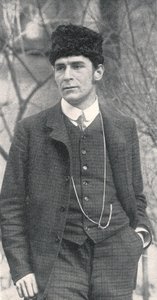
Franz Marc
1880 - 1916 , Tyskland
Kortfakta
- Artistic Movement Or Style: Tysk expressionism
- Artists Or Movements Influenced By This Artist: ['Der Blaue Reiter']
- Artists Who Influenced This Artist:
- Van Gogh
- Delaunay
- Date Of Birth: 8 februari 1880
- Date Of Death: 4 mars 1916
- Full Name: Franz Moritz Wilhelm Marc
- Nationality: Tysk
- Notable Artworks:
- The Tiger
- Red Deer
- Tower Blue
- Place Of Birth: München, Tyskland
Relaterade artiklar

Unmasking Emotion: A Journey Through the Raw Power and Visceral Beauty of German Expressionism
Explore the raw emotional power of German Expressionism. From Kirchner to Die Brücke, discover how artists used distortion and vibrant color to unmask the human psyche. A deep dive into art history for the discerning collector and enthusiast.

Tysk Expressionism: 10 Mästerverk som Definierade en Epok – Konst & Inredning
Utforska 10 ikoniska mästerverk inom tysk expressionism! Lär känna konstnärer som Nolde, Kirchner & Heckel. Upptäck historien bakom dessa färgstarka målningar och finn inspiration till din inredning med AllPaintingsStore.com – museumkvalitet för ditt hem.

Franz Marc: Expressionism, Spirituality & the Animal Symbolism of a Modern Master
Explore the profound world of Franz Marc's Expressionist paintings. Discover his spiritual connection to animals, innovative use of color, and lasting impact on modern art history. Learn more at AllPaintingsStore.

Beyond the Screen: Transforming Personal Memories into Timeless AI-Driven Anime Masterpieces
Experience the magic of digital metamorphosis. Transform your cherished photos into stunning, hand-painted anime masterpieces using our proprietary AI technology and professional artists. Elevate your personal story with a timeless, high-quality oil painting on canvas.

Djurens Bestående Närvaro i Konsten: Symbolik och Inredningsdesign
Utforska djurens fascinerande symbolik i konsten och hur du kan integrera dessa teman i din inredning. Expertinsikter om hundar, katter, hästar och mer!


