


 Förhandsvisa
 Skicka
 Dela
Dela
 Visa detaljer
 Guide
Guide

 Ladda ner
 Liknande objekt
 Röntgen
 Bildspel
 Q&A
Q&A Statistik
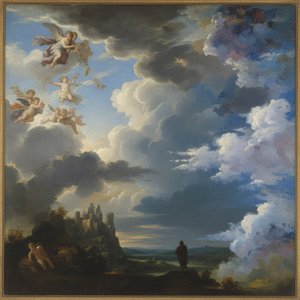
Study for Clouds (Contre-jour)
 Oil On Canvas
- WallArt
- Cubist Abstraction
 1970
1970 80.0 x 100.0 cm
 Visa mer
Konstverket som visas på denna sida skyddas av upphovsrättslagen, vilket innebär att vi inte lagligt kan skapa eller sälja en identisk reproduktion. Detta skydd upprätthålls genom internationella avtal såsom den Bernkonventionen och genom nationella lagar, inklusive de som fastställs av Amerikansk upphovsrättslag – Titel 17. Alla rättigheter förbehållna. Återgivning av konstverk är förbjuden utan skriftligt tillstånd från WahooArt.
Denna metod följer fullt ut upphovsrättsliga regler eftersom den inte innebär kopiering eller duplicering av det skyddade konstverket. Istället är det en kreativ nytolkning – en ny målning som är influerad av originalet men inte identisk med det.
Giclée / Konsttryck
Giclée- eller canvasprint av museumskvalitet med snabb produktion och flexibla ytbehandlingsalternativ. ( Beställ handmålad reproduktion Byt till digital bild)




P118B Skr10

P118H Skr10

P118W Skr10

P438Z Skr10

P508JH Skr12

P508YH Skr12

P805H Skr10

P805Z Skr10

P919BZ Skr10

P919G Skr10

P919XJ Skr10

P959ZH Skr10

P968JZ Skr12

W106C Skr8

W218G Skr10

W218JH Skr8

W218Y Skr10

W307PJ Skr10

W316G Skr10

W316PJ Skr8

W316Y Skr10

W398PJ Skr8

W4111J Skr10

W500HY Skr15

W500JH Skr15

W692G Skr12

W849H Skr8

W940BG Skr15

W953PJ Skr8




Välj bland våra förinställda storlekar som motsvarar konstverkets ursprungliga proportioner.

Ange den bredd och höjd du behöver för att passa din ram eller vägg. Ett tryck kan endast beskäras, aldrig göras större än originalbilden, vilket innebär att ett format med en annan proportion leder till att en del av bilden går förlorad. Vi skickar en digital mockup för godkännande innan vi påbörjar tryckningen. Bilden som visas på denna sida visar inte den faktiska beskärningen — det är endast mockuppen som gör det.
Leverans över hela världen () på 2 veckor istället för standard 4/5 veckor. (30 oktober)

Fri expressfrakt över hela världen

Högkvalitativ linnecanvas

Fullständig fraktförsäkring

Garantier för återbetalning av tullavgifter

Garantier för exakt färgåtergivning

100 dagars returrätt (endast vid fel)

100% pengarna tillbaka-garanti

Mängdrabatt erbjuds
 Glasalternativet är endast tillgängligt i storlekar under 110 cm.

Study for Clouds (Contre-jour)
Giclée / Konsttryck
Storlek på reproduktion
-


Slutgiltigt pris
Skr 643
A Window into Richter’s Soul: The Poetic Study of Light and Form
Gerhard Richter's *Study for Clouds (Contre-jour)*, executed in 1970, stands as a testament to his pioneering approach within Abstract Expressionism. More than just a depiction of natural phenomena—a sunset viewed through swirling clouds—it’s an exploration of perception itself, capturing the elusive beauty and transformative power of light against textured surfaces.
- Subject Matter: The artwork centers on a simple yet profound observation: the dramatic interplay between sunlight and cloud formations. Richter eschews representational accuracy, prioritizing instead the emotional resonance of color and texture.
- Style & Technique: Richter’s masterful use of oil paint—applied in multiple layers with meticulous blending—creates an illusionistic surface that mimics the organic irregularities of clouds. The technique is characterized by a deliberate ambiguity; it's neither fully abstract nor entirely realistic, existing somewhere between these two poles.
- Color Palette: Dominated by cool blues and grays, punctuated by flashes of pale yellow where sunlight penetrates the cloud cover, the palette reflects the subdued grandeur of twilight. Richter’s color choices are carefully calibrated to convey mood and atmosphere—a sense of quiet contemplation amidst a dynamic visual experience.
The Influence of Friedrich and Beyond
Richter's work is deeply rooted in the Romantic tradition, particularly influenced by Caspar David Friedrich’s landscapes imbued with sublime emotion. Like Friedrich, Richter seeks to capture the awe-inspiring grandeur of nature while simultaneously conveying a feeling of vulnerability and insignificance. However, Richter departs from Friedrich’s meticulous detail, favoring instead a looser brushstroke that emphasizes tonal variation and textural depth.
- Historical Context: Created during the formative years of Richter's artistic career—a period marked by experimentation and intellectual engagement—the painting reflects the broader stylistic currents of the time. It aligns with the burgeoning interest in abstraction as a means of expressing subjective experience.
- Symbolism: Clouds themselves hold symbolic significance, representing change, impermanence, and the sublime beauty of the natural world. Richter’s depiction captures this essence—a fleeting glimpse of light and color that evokes feelings of wonder and melancholy.
A Meditation on Perception
*Study for Clouds (Contre-jour)* isn't merely a visual representation; it's an invitation to contemplate the nature of perception. Richter’s technique—characterized by layering, blurring, and subtle tonal shifts—challenges viewers to consider how our senses interpret reality. The painting encourages us to appreciate the beauty of imperfection and to embrace the ambiguity inherent in artistic expression.
- Materials Used: Oil paint on canvas – Richter’s choice of medium underscores his commitment to capturing the materiality of the artwork itself, mirroring the textures and nuances of the observed landscape.
- Perspective & Depth: Atmospheric perspective—the gradual lightening and diminishing of color intensity as distance increases—creates a convincing illusion of depth, immersing the viewer in the contemplative mood of the scene.
Frågor och svar
Kan jag se "Study for Clouds (Contre-jour)" av Gerhard Richter på min egen vägg innan jag köper den?
"Study for Clouds (Contre-jour)" av Gerhard Richter kan förhandsvisas på din egen vägg via konstverkets Förhandsvisning i AR-sida med hjälp av förstärkt verklighet (AR) på en kompatibel enhet.
Är "Study for Clouds (Contre-jour)" överlag mer ljus eller mörk?
De registrerade värdena för "Study for Clouds (Contre-jour)" av Gerhard Richter är: bright i ljusstyrka och Gentle Luminance i luminans.
Hur många personer ser "Study for Clouds (Contre-jour)"?
Statistik för "Study for Clouds (Contre-jour)" av Gerhard Richter finns på verkets Besöksstatistik-sida: månatliga besök för verket, besök för konstnärens verk samt en uppdelning av nyligen anlända besökare per land och språk.
Liknande konstverk


Konstnärsbiografi
A Life Shaped by Division: The Early Years and Artistic Formation of Gerhard Richter
Gerhard Richters liv är oåtskilt knutet till Tysklands splittrade historia under 2000-talet. Född i Dresden 1932, utspelade hans barndom sig i skuggan av ett stigande nazistiskt regime. Denna formativa period, präglad av förflyttningar – familjen flyttades flera gånger under krigsåren – innebar en djupgående känsla av osäkerhet och en ifrågasättande anda som genomsyrade hans konstnärliga praktik i decennier framöver. De idylliska landskapen från hans tidiga barndom i Reichenau och Waltersdorf rubbades snart av konflikt, vilket lämnade ett bestående intryck på hans psyke. Hans far, om än inte en ivrig anhängare av nazipartiet, navigerade de komplexa förhållandena under förtryck med att vara lärare, medan hans mor främjade en kärlek till litteratur och musik inom familjen. Denna dualitet – en pragmatisk acceptans av omständigheter tillsammans med en längtan efter kulturellt uttryck – blev ett definierande kännetecken för Richters egen konstnärliga approach. Han började sin formella utbildning vid Dresdens konstakademi 1951, initialt djupt rotad i den socialistiska realismen som krävdes av det östtyska staten. Även inom denna begränsade miljö brann en längtan efter konstnärlig frihet under ytan, drivet av ett växande missnöje med ideologiska begränsningar och en önskan att utforska mer expansiva kreativa möjligheter.Escaping Constraints: Düsseldorf and the Exploration of Style
Året 1961 visade sig vara avgörande. Richter, tillsammans med sin fru Marianne Eufinger, fattade det modiga beslutet att fly från Östtyskland och söka skydd i den blomstrande konstscenen i Düsseldorf. Detta steg markerade en radikal förändring i hans konstnärliga bana. Västtysklands landskap erbjöd en befriande miljö där experiment och innovation inte bara tilläts utan aktivt uppmuntrades. I Düsseldorf mötte han ett levande samhälle av konstnärer som brottades med frågor om identitet, representation och den historiska arvets komplexitet. Han började omedelbart att bryta ner de rigida stilistiska konventionerna i socialistisk realism, och inledde en intensiv utforskningstid som skulle definiera hans tidiga vuxna verk. Denna era såg honom oscillerar mellan synes olika stilar – från fotorealism, noggrant återge fotografier med en nästan klinisk distans, till abstrakta kompositioner präglade av djärva färger och dynamiska penseldrag. Hans samarbete med Sigmar Polke ledde till att termen ‘Capitalist Realism’ skapades, ett medvetet tvetydigt etikett som återspeglade deras gemensamma skepticism mot etablerade konstnormer och deras appropriation av bilder från reklam och massmedia. Denna period handlade inte om att hitta *en* stil, utan snarare om att ifrågasätta själva begreppet stilistisk sammanhållning, och omfamna motsättningar som en grundläggande princip.Blurring Boundaries: Photorealism, Abstraction, and the Power of Chance
Richters konstnärliga ordförråd utvidgades under 1960-talet och framåt, omfattande ett otroligt brett spektrum av tekniker och teman. Hans fotorealistiska målningar, ofta baserade på familjefotografier eller tidningsbilder, är inte bara kopior av verkligheten utan snarare undersökningar av synens och representationens natur. Genom att noggrant återge dessa bilder med en nästan klinisk distans tvingar han betraktarna att konfrontera den inneboende tvetydigheten i fotografisk sanning. Samtidigt djupnade Richter i abstraktion, skapade dukar lagrade med livfulla färger och gestaliska drag. Dessa abstrakta verk är ofta skapade med hjälp av en unik teknik som involverar squeegeer – verktyg som vanligtvis används för att rengöra fönster – som han drar över dukens yta, manipulerar färgen på ett oförutsägbart sätt. Detta omfamnar slump och spontanitet är centralt för hans konstnärliga filosofi, vilket gör honom att släppa kontrollen och bjuda in oväntade utfall. Hans ‘Color Charts’, systematiska arrangemang av färgfält, ifrågasätter vidare traditionella uppfattningar om konstnärligt uttryck. Dessa verk handlar inte om individuella estetiska preferenser utan snarare om att utforska de inneboende egenskaperna hos färgen och dess organisatoriska möjligheter.Legacy and Influence: A Master of Contemporary Art
Gerhard Richters inflytande på samtida konst är obestridligt. Hans vilja att utmana konventioner, hans ihållande utforskning av teknik och hans djupa engagemang med historiska och politiska teman har etablerat honom som en av de viktigaste konstnärerna i vår tid. Han har konsekvent motstått enkla kategoriseringar, trotsade försök att placera hans verk i ett enda stilistiskt ramverk. Denna vägran att definieras, tillsammans med hans tekniska skicklighet och intellektuella rigor, har gett honom allmänt erkännande och kommersiell framgång – hans målningar regelbundet uppnår rekordpriser på auktioner. Utöver marknadsvärdet ligger dock en djupare betydelse. Richters konst talar om modern existensens komplexiteter, som brottas med frågor om minne, identitet och sökandet efter mening i en fragmenterad värld. Han erbjuder inte svar utan snarare ställer frågor, uppmanar betraktarna att konfrontera sina egna förutfattningar och engagera sig i kritisk dialog. *Hans inflytande kan ses i arbetet hos otaliga konstnärer som har följt hans fotspår*, dragna till hans innovativa tekniker och hans obevekliga engagemang för konstnärlig utforskning. Richters arv är inte bara att skapa vackra objekt; det handlar om att utvidga möjligheterna för måleriet självt. Han är fortfarande en vital kraft i samtida konst, fortsätter att inspirera och provocera publiken med sitt utmanande och djupt resonanta verk.
Gerhard Richter
1932 - , Tyskland
Kortfakta
- Artistic Movement Or Style:
- Abstrakt
- Fotorealism
- Artists Or Movements Influenced By This Artist: ['Samtida konstnärer']
- Artists Who Influenced This Artist:
- Picasso
- Arp
- Date Of Birth: 9 februari 1932
- Full Name: Gerhard Richter
- Nationality: Tysk
- Notable Artworks:
- Abstrakt Bild
- Wallace Bournes
- Place Of Birth: Dresden, Tyskland
Relaterade artiklar

The Timeless Charm of Oil on Board: Reimagining Texture and Light through the Impressionist Lens
Discover the profound intimacy of oil on panel. Explore how Impressionist masters used rigid supports to capture light, texture, and impasto depth through exquisite, handmade oil reproductions for discerning collectors.
Ephemeral Visions: Clouds as Motif & Metaphor in Western Art History
Explore the captivating history of clouds in Western art! From Romantic masterpieces to Symbolist visions, discover how artists captured atmosphere, emotion & spirituality. A guide for collectors and enthusiasts.

The Enduring Legacy of Oil on Canvas: Technique, History & Aesthetic Impact
Explore the rich history & techniques of oil painting – from Renaissance masters to Impressionism. Discover pigments, layering methods, and why this timeless medium endures. Expert insights for artists & art enthusiasts.

Olja på duk: En tidlös teknik – Historik, process och konstnärliga möjligheter
Utforska oljemålningskonsten! Lär dig om flamländsk teknik, materialval och historisk utveckling. Expertguider för både nybörjare och erfarna konstnärer – bevara dina målningar med bästa praxis.

The Enduring Power of Painting: A Historical & Contemporary Exploration of Form and Emotion
Explore the rich history & enduring techniques of oil painting with AllPaintingsStore. Discover masterpieces, learn about art collecting, and find authentic handmade reproductions crafted by skilled artists.


