


 Visa i rummet
 Skicka
 Dela
Dela
 Detaljer
 Studentguide för konstverk

 Ladda ner
 Liknande objekt
 Röntgen
 Bildspel
 Besökstatistik
Mud
 1919
1919 335.0 x 203.0 cm
 Läs mer
Handgjord oljereproduktion
Handmålad olja på duk i din valda storlek och ram, tillverkad efter beställning av våra konstnärer. ( Byt till tryckta exemplar Byt till digital bildförsäljning)




































Välj bland våra förinställda storlekar som motsvarar konstverkets ursprungliga proportioner.

Ange den bredd och höjd du behöver för att passa din ram eller din vägg. Eftersom detta är handmålat kan konstnären vid en annan form måla lite mer runt bilden eller beskära den något – du väljer själv. Vi skickar en digital mockup för godkännande innan målningen påbörjas. Bilden som visas på denna sida representerar inte det slutgiltiga resultatet — det är endast mockuppen som visar det.
Efter beställning kommer AllPaintingsStore.com team att mejla kunden för instruktioner och tillhandahålla en skissförhandsvisning
Leverans över hela världen () på 3–4 veckor istället för standard 5 veckor. (23 oktober). Inga kompromisser med kvaliteten.

Fri expressfrakt över hela världen

Högkvalitativ linnecanvas

Fullständig fraktförsäkring

Garantier för återbetalning av tullavgifter

Garantier för exakt färgåtergivning

100 dagars returrätt vid fabrikationsfel

100% pengarna tillbaka-garanti

Mängdrabatt erbjuds
 Glasalternativet är endast tillgängligt i storlekar under 110 cm.

Mud
Tryckteknik
Reproduktionsstorlek
-


Totalpris
Skr 2559
Liknande konstverk


Om konstnären
Gilbert Rogers (1881 – 1956): Witnessing War Through Impressionistic Vision
Gilbert Rogers was a British painter whose artistic output primarily focused on capturing the visceral experience of World War I, specifically depicting stretcher bearers and the medical corps. Born in London in 1881, Rogers possessed an innate fascination with art from a young age, honing his skills through self-study and experimentation before embarking on a formal artistic education at Slade School of Fine Art. This formative period instilled in him a deep appreciation for Impressionism, influencing his distinctive style and palette—characterized by loose brushstrokes and vibrant colors intended to convey mood and atmosphere rather than precise detail.- Early Life & Artistic Influences:
- Rogers’s upbringing fostered an interest in sketching and drawing landscapes, establishing a foundational understanding of composition and tonal variation.
The WWI Canvas: Capturing the Front Line Experience
Rogers's artistic career gained prominence during the First World War. Recognizing the urgent need for visual documentation of the conflict’s realities—particularly the grueling conditions faced by medical personnel—he volunteered his talents to depict scenes from hospitals and ambulance convoys. His most celebrated works include “First World War A Convoy of Ambulances of the Royal Army Medical Corps after a Battle,” an evocative portrayal of stretcher bearers navigating the aftermath of combat, meticulously rendered in oil on canvas. This painting exemplifies Rogers’s commitment to conveying emotion through color and brushwork—a hallmark of Impressionistic technique—creating a powerful impression of both chaos and compassion amidst the horrors of war. He collaborated closely with photographers like Bertram Wooster to produce composite images that combined photographic realism with artistic interpretation, furthering the effort to document the war's impact on human experience.- Notable Paintings:
- "First World War A Convoy of Ambulances of the Royal Army Medical Corps after a Battle" (1917): Demonstrates Rogers’s masterful use of Impressionistic brushstrokes to convey the emotional intensity of wartime trauma.
Technique & Artistic Style: Impressionism's Impact
Rogers embraced Impressionist principles wholeheartedly, prioritizing subjective perception over objective representation. He eschewed meticulous detail in favor of capturing fleeting moments and atmospheric conditions—a deliberate choice that aligns with the broader artistic movement’s rejection of academic conventions. Rogers skillfully blended pigments to achieve luminous color harmonies, layering brushstrokes to build up tonal depth and creating a sense of immediacy and dynamism on his canvases. His approach mirrored the pioneering efforts of artists like Monet and Renoir, who sought to capture the essence of light and color as experienced by the human eye—a stylistic decision that cemented Rogers’s legacy as a significant contributor to British Impressionism.Legacy & Historical Significance
Gilbert Rogers's paintings stand as poignant reminders of the First World War’s profound psychological toll on soldiers and medical staff alike. Beyond their aesthetic beauty, they serve as invaluable historical records—offering insights into the daily lives of those involved in treating wounded veterans. Rogers’s artistic vision transcended mere visual depiction; he aimed to communicate empathy and understanding for the suffering endured by individuals confronting unimaginable circumstances. His work continues to resonate with audiences today, prompting reflection on themes of resilience, compassion, and the enduring power of art to bear witness to human experience during times of crisis.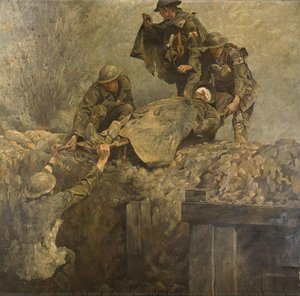
Gilbert Rogers
1881 - 1956
Snabbfakta
- Artistic Movement Or Style: Impressionism
- Artists Or Movements Influenced By This Artist: ['Post-Impressionism']
- Artists Who Influenced This Artist:
- Claude Monet
- Pierre Auguste Renoir
- Date Of Birth: 1881
- Date Of Death: 1956
- Full Name: Gilbert Rogers
- Nationality: British
- Notable Artworks: ['First World War A Convoy of Ambulances']
- Place Of Birth: London, England

