


 Förhandsvisa
 Skicka
 Dela
Dela
 Visa detaljer
 Guide
Guide

 Ladda ner
 Liknande objekt
 Röntgen
 Bildspel
 Q&A
Q&A Statistik
danae


 Visa mer
Giclée / Konsttryck
Giclée- eller canvasprint av museumskvalitet med snabb produktion och flexibla ytbehandlingsalternativ. ( Beställ handmålad reproduktion Byt till digital bild)




P118B Skr10

P118H Skr10

P118W Skr10

P438Z Skr10

P508JH Skr12

P508YH Skr12

P805H Skr10

P805Z Skr10

P919BZ Skr10

P919G Skr10

P919XJ Skr10

P959ZH Skr10

P968JZ Skr12

W106C Skr8

W218G Skr10

W218JH Skr8

W218Y Skr10

W307PJ Skr10

W316G Skr10

W316PJ Skr8

W316Y Skr10

W398PJ Skr8

W4111J Skr10

W500HY Skr15

W500JH Skr15

W692G Skr12

W849H Skr8

W940BG Skr15

W953PJ Skr8




Välj bland våra förinställda storlekar som motsvarar konstverkets ursprungliga proportioner.

Ange den bredd och höjd du behöver för att passa din ram eller vägg. Ett tryck kan endast beskäras, aldrig göras större än originalbilden, vilket innebär att ett format med en annan proportion leder till att en del av bilden går förlorad. Vi skickar en digital mockup för godkännande innan vi påbörjar tryckningen. Bilden som visas på denna sida visar inte den faktiska beskärningen — det är endast mockuppen som gör det.
Leverans över hela världen () på 2 veckor istället för standard 4/5 veckor. (31 oktober)

Fri expressfrakt över hela världen

Högkvalitativ linnecanvas

Fullständig fraktförsäkring

Garantier för återbetalning av tullavgifter

Garantier för exakt färgåtergivning

100 dagars returrätt (endast vid fel)

100% pengarna tillbaka-garanti

Mängdrabatt erbjuds
 Glasalternativet är endast tillgängligt i storlekar under 110 cm.

danae
Giclée / Konsttryck
Storlek på reproduktion
-


Slutgiltigt pris
Skr 643
A Golden Descent: The Erotic Splendor of Klimt’s Danaë
In the heart of the Viennese Secession movement, few works radiate as much intoxicating warmth and mythic power as Gustav Klimt’s Danaë. Painted between 1907 and 1908, this masterpiece serves as a breathtaking intersection of classical mythology and the opulent, sensory-driven aesthetic of Art Nouveau. The canvas captures a moment of profound transformation, where the boundaries between the divine and the mortal dissolve into a shimmering sea of gold. As viewers gaze upon the reclining figure, they are not merely observing a scene from antiquity, but are instead invited into a private, ecstatic encounter that feels both ancient and startlingly modern.
The subject matter draws from the Greek myth of Danaë, the daughter of King Acrisius, who was imprisoned in a bronze tower to prevent a prophecy of her downfall. Unable to reach her through physical means, Zeus—the king of the gods—descended upon her in the form of a torrential golden rain. Klimt captures the precise instant of this celestial visitation. The painting is famously erotic, yet it transcends simple provocation through its masterful use of symbolism. The stream of golden coins and light flowing between Danaë’s thighs represents the divine impregnation, turning a moment of biological conception into a cosmic event of light and wealth.
The Alchemy of Gold and Pattern
Technically, Danaë is a triumph of Klimt’s "Golden Phase." The artist employs a sophisticated manipulation of color and texture that mimics the effect of precious metals. While much of his most famous work utilized actual gold leaf, here, the illusion of luminosity is achieved through meticulous oil painting techniques that create an ethereal, multidimensional glow. This shimmering surface does more than decorate; it symbolizes immortality and the divine grace inherent in the myth. The composition is a labyrinth of intricate geometric patterns and stylized floral motifs, heavily influenced by Byzantine mosaics and Eastern aesthetics, which wrap around the central figure like a protective, ornamental cocoon.
The visual language is one of deliberate contrast. Amidst the overwhelming brilliance of the gold, Klimt introduces deep, royal purples and soft, fleshy tones that ground the ethereal scene in human sensation. The way the light catches the curves of Danaë’s body creates a sense of weight and presence, making her vulnerability palpable. For the collector or interior designer, this interplay of texture and light offers an unparalleled depth; the painting possesses a kinetic quality, appearing to shift and glow depending on the ambient lighting of a room, much like the very gold rain it depicts.
An Emotional Resonance for the Modern Space
Beyond its historical significance, Danaë carries an emotional weight that continues to captivate contemporary audiences. It is a painting about desire, fertility, and the unexpected arrival of fate. There is a profound sense of intimacy in the way Danaë lies in a fetal-like, yet receptive, pose—a moment of total surrender to a force greater than herself. This tension between the heavy, ornamental surroundings and the soft, vulnerable human form creates a narrative pull that is impossible to ignore.
For those seeking to curate a space of luxury and intellectual depth, a high-quality reproduction of this work serves as a magnificent focal point. It brings with it an atmosphere of opulence and a conversation piece rooted in the heights of European art history. Whether placed in a grand salon or a sophisticated private study, Danaë acts as a window into a world where myth and reality are inextricably linked by a single, golden drop of light.
Frågor och svar
Hur upplevs ljusstyrkan i "danae" av Gustav Klimt?
När det gäller upplevd ljusstyrka är "danae" av Gustav Klimt bright.
Kan jag se "danae" av Gustav Klimt på min egen vägg innan jag köper den?
"danae" av Gustav Klimt kan förhandsvisas på din egen vägg via konstverkets Förhandsvisning i AR-sida med hjälp av förstärkt verklighet (AR) på en kompatibel enhet.
Vilken placering passar bäst för formatet på "danae" av Gustav Klimt?
Format (Square) och rekommenderat utrymme (Restaurant) är de två placeringsfakta som finns registrerade för "danae" av Gustav Klimt.
Konstnärsbiografi
Gustav Klimts tidiga liv och konstnärliga rötter
Gustav Klimt, född den 14 juli 1862 i Baumgarten nära Wien, växte upp i en familj präglad av både konstnärlig ådra och ekonomiska svårigheter. Hans far, Ernst Klimt, var guldsmed – ett yrke som subtilt men djupt skulle påverka den unge Gustavs estetiska känslighet. Fascinationen för bladguld, de minutiösa detaljerna, den rena överflödet kom att prägla hans konstnärskap. Familjens ekonomiska situation innebar frekventa flyttar inom Wien, en rastlös uppväxt som kanske bidrog till Klimts skarpa observationsförmåga och känslighet för mänskliga erfarenheter. Redan som barn visade han anmärkningsvärda teckningstalanger, vårdade av faderns yrke och en medfödd begåvning som snabbt blev uppenbar. År 1876 antogs han till Wiens Kunstgewerbeschule (Skolan för tillämpad konst) där han inledde formell utbildning i arkitektonisk målning under Ferdinand Laufberger. Detta gav honom en solid teknisk grund, men utsatte honom också för de rådande akademiska stilarna – stilar som Klimt så småningom skulle utmana och överträffa. Det var här han också ingick ett viktigt konstnärligt partnerskap med sin bror Ernst och Franz von Matsch, ett samarbete som säkrade tidiga uppdrag för dekorativa väggmålningar och tak, vilket lade grunden för hans framtida framgångar.Genombrottet och Wiener Secession
Under 1890-talet blev Klimt alltmer desillusionerad av det konservativa konstnärsetablissemanget i Wien. Han längtade efter större kreativ frihet, ett utrymme där innovation kunde blomstra utan traditionens begränsningar. Denna önskan kulminerade i bildandet av Wiener Secession 1897, en avgörande händelse i österrikisk konsthistoria. Klimt valdes till dess förste ordförande och blev rörelsens frontfigur, som strävade efter att bryta med de rigida akademiska normerna och omfamna nya konstnärliga strömningar som svepte över Europa – jugend, symbolism och japansk estetik. Secessionens egen utställningsbyggnad, designad av Joseph Maria Olbrich, blev en symbol för denna revolt, ett tempel tillägnat modern konst. Klimts verk var centrala för Secessions ethos, och förkroppsligade dess avvisande av konventionell estetik och dess omfamnande av dekorativa element, djärva färger och symbolisk imagery. Hans målningar började utforska teman som kärlek, död och sexualitet med en aldrig tidigare skådad öppenhet, vilket utmanade samhällsnormer och väckte både beundran och upprördhet.Den gyllene perioden och konstnärlig mognad
Runt år 1900 inträdde Klimt i vad som nu kallas hans "gyllene period", en tid präglad av den överdådiga användningen av bladguld, inspirerad av bysantinska mosaiker och medeltida illuminerade manuskript. Denna teknik förvandlade hans målningar till skimrande, overkliga visioner, genomsyrade av en känsla av andlig djup och sensuell lockelse. Kyssen (1907-1908), kanske hans mest ikoniska verk, exemplifierar denna stil – ett par låsta i en omfamning, höljda i en gyllene aura, deras kroppar prydda med intrikata mönster. Denna period såg också Klimt producera en serie fantastiska porträtt, inklusive *Porträtt av Adele Bloch-Bauer I* (1907), som visade hans förmåga att fånga inte bara fysisk likhet utan också sina modellers psykologiska komplexitet. Han suddade alltmer ut gränserna mellan målning och ornamentik, integrerade dekorativa element i sina kompositioner för att skapa en harmonisk fusion av form och innehåll. Påverkan från japansk konst – japonismen – var särskilt tydlig i hans plattare perspektiv, betoning på linjer och användning av dekorativa mönster.Kontroverser, influenser och ett bestående arv
Klimts karriär var inte utan kontroverser. År 1900 fick han ett prestigefullt uppdrag att måla takmålningar för den stora salen i Wiens universitet, som representerade Filosofi, Jurisprudence och Teologi. Dessa verk – särskilt *Filosofi* – ansågs provokativa och till och med pornografiska av konservativa kritiker, vilket ledde till offentlig upprördhet och slutligen fick Klimt att vägra ytterligare offentliga uppdrag. Denna händelse markerade en vändpunkt i hans karriär, som drev honom mot mer privata beställningar och gav honom större konstnärlig frihet. Under hela sitt liv påverkades Klimt av ett mångsidigt utbud av artister och stilar – från Hans Makarts historiska målningar till den dekorativa konsten i Byzantium och Japan. Han hämtade också inspiration från symbolismen, utforskande teman som mytologi, allegori och det undermedvetna. Gustav Klimt fortsatte att måla flitigt fram till sin död den 6 februari 1918 av en stroke under spanska sjukan. Hans senare verk utforskade mer abstrakta former och landskap, vilket visade pågående konstnärlig utveckling. Han erkänns nu som en av de viktigaste figurerna i österrikisk konsthistoria, en ledande företrädare för Wiener Secession och en bestående symbol för jugendens elegans. Hans målningar uppnår höga priser på auktion, och hans inflytande fortsätter att resonera i samtida konst och design.Nyckelkaraktäristika & Konstnärlig stil
- Symbolism: Klimts verk är djupt symboliskt och utforskar ofta teman som kärlek, död, sexualitet och den mänskliga existensen.
- Jugend: Han var en ledande figur i jugendrörelsen, präglad av dess organiska linjer, dekorativa mönster och betoning på skönhet.
- Den gyllene perioden: Hans användning av bladguld skapade skimrande, överdådiga ytor som blev hans signaturstil.
- Dekorativa element: Klimt integrerade dekorativa element i sina kompositioner och suddade ut gränserna mellan målning och ornamentik.
- Den kvinnliga formen: Den kvinnliga kroppen var ett centralt motiv i hans verk, ofta avbildad med sensualitet och psykologiskt djup.
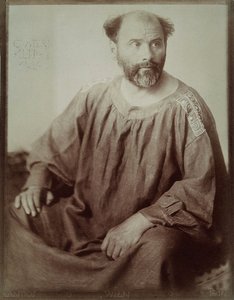
Gustav Klimt
1862 - 1918 , Österrike
Kortfakta
- Artistic Movement Or Style: Symbolism, Art Nouveau
- Artists Or Movements Influenced By This Artist: ['Egon Schiele']
- Artists Who Influenced This Artist:
- Hans Makart
- Japansk konst
- Date Of Birth: 14 juli 1862
- Date Of Death: 6 februari 1918
- Full Name: Gustav Klimt
- Nationality: Österrikisk
- Notable Artworks:
- The Kiss
- Adele Bloch-Bauer I
- Place Of Birth: Wien, Österrike
Relaterade artiklar

Art Nouveau Guide: Integrating Elegant Curves and Organic Design into Luxury Hotel Interiors
Master Art Nouveau integration for luxury hotel interiors. Discover expert strategies for utilizing organic curves, whiplash lines, and botanical motifs to create sophisticated, high-end hospitality spaces with scalable, professional art procurement solutions.


