


 Visa i rummet
 Skicka
 Dela
Dela
 Detaljer
 Studentguide för konstverk

 Ladda ner
 Liknande objekt
 Röntgen
 Bildspel
 Besökstatistik
Painters
 Acrylic On Canvas
- WallArt
- Romanticism
 1790
1790 24.0 x 32.0 cm
 Ermitaget
 Läs mer
Giclée / Konsttryck
Giclée- eller canvasprint av museumskvalitet med snabb produktion och flexibla ytbehandlingsalternativ. ( Köp handmålat konstverk Byt till digital bildförsäljning)




P118B Skr10

P118H Skr10

P118W Skr10

P438Z Skr10

P508JH Skr12

P508YH Skr12

P805H Skr10

P805Z Skr10

P919BZ Skr10

P919G Skr10

P919XJ Skr10

P959ZH Skr10

P968JZ Skr12

W106C Skr8

W218G Skr10

W218JH Skr8

W218Y Skr10

W307PJ Skr10

W316G Skr10

W316PJ Skr8

W316Y Skr10

W398PJ Skr8

W4111J Skr10

W500HY Skr15

W500JH Skr15

W692G Skr12

W849H Skr8

W940BG Skr15

W953PJ Skr8




Välj bland våra förinställda storlekar som motsvarar konstverkets ursprungliga proportioner.

Ange den bredd och höjd du behöver, för att passa din ram eller din vägg. Ett tryck kan endast beskäras, aldrig göras större än bilden, vilket innebär att ett format med en annan formform leder till att en del av bilden går förlorad. Vi skickar en digital mockup för godkännande innan vi trycker något. Bilden som visas på denna sida visar inte den faktiska beskärningen — det är endast mockuppen som gör det.
Leverans över hela världen () på 2 veckor istället för standard 4/5 veckor. (23 oktober)

Fri expressfrakt över hela världen

Högkvalitativ linnecanvas

Fullständig fraktförsäkring

Garantier för återbetalning av tullavgifter

Garantier för exakt färgåtergivning

100 dagars returrätt vid fabrikationsfel

100% pengarna tillbaka-garanti

Mängdrabatt erbjuds
 Glasalternativet är endast tillgängligt i storlekar under 110 cm.

Painters
Giclée / Konsttryck
Reproduktionsstorlek
-


Totalpris
Skr 635
Hubert Robert’s “Painters”: A Vision of Ruin and Remembrance
Hubert Robert's "Painters," painted in 1790, isn’t merely a depiction of laborers at work; it’s a carefully constructed meditation on labor, time, and the enduring power of memory. The scene unfolds within a rugged, almost theatrical landscape – a dramatic vista dominated by a towering rock formation, its weathered surface hinting at centuries of exposure to the elements. Two figures, rendered with a subtle realism that belies Robert's penchant for romanticized ruins, are engaged in the arduous task of carving stone. One, positioned atop the rock, directs the work with a commanding presence, while the other, lower down, meticulously shapes the material beneath him. The composition isn’t about capturing a specific moment; it’s about evoking a feeling – a sense of timelessness and the relentless passage of time, beautifully intertwined with the human effort to impose order upon nature.
Robert's style is distinctly rooted in the Neoclassical tradition, yet infused with the burgeoning Romantic sensibility that was beginning to challenge its rigid formality. He masterfully employs atmospheric perspective – the subtle blurring and darkening of distant elements – to create a profound sense of depth and space. The light, diffused and golden, washes over the scene, casting long shadows and highlighting the textures of the rock and the figures’ clothing. Notice how Robert utilizes loose brushstrokes, particularly in the depiction of the landscape, creating an impressionistic effect that anticipates later developments in art history. This deliberate softness contrasts with the sharper detail given to the men themselves, suggesting a focus on their individual struggles within the grand scheme of nature.
The Context of Labor and Ruin
To fully appreciate “Painters,” it’s crucial to understand Robert's artistic interests – particularly his fascination with ruins. Following the upheavals of the French Revolution, a renewed interest in antiquity and the past emerged, fueled by archaeological discoveries and a desire to reconnect with a perceived lost sense of order and stability. Robert, like many artists of his time, found inspiration in the decaying grandeur of Roman temples and medieval castles, transforming these remnants into evocative landscapes – ‘capriccios’ as he called them. These weren't simply artistic exercises; they were explorations of memory, loss, and the cyclical nature of history. The very act of painting ruins became a way to preserve a fading past, imbuing it with new life and meaning.
The figures depicted in “Painters” represent a specific segment of 18th-century French society – laborers engaged in essential but often overlooked work. Robert’s choice to portray them within such a dramatic landscape elevates their status, suggesting that even the most humble tasks are worthy of artistic attention. The scene subtly critiques the social hierarchies of the time, presenting these men not as mere workers, but as active participants in shaping the world around them. The rock formation itself can be interpreted as a symbol of enduring strength and resilience – a testament to the power of human labor against the forces of nature.
Symbolism and Emotional Resonance
Beyond its straightforward depiction of work, “Painters” is rich in symbolic meaning. The towering rock formation, with its weathered surface, represents the weight of history and the passage of time. The figures’ focused expressions convey a sense of dedication and perseverance, but also hint at the physical strain of their labor. Robert's use of color – predominantly earthy tones punctuated by flashes of gold – evokes feelings of warmth, nostalgia, and perhaps even melancholy. The overall effect is one of quiet contemplation, inviting the viewer to reflect on the relationship between humanity and nature, work and memory.
The inclusion of animals—a horse and a dog—adds another layer of complexity to the scene. Animals have long been associated with labor and service in art, symbolizing loyalty, strength, and connection to the natural world. Their presence reinforces the theme of human interaction with the environment, suggesting a harmonious coexistence – albeit one marked by hard work and enduring effort. “Painters” is not simply a landscape; it’s a carefully orchestrated tableau that speaks volumes about the values and anxieties of its time.
A Timeless Masterpiece: Reproduction Considerations
Reproductions of Hubert Robert's “Painters” offer a remarkable opportunity to bring this evocative artwork into your home or office. The meticulous detail captured by Robert’s brushstrokes, combined with his masterful use of light and shadow, translates beautifully to high-quality reproductions. When selecting a reproduction, pay close attention to the texture and color accuracy – features that are crucial for capturing the painting's atmospheric depth and emotional resonance. AllPaintingsStore offers meticulously crafted hand-painted reproductions that faithfully recreate Robert’s original vision, ensuring that you experience the full impact of this timeless masterpiece.
Frågor och svar
Vilken konstnär tillskrivs "Painters"?
Konstnären bakom "Painters" är Hubert Robert. Verket är katalogiserat under Hubert Roberts namn.
Hur laddar jag ner bilden av "Painters" av Hubert Robert?
Bilden av "Painters" av Hubert Robert kan laddas ner från verkets Ladda ner-sida: en högupplöst digital bildnedladdning.
Vilket rum rekommenderas för "Painters" av Hubert Robert, med tanke på dess färger?
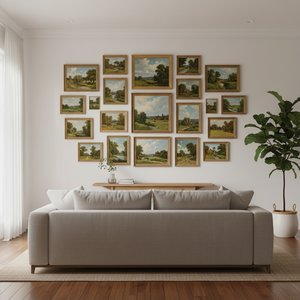
Med sin Earthy-palett rekommenderas "Painters" av Hubert Robert för ett Living Room. Färgerna är en del av anledningen till detta förslag.
Liknande konstverk


Om konstnären
Hubert Robert: A Painter of Ruins and Visions
Hubert Robert, en namn synonymt med suggestiva landskap och den romantiska locken av ruiner, upptar en unik position i 1800-talets franska konst. Född i Paris 1733, utspelade hans liv sig mot en bakgrund av förskjutna konstnärliga stilar och monumentala historiska omvälvningar – från Rococos lekfulla elegans till Neoklassicismens gryning, och slutligen genom de stormiga åren under den franska revolutionen. Han var inte bara dokumenterare av förfall; han skapade visioner, blandade observation med fantasi för att skapa scener som resonerade med både en nostalgisk längtan efter det förflutna och en förväntan på framtiden. Hans resa började inom den strukturerade världen av konstnärlig utbildning, initialt under skulptören Michel-Ange Slodtz, som erkände Roberts talang men klokt vägledde honom mot målarverket, kände hans sanna kall låg i att fånga ljus, atmosfär och den subtila poesin hos formen.Roman Reveries: Shaping an Artistic Identity
Den avgörande punkten i Roberts konstnärliga utveckling inträffade med hans förlängda vistelse i Rom 1754. I sällskap av Étienne-François de Choiseul, fördjupade han sig i en värld genomsyrad av historia och arkitektonisk prakt. I hela elva år blev staden den antika som sin utomhusstudio, dess sammanrasade tempel, majestätiska valv och övervuxna trädgårdar brände hans fantasi. Detta var inte bara att kopiera det han såg; det handlade om att tolka det, omarbeta det och infusa det med en känsla av melankolisk skönhet. Han arbetade tillsammans med Giovanni Paolo Panini, vars inflytande är synligt i Roberts tidiga *capriccio*-kompositioner – dessa fantasifulla vyer som placerade klassiska ruiner bredvid samtida liv. Men Robert rörde sig snabbt bortom imitationen, utvecklade sin egen distinkta stil präglad av noggrann detalj, atmosfärisk perspektiv och en djup känsla för ljusets lek och skuggans dans. Han målade inte bara ruiner; han målade tiden själv, fångade den plågsamma skönheten i flyktighet och den bestående kraften hos minnet. Hans skissböcker från denna period är ovärderliga register över hans observationer, fyllda med noggranna studier av romerska landmärken som Villa d’Este och Caprarola, vilket visar en skarp blick för arkitektonisk nyans och landskapskomposition.Parisian Acclaim and Royal Patronage
Roberts återkomst till Paris 1765 markerade en vändpunkt i hans karriär. Han fick snabbt erkännande inom den konstnärliga etablissemanget, säkrade inträde i Académie Royale de Peinture et de Sculpture med “The Port of Rome, Ornamented with Different Monuments of Architecture, Ancient and Modern.” Hans efterföljande utställningar på Salon fick omfattande beröm, fångade publikens uppmärksamhet med sina suggestiva representationer av ruiner och pittoreska landskap. Denis Diderot, en framstående figur i Upplysningen, hyllade entusiastiskt Roberts målade prakt, erkände hans förmåga att transportera tittarna till en annan tid och plats. Detta ledde till kunglig beskydd, med uppdrag för dekorativa projekt och befordran till “Designer of the King’s Gardens” och senare, “Keeper of the King’s Pictures.” Han blev en eftertraktad konstnär, inte bara för sina dukmålningar utan också för sina innovativa utformningar av trädgårdar och palats interiörer. Hans verk resonerade med den rådande smaken för *capriccio*-måleri – ett genre som lockade samlare fascinerade av historia, arkeologi och det pittoreska – men Robert infogade en unik känsla, lyfte den bortom rent dekorativ konst.Revolution, Resilience, and Lasting Legacy
Den franska revolutionen presenterade en osedvanlig utmaning för Robert. Medan många konstnärer kämpade med att navigera i det turbulenta politiska klimatet, fann han sig själv fångad i strömmen av förändringar. Han blev till och med fängslad under Terrorns tid, en skrämmande upplevelse som ändå inspirerade en serie teckningar som dokumenterade hans tid i fängelset. Trots detta fortsatte han att måla flitigt under denna period, vilket visade ett outtröttligt engagemang för sin konst. Efter Revolutionen utsågs Robert till kurator för det nyetablerade Muséum Central des Arts – den framtida Louvren – ett testamente till hans expertis och dedikation till att bevara kulturellt arv. Han spelade en viktig roll i att organisera och katalogisera museets samling, säkerställa att Frankrikes konstskatter skyddades för kommande generationer. Hubert Robert dog i Paris 1808, lämnade efter sig ett otroligt verk som fortsätter att inspirera beundran och uppskattning. Hans arv ligger inte bara i hans tekniska behärksamhet utan också i hans unika förmåga att blanda historisk noggrannhet med fantasifull vision. Han banade väg för en genre av måleri som firade både skönheten i förfall och den bestående kraften hos mänsklig kreativitet, vilket etablerade honom som en nyckelperson som broderar samman Rococo- och Neoklassicismens perioder och förutspår aspekter av Romantik med sin fascination för historia och fantasi.- Key Influences: Giovanni Paolo Panini, Piranesi, the architectural landscape of Rome.
- Major Themes: Ruins, landscapes, *capriccio* paintings, historical memory, the passage of time.
- Artistic Style: Meticulous detail, atmospheric perspective, evocative lighting, blending observation with imagination.

Hubert Robert
1733 - 1808 , Frankrike
Snabbfakta
- Artistic Movement Or Style: Romantisk, Neoklassisk
- Artists Or Movements Influenced By This Artist: ['Romantism']
- Artists Who Influenced This Artist:
- Giovanni Panini
- Piranesi
- Date Of Birth: 22 maj 1733
- Date Of Death: 15 apr 1808
- Full Name: Hubert Robert
- Nationality: Fransk
- Notable Artworks:
- Porten i Rom
- Galateans flykt
- Louvrens galleria
- Place Of Birth: Paris, Frankrike
Relaterade artiklar

Romantiska landskap: Topp 10 mästerverk som definierade en epok – AllPaintingsStore.se
Utforska de 10 mest ikoniska mästerverken inom romantisk landskapsmålning! Lär känna Caspar David Friedrich, Turner & andra. Hitta inspiration och köp museumkvalitativa konsttryck på AllPaintingsStore.com.

Hubert Robert: Picturing Ruins, Preserving Memory – A Study of Romantic Antiquarianism & Artistic Innovation
Explore the captivating world of Hubert Robert, master of Romantic landscape painting & 'capriccio' ruins. Discover his historical context, artistic innovations, and collecting insights with AllPaintingsStore.

Paul Huet: Capturing the Essence of French Romanticism Through Light and Landscape
Explore the captivating world of Paul Huet (1803-1869), a master of French Romantic landscape painting. Discover his influence on Barbizon & Impressionism, and browse high-quality reproductions at AllPaintingsStore.
John Constables 25 Mästerverk: En Konstnärlig Resa i Det Engelska Landskapet | AllPaintingsStore
Utforska John Constables 25 mest ikoniska målningar – romantikens mästare av det engelska landskapet. Upptäck historien, tekniken & skönheten i verk som 'Hay Wain'. Köp exklusiva konsttryck på AllPaintingsStore.com.

Evocations of Place: A Historical Journey Through Landscape Art
Explore the rich history of landscape art with AllPaintingsStore. Discover renowned artists, movements like Impressionism & Romanticism, and expert guidance for collecting timeless pieces. Find your perfect serene escape today!


