


 Visa i rummet
 Skicka
 Dela
Dela
 Detaljer
 Studentguide för konstverk

 Ladda ner
 Liknande objekt
 Röntgen
 Bildspel
 Besökstatistik
Le marche a Ostende


 Läs mer
Giclée / Konsttryck
Giclée- eller canvasprint av museumskvalitet med snabb produktion och flexibla ytbehandlingsalternativ. ( Köp handmålat konstverk Byt till digital bildförsäljning)




P118B Skr10

P118H Skr10

P118W Skr10

P438Z Skr10

P508JH Skr12

P508YH Skr12

P805H Skr10

P805Z Skr10

P919BZ Skr10

P919G Skr10

P919XJ Skr10

P959ZH Skr10

P968JZ Skr12

W106C Skr8

W218G Skr10

W218JH Skr8

W218Y Skr10

W307PJ Skr10

W316G Skr10

W316PJ Skr8

W316Y Skr10

W398PJ Skr8

W4111J Skr10

W500HY Skr15

W500JH Skr15

W692G Skr12

W849H Skr8

W940BG Skr15

W953PJ Skr8




Välj bland våra förinställda storlekar som motsvarar konstverkets ursprungliga proportioner.

Ange den bredd och höjd du behöver, för att passa din ram eller din vägg. Ett tryck kan endast beskäras, aldrig göras större än bilden, vilket innebär att ett format med en annan formform leder till att en del av bilden går förlorad. Vi skickar en digital mockup för godkännande innan vi trycker något. Bilden som visas på denna sida visar inte den faktiska beskärningen — det är endast mockuppen som gör det.
Leverans över hela världen () på 2 veckor istället för standard 4/5 veckor. (24 oktober)

Fri expressfrakt över hela världen

Högkvalitativ linnecanvas

Fullständig fraktförsäkring

Garantier för återbetalning av tullavgifter

Garantier för exakt färgåtergivning

100 dagars returrätt vid fabrikationsfel

100% pengarna tillbaka-garanti

Mängdrabatt erbjuds
 Glasalternativet är endast tillgängligt i storlekar under 110 cm.

Le marche a Ostende
Giclée / Konsttryck
Reproduktionsstorlek
-


Totalpris
Skr 634
A World Masked: James Ensor’s “Le Marche a Ostende”
James Ensor's "Le Marche a Ostende" – "The Market at Ostend" – isn’t merely a depiction of a Belgian seaside town; it’s a meticulously constructed psychological landscape, a vibrant tableau brimming with unsettling detail and profound social commentary. Painted in 1883, this oil on canvas offers a glimpse into the heart of Ostend, Ensor's birthplace and lifelong home, but filtered through an intensely personal and often darkly humorous lens. The scene unfolds along a bustling street, populated by figures caught in moments of quiet contemplation, hurried movement, and veiled observation – all rendered with a distinctive palette and a masterful command of form that firmly establishes Ensor as a pioneer of Expressionism. The painting’s power lies not just in its visual richness but in the palpable sense of unease it evokes, hinting at hidden anxieties and the complexities of human interaction beneath the surface of everyday life.The Artist's Context: Ostend and the Carnival Spirit
Ensor’s artistic development was inextricably linked to his upbringing in Ostend, a town renowned for its annual carnival – a riot of masks, costumes, and theatrical spectacle. His parents operated a souvenir shop overflowing with these very objects, providing him with an unparalleled visual vocabulary and a lifelong fascination with disguise and the performative aspects of identity. This constant exposure to the paraphernalia of carnival profoundly shaped his artistic vision, informing his choice of subject matter – particularly masks – and influencing his distinctive style. The painting itself can be seen as a distillation of this carnival atmosphere, capturing not just the physical setting but also its underlying spirit of illusion and hidden meanings. The figures in "Le Marche a Ostende" are themselves wearing metaphorical masks, concealing their true emotions and intentions behind carefully constructed facades.A Symphony of Color and Form: Ensor’s Technique
Ensor's technique is immediately recognizable – bold, expressive brushstrokes layered upon one another to create a textured surface that seems to vibrate with energy. He employs a deliberately flattened perspective, pushing figures forward into the foreground while simultaneously creating a sense of depth through carefully considered color relationships and subtle variations in tone. The palette is rich and saturated, dominated by deep blues, greens, and reds, punctuated by flashes of brighter hues – yellows, oranges, and pinks – that draw the eye to key elements within the composition. Notice how he uses impasto—thickly applied paint—to emphasize certain areas, particularly the faces of the figures, lending them a heightened sense of presence and emotional intensity. The use of contrasting colors and textures creates a dynamic visual experience, mirroring the chaotic energy of the bustling market scene.Symbolism and Social Commentary: Unmasking Ostend
Beyond its immediate visual appeal, "Le Marche a Ostende" is laden with symbolic meaning. The two principal figures – one gazing down at an unseen object, the other walking away – represent a fundamental disconnect between individuals, a sense of isolation within a crowd. The bench occupied by the seated couple suggests a fleeting moment of connection amidst the anonymity of the market. The presence of skeletons subtly hints at mortality and the ephemeral nature of human existence. More broadly, the painting can be interpreted as a critique of Ostend’s burgeoning bourgeois society – a society obsessed with appearances and preoccupied with superficial displays of wealth and status. Ensor's use of masks, both literal and figurative, serves to expose the hidden anxieties and contradictions that lie beneath the veneer of respectability. The painting is not simply a record of a street scene; it’s an invitation to delve deeper into the complexities of human nature and the social dynamics of a rapidly changing world.Bringing “Le Marche a Ostende” Home: A AllPaintingsStore Reproduction
AllPaintingsStore offers meticulously crafted, hand-painted reproductions of James Ensor's "Le Marche a Ostende," allowing you to experience this iconic artwork in stunning detail and vibrant color. Our skilled artists replicate Ensor’s distinctive brushwork and nuanced palette with the utmost precision, ensuring that your reproduction captures the painting’s original emotional impact. We offer various framing options to complement your personal style and décor, from classic wooden frames to contemporary metal designs. Invest in a AllPaintingsStore reproduction of "Le Marche a Ostende" – not just an image, but a tangible connection to one of the most important figures in modern art. Explore our selection today and bring Ensor’s unsettling yet captivating vision into your home.Frågor och svar
Vilken period av James Ensors karriär tillhör "Le marche a Ostende"?
"Le marche a Ostende" tillhör James Ensors Mature Period i konstnärskarriären. Denna klassificering relaterar verket till konstnärens utveckling.
Är James Ensor, skaparen av "Le marche a Ostende", känd under andra namn?
James Ensor är även känd som Ensor.
Vilken tryckstorlek på "Le marche a Ostende" av James Ensor passar det rekommenderade rummet?
I ett Living Room rekommenderas "Le marche a Ostende" i tryckstorleken Large.
Liknande konstverk


Om konstnären
A Life Immersed in Masks and Shadows: The World of James Ensor
James Sidney Edouard Ensor, Baron Ensor, född den 13 april 1860 i Ostend, Belgien, död den 19 november 1949 i samma stad, var en belgisk målare och grafiker – en konstnär vars verk präglades av en djupgående fascination för masker, illusioner och det mörka under ytan. Hans livsverk är ett fascinerande möte mellan engelsk och belgiskt arv, en barndom i en levande hamnstad och en konstnärlig resa som ledde honom bortom traditionella gränser och in i de mest obekväma och spännande territorierna inom den moderna konsten.Ensor föddes till ett familjeliv där hans far, James Frederic Ensor, var en välutbildad ingenjör från England, och hans mor, Maria Catherina Haegheman, var belgiskt härkomst. Denna kulturella blandning kan ha bidragit till den dualitet som genomsyrade hans konst – en ständig utforskning av identitet, maskering och det dolda. Hans barndom i Ostend, en livlig hamnstad fylld med karnevaler, souvenirbutiker och ovanliga föremål, var en central inspiration för hans framtida verk. Hans föräldrars butik, där de sålde skivor, masker och andra märkliga prydnadssaker, fungerade som ett levande museum – en kista av intryck som formade hans konstnärliga synvinkel.
From Somber Realism to Grotesque Visions
Ensor’s tidiga målningar återspeglar en mer traditionell stil, där han skildrade vardagliga scener i dämpade toner. Verk som *Russian Music* (1881) och *The Drunkards* (1883) visar en ung konstnär som kämpar med realismen, men även här finns antydningar om den obehagliga bildvärld som skulle komma. En avgörande vändpunkt inträffade när hans färgpalett ljusnade och hans motiv blev alltmer bisarra. Han började fylla sina dukar med karnevaler, skelett, dockor och allegoriska figurer – en värld präglad av fantasi och ofta nära det groteska. Detta var inte bara en stilistisk förändring; det var en medveten utforskning av de mörkare aspekterna av mänsklig existens, ett avståndstagande från samhällets normer och en omfamning av det irrationella.
Hans konstnärliga stil blev omedelbart igenkännbar genom sin kraftfulla penseldragning, livfulla färger och teaterliknande kvalitet – ett visuellt språk som var unikt för honom. Han använde sig ofta av stark kontrast mellan ljus och mörker, och hans verk är fyllda med en känsla av spänning och obekvämhet. Hans konst handlade inte om att bara representera verkligheten; det handlade om att avslöja den underliggande sanningen – ofta en skrämmande eller obehaglig sanning.
Key Works and Recurring Themes
Under sin långa karriär (han levde och arbetade i över 70 år) producerade Ensor ett antal verk som fortsätter att chockera och fascinera betraktare. *The Scandalized Masks* (1883) är ett tidigt exempel på hans fascination för maskeringens makt och dess förmåga att avslöja dolda känslor. Hans mest kontroversiella verk, *Christ’s Entry Into Brussels* (1888-1889), fortsätter att vara en kraftfull satir över religiös hyckleri och samhällets likgiltighet – ett målning som initialt möttes med hård kritik men nu betraktas som ett mästerverk. Bilden av Kristus som marscherar in i en stad full av groteska, maskerade figurer är en kraftfull kommentar till klyftan mellan andliga ideal och mänskligt beteende.
Andra betydande verk inkluderar *Skeletons Fighting over a Hanged Man* (1891), som utforskar teman kring död, förfall och livets absurditet, samt *Tribulations of Saint Anthony* (1887), som dyker ner i komplexa allegoriska teman om lockelse, synd och andlig kamp. Genom hela hans verk finns en återkommande utforskning av döden, samhällskritik, religiös satir och den oändliga kraften hos fantasin – teman som resonerar med en tidlös relevans.
A Pioneer of Modernism: Influences and Legacy
Även om Ensor motvilligt klassificerades, var hans konstnärliga arv komplext och fascinerande. Han erkände inflytanden från mästare som Pieter Bruegel den Äldre, vars trängselrika scener och moraliserande berättelser resonerade med hans egen vision, samt Francisco Goya, vars mörk humor och skoningslösa skildringar av mänskligt lidande lämnade ett bestående intryck. James Abbott McNeill Whistler’s betoning på estetik spelade också en roll i att forma hans konstnärliga känslor.
Men Ensor var inte bara en imitator; han syntetiserade dessa influenser till något helt nytt och originellt. Han är nu allmänt erkänd som en nyckelperson i övergången från 1800-talets symbolism till tidig 20:a århundradets expressionism och surrealism – en sann pionjär inom modern konst. Hans modiga utforskning av det undermedvetna, hans omfamning av groteska bilder och hans avståndstagande från akademiska normer banade väg för framtida generationer av konstnärer som vågade utmana konstens gränser. Trots initial motstånd fick han slutligen erkännande i sin senare ålder, där han blev baron av kung Alberts I beviljande 1929 och belönades med Légion d’honneur 1933.
Han dog i Ostend 1949, lämnade efter sig ett verk som fortsätter att fängsla, störa och inspirera. Hans arv består som ett testamente till konstens kraft att konfrontera obekväma sanningar och utforska djupet av den mänskliga erfarenheten.
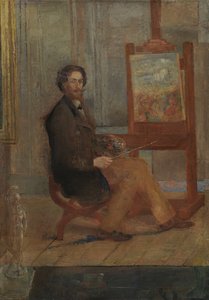
James Ensor
1860 - 1949 , Belgien
Snabbfakta
- Artistic Movement Or Style: Expressionism, Surrealism
- Artists Or Movements Influenced By This Artist:
- Expressionism
- Surrealism
- Artists Who Influenced This Artist:
- Bruegel d.ä.
- Goya
- Whistler
- Date Of Birth: 13 april 1860
- Date Of Death: 19 november 1949
- Full Name: James Sidney Edouard Ensor
- Nationality: Belgisk
- Notable Artworks:
- Maskerna i skandal
- Skelett...
- Kristi intrång...
- Place Of Birth: Ostend, Belgien
Relaterade artiklar

Banksy Unmasked: The Power and Mystery of Street Art's Greatest Icon
Explore the enigmatic world of Banksy. Journey through his iconic stencils, decode his subversive social commentary, and discover how this anonymous legend redefined modern art and pop culture through powerful urban storytelling.


