


 Förhandsvisa
 Skicka
 Dela
Dela
 Visa detaljer
 Guide
Guide

 Ladda ner
 Liknande objekt
 Röntgen
 Bildspel
 Statistik
Azul I


 Visa mer
Konstverket som visas på denna sida skyddas av upphovsrättslagen, vilket innebär att vi inte lagligt kan skapa eller sälja en identisk reproduktion. Detta skydd upprätthålls genom internationella avtal såsom den Bernkonventionen och genom nationella lagar, inklusive de som fastställs av Amerikansk upphovsrättslag – Titel 17. Alla rättigheter förbehållna. Återgivning av konstverk är förbjuden utan skriftligt tillstånd från WahooArt.
Som ett respektfullt och lagligt alternativ erbjuder vi skräddarsydda, handmålade konstverk inspirerade av originalet. Våra skickliga och professionella konstnärer studerar noggrant originalets stil, stämning och konstnärliga essens för att skapa ett nytt, unikt verk som väcker samma känsla – samtidigt som det förblir en originell skapelse i egen rätt.
Denna metod följer fullt ut upphovsrättsliga regler eftersom den inte innebär kopiering eller duplicering av det skyddade konstverket. Istället är det en kreativ nytolkning – en ny målning som är influerad av originalet men inte identisk med det.
Handgjord oljereproduktion
Handmålad olja på duk i din valda storlek och ram, tillverkad efter beställning av våra konstnärer. ( Byt till tryck Byt till digital bild)




P118B Skr10

P118H Skr10

P118W Skr10

P438Z Skr10

P508JH Skr12

P508YH Skr12

P805H Skr10

P805Z Skr10

P919BZ Skr10

P919G Skr10

P919XJ Skr10

P959ZH Skr10

P968JZ Skr12

W106C Skr8

W218G Skr10

W218JH Skr8

W218Y Skr10

W307PJ Skr10

W316G Skr10

W316PJ Skr8

W316Y Skr10

W398PJ Skr8

W4111J Skr10

W500HY Skr15

W500JH Skr15

W692G Skr12

W849H Skr8

W940BG Skr15

W953PJ Skr8




Välj bland våra förinställda storlekar som motsvarar konstverkets ursprungliga proportioner.

Ange den bredd och höjd du behöver för att passa din ram eller din vägg. Eftersom detta är handmålat kan konstnären, vid ett annat format, måla lite mer runt bilden eller beskära den något – det är du som väljer. Vi skickar en digital mockup för godkännande innan målningen påbörjas. Bilden som visas på denna sida representerar inte det slutgiltiga resultatet — det är endast mockuppen som visar det.
Efter beställning kommer AllPaintingsStore.com team att mejla kunden för instruktioner och tillhandahålla en skissförhandsvisning
Leverans över hela världen () på 3–4 veckor istället för standard 5 veckor. (25 oktober). Inga kompromisser med kvaliteten.

Fri expressfrakt över hela världen

Högkvalitativ linnecanvas

Fullständig fraktförsäkring

Garantier för återbetalning av tullavgifter

Garantier för exakt färgåtergivning

100 dagars returrätt (endast vid fel)

100% pengarna tillbaka-garanti

Mängdrabatt erbjuds
 Glasalternativet är endast tillgängligt i storlekar under 110 cm.

Azul I
Reproduktionsmetod
Storlek på reproduktion
-


Slutgiltigt pris
Skr 2557
A Symphony of Blue: Exploring Joan Miró’s *Azul I*
Azul I*, created by the visionary Spanish artist Joan Miró, is a captivating exploration of color and form that embodies the spirit of abstract expressionism. This artwork isn't merely a painting; it’s an invitation to delve into a world of subconscious imagery and poetic suggestion.Subject & Style: Beyond Representation
- Pure Abstraction: *Azul I* eschews traditional representation, offering instead a purely abstract composition. There are no recognizable objects or scenes; the artwork exists as an independent realm of color and shape.
- Surrealist Roots: While firmly rooted in abstraction, the work carries echoes of Miró’s earlier Surrealist explorations. The floating forms and dreamlike quality hint at a world beyond rational thought.
- Abstract Expressionism Influence: The emphasis on spontaneous gesture and emotional expression aligns *Azul I* with the tenets of Abstract Expressionism, though Miró maintains his unique visual language.
Technique & Composition: A Delicate Balance
- Chromatic Harmony: The dominant hue is, unsurprisingly, blue – a color that held deep significance for Miró. He saw it as representing the vastness of the sky and the depths of the unconscious mind. The gradient from lighter to darker blues creates a sense of atmospheric depth.
- Dynamic Elements: Scattered across this blue field are dark, circular shapes – some solid, others subtly textured. These forms create visual interest and a sense of movement. A striking white diagonal line cuts through the composition, adding energy and disrupting the serenity of the blues.
- Focal Point & Contrast: A single, elongated red oval in the upper left corner provides a powerful focal point. The contrast between the red and blue is visually arresting, drawing the viewer’s eye and suggesting a spark of energy or passion.
- Brushwork & Texture: While the exact technique remains open to interpretation (potentially brushstrokes or digital manipulation), there's evidence of varied texture within the blues, adding depth and visual complexity.
Historical Context: Miró’s Artistic Journey
- A Catalan Master: Joan Miró (1893-1983) was a pivotal figure in 20th-century art, born in Barcelona, Spain. His work reflects both his Catalan heritage and his engagement with the international avant-garde.
- From Figurative to Abstract: Miró’s artistic development saw him move from more figurative early works towards increasingly abstract forms. *Azul I* represents a mature stage in this evolution, where he had fully embraced the power of non-representational imagery.
- A Legacy of Innovation: Miró's pioneering spirit influenced generations of artists and continues to inspire today. His work can be found in major museums worldwide, including the Fundació Joan Miró in Barcelona and the Bechtler Museum of Modern Art in Charlotte.
Symbolism & Emotional Impact: A World Within
- Circles as Void or Potential: The dark circles can be interpreted as voids, absences, or perhaps portals to another dimension. They also suggest a sense of mystery and the unknown.
- Red as Energy & Life Force: The red element is often seen as representing passion, energy, or even a vital life force within the vastness of the blue expanse.
- A Meditative Experience: *Azul I* invites contemplation and introspection. The artwork’s simplicity and harmonious color palette create a calming yet stimulating effect, encouraging viewers to lose themselves in its abstract world.
- Interior Design Appeal: The predominantly blue tones make this piece exceptionally versatile for interior design. It would complement modern or minimalist spaces, adding a touch of sophistication and artistic depth. The subtle energy of the red element provides a captivating accent.
Frågor och svar
Vilken känsla förmedlar färgerna i "Azul I" av Joan Miró?
Den Dark färgpaletten i "Azul I" av Joan Miró harmonierar med dess Tranquil emotionella ton. Färg är ett av de sätt som ett verk förmedlar känsla på.
Hur ljus är "Azul I" i sin helhet?
Den upplevda ljusstyrkan i "Azul I" av Joan Miró är balanced. Den kan anpassas efter ljuset i det avsedda rummet.
Har "Azul I" starka ljus-mörkerkontraster?
Ljus-mörker-kontrasten i "Azul I" är registrerad som Serene. Kontrast beskriver hur starkt ljusa och mörka partier skiljer sig åt.
Liknande konstverk


Konstnärsbiografi
A Catalan Visionary: The Life and Art of Joan Miró
Joan Miró i Ferrà, born in Barcelona in 1893, stands as one of the most significant figures in 20th-century art. His journey was not merely a progression through styles but an exploration of inner worlds, translating dreams, memories, and Catalan identity onto canvas with a uniquely poetic visual language. From humble beginnings marked by illness and initial parental reservations about his artistic pursuits, Miró persevered, driven by an innate need to express the intangible—the emotions, sensations, and subconscious currents that lie beneath the surface of reality. His early life was steeped in the traditions of Barcelona, a city brimming with architectural marvels thanks to Antoni Gaudí, whose organic forms would subtly influence Miró’s later abstractions. The goldsmithing profession of his father instilled an appreciation for meticulous craftsmanship, while the rugged Catalan landscape became a recurring motif and source of inspiration throughout his career.Early Influences and the Path to Surrealism
Miró's formal artistic training began at La Llotja in Barcelona, where he honed his skills in traditional techniques. However, it was exposure to the avant-garde movements sweeping through Paris that truly ignited his creative evolution. The vibrant colors of Fauvism and the fragmented forms of Cubism resonated deeply, prompting him to move to Paris in 1920. This period proved pivotal as he encountered artists like Pablo Picasso and began experimenting with increasingly abstract compositions. Yet, Miró didn’t simply adopt these styles; he synthesized them, forging a path toward his own distinctive aesthetic. He sought to distill forms to their essence, stripping away representational details in favor of symbolic shapes and evocative colors. This exploration led him to the Surrealist group in 1924, aligning him with artists such as Max Ernst and Salvador Dalí. While embracing the Surrealist interest in the subconscious, Miró maintained a unique sensibility—his work was less about shocking imagery or Freudian symbolism than it was about creating a world of playful forms and poetic suggestion. He famously stated that he wanted to “paint what I see,” but what he saw wasn’t necessarily what others perceived; it resided within the realm of dreams and imagination.The Surrealist Universe: Exploring Symbolism and Imagination
Miró's involvement with Surrealism profoundly shaped his artistic vision. Influenced by Sigmund Freud’s theories on psychoanalysis, Miró sought to tap into the hidden depths of consciousness—to depict not what is visible but what is felt. His canvases became populated with fantastical creatures—birds, insects, amorphous shapes—each imbued with symbolic significance. Recurring motifs like spirals and circles represented cycles of life and death, while biomorphic forms evoked primal instincts and primordial landscapes. Collaborations with fellow Surrealists yielded groundbreaking techniques such as *grattage*, where paint was scraped off the canvas surface to reveal underlying textures—a method he pioneered alongside Max Ernst for designs intended for Sergei Diaghilev’s ballet, *The Firebird*. This experimental approach underscored Miró's commitment to challenging artistic conventions and pushing the boundaries of visual expression.Major Works and Artistic Innovations
Throughout his prolific career, Miró produced an astonishing array of paintings, sculptures, ceramics, and prints—each reflecting his evolving aesthetic sensibilities. The Farm (1922) stands as a seminal work demonstrating his early embrace of Surrealist principles. Its depiction of Catalan rural life is rendered in vibrant colors and simplified forms, conveying both visual beauty and symbolic depth. The series *Dutch Interiors* (1928-1930), created during his Parisian period, reimagined the interiors of Dutch bourgeois homes through a Cubist lens—a bold departure from traditional representation that prioritized geometric abstraction and expressive color palettes. Miró’s monumental sculpture *Barcelona* (1945) embodies his desire to engage with grand themes—the Catalan spirit and the resilience of human creativity in times of adversity. His ceramic works, particularly those produced during World War II, explored textural surfaces and organic forms—a testament to his versatility as an artist.Legacy and Enduring Influence
Joan Miró’s contribution to modern art is undeniable. He wasn't merely a painter; he was a visionary who redefined the possibilities of artistic expression. His work profoundly influenced subsequent generations of artists, fostering experimentation with abstraction and symbolism—inspiring movements like Abstract Expressionism and Pop Art. Beyond his artistic achievements, Miró championed Catalan culture and identity—a commitment reflected in his lifelong dedication to preserving the traditions of his homeland. He established two foundations—the Fundació Joan Miró in Barcelona (1975) and the Fundació Pilar i Joan Miró in Palma de Mallorca (1981)—ensuring that his legacy would endure, providing spaces for artistic exploration and education. His art continues to captivate audiences worldwide, inviting us to contemplate the mysteries of consciousness and celebrate the transformative power of imagination—a timeless testament to the enduring spirit of a truly exceptional artist.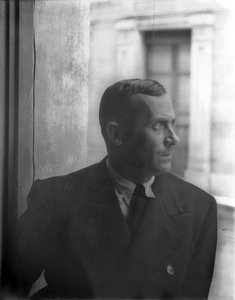
Joan Miró
1893 - 1983 , Spanien
Kortfakta
- Artistic Movement Or Style: Surrealism
- Artists Who Influenced This Artist:
- Pablo Picasso
- Sergei Diaghilev
- Date Of Birth: 1893
- Date Of Death: 1983
- Full Name: Joan Miró i Ferrà
- Nationality: Spanska
- Notable Artworks:
- Nudebad med Spegel
- La Poetisa
- Målning
- Place Of Birth: Barcelona, Spanien
Relaterade artiklar

Expressionist Abstraction: A Procurement Guide to Bold Colors and Emotional Impact for Modern Hotel Interiors
Elevate hospitality spaces with Expressionist Abstraction. A professional procurement guide for hotel designers on sourcing bold, large-scale abstract oil paintings to create impactful, high-end modern interiors through reliable bulk-order art solutions.


