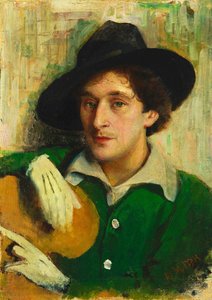
1910. Acrylic On Canvas, 34.0 x 24.0 cm.

§ 1Katalogdata

- 34.0 x 24.0 cm


Detta konstverk är upphovsrättsligt skyddat
Konstverket som visas på denna sida skyddas av upphovsrättslagen, vilket innebär att vi inte lagligt kan skapa eller sälja en identisk reproduktion. Detta skydd upprätthålls genom internationella avtal såsom den Bernkonventionen och genom nationella lagar, inklusive de som fastställs av Amerikansk upphovsrättslag – Titel 17. Alla rättigheter förbehållna. Återgivning av konstverk är förbjuden utan skriftligt tillstånd från WahooArt.
Som ett respektfullt och lagligt alternativ erbjuder vi skräddarsydda, handmålade konstverk inspirerade av originalet. Våra skickliga och professionella konstnärer studerar noggrant originalets stil, stämning och konstnärliga essens för att skapa ett nytt, unikt verk som väcker samma känsla – samtidigt som det förblir en originell skapelse i egen rätt.
Denna metod följer fullt ut upphovsrättsliga regler eftersom den inte innebär kopiering eller duplicering av det skyddade konstverket. Istället är det en kreativ nytolkning – en ny målning som är influerad av originalet men inte identisk med det.
 Läs mer
§ 2Abstrakt
Beskrivning av samlarobjekt
Marc Chagall's 'Butcher' (1910) captures a poignant scene of rural life with vibrant colors and expressive brushstrokes, reflecting the artist’s unique vision and Jewish heritage.
Konstnärens biografi
Upplev Marc Chagalls drömlika "En sommarnattsdröm" (Midsummer Night's Dream). Ett surrealistiskt mästerverk fyllt av symbolik, kärlek och magi – fånga konstens essens!
§ 3Kommentarer
A Portrait of Rustic Intensity: Unpacking Marc Chagall's "Butcher"
Marc Chagall’s 1910 painting, “Butcher,” isn’t merely a depiction of a man with a cleaver; it’s a vibrant plunge into the artist’s deeply personal and profoundly evocative world. Painted during a period of intense experimentation and stylistic evolution, this work embodies the core tenets of Expressionism while simultaneously retaining the unique, dreamlike quality that would become synonymous with Chagall's oeuvre. The painting immediately arrests the viewer with its bold color palette – a riot of blues, reds, yellows, and greens—a deliberate departure from the muted tones often associated with academic realism. This isn’t a photograph; it’s an emotional landscape rendered in pigment.
The subject himself is presented with arresting immediacy. The butcher, clad in a striking blue coat, dominates the composition, his face partially obscured by a long, flowing white beard. His posture suggests both focused concentration and a quiet intensity, hinting at the weight of responsibility and the physicality of his trade. He’s not idealized or romanticized; he's presented with raw honesty, reflecting Chagall’s fascination with everyday life and the dignity of labor. The inclusion of two birds – one perched delicately near the top left corner, another fluttering towards the bottom right – adds a layer of symbolic complexity, perhaps representing freedom, instinct, or the fleeting nature of existence within the confines of this rustic setting.
Roots in Vitebsk: Folklore and Jewish Identity
To truly understand “Butcher,” one must delve into Chagall’s formative years spent in Vitebsk, a city brimming with cultural confluence. Born Moishe Shagal in 1887, Chagall’s childhood was shaped by the vibrant tapestry of his Hasidic Jewish community – a world steeped in folklore, religious ritual, and deeply ingrained traditions. Vitebsk's unique blend of Russian Orthodox churches and bustling Jewish marketplaces provided a rich visual vocabulary for the young artist, informing his distinctive style. The painting subtly echoes this environment; the arrangement of objects, the use of color, and even the butcher’s attire all resonate with elements found in Chagall’s native landscape.
The presence of the birds is particularly significant within this context. Birds frequently appear in Chagall's work, often symbolizing hope, spirituality, or a longing for escape – themes deeply rooted in Jewish mysticism and folklore. Their placement within the scene suggests a connection between the earthly realm of the butcher’s trade and the spiritual aspirations of his community.
Expressionist Techniques: Color, Form, and Emotion
“Butcher” is firmly grounded in the principles of Expressionism, a movement characterized by its emphasis on subjective experience and emotional intensity. Chagall employs loose brushstrokes, distorted forms, and an unrestrained use of color to convey a sense of urgency and drama. The painting’s composition—the dynamic arrangement of objects, the exaggerated perspective—creates a feeling of instability and unease, mirroring the anxieties and uncertainties of the early 20th century. The gouache on paper medium lends itself beautifully to this expressive style, allowing for rich color saturation and textural variation.
Notably, Chagall’s use of color isn't merely decorative; it’s deeply symbolic. The dominant blues evoke a sense of melancholy or introspection, while the reds and yellows inject bursts of energy and vitality. This interplay of colors contributes to the painting’s overall emotional impact, creating a powerful visual narrative that transcends mere representation.
A Window into the Soul: Legacy and Interpretation
“Butcher” is more than just a portrait; it's a window into Chagall’s soul—a testament to his unwavering belief in the power of imagination and memory. It stands as a poignant reminder of his roots, his artistic evolution, and his enduring fascination with the human condition. Reproductions of this captivating work offer an exceptional opportunity to bring this evocative image into your home or office, allowing you to experience firsthand the emotional depth and artistic brilliance of one of the 20th century’s most beloved artists. AllPaintingsStore offers meticulously crafted hand-painted reproductions that faithfully capture the essence of Chagall's masterpiece, ensuring its beauty and significance endure for generations to come.
Frågor och svar
Vilken känsla tillför "Butcher" av Marc Chagall ett rum?
Den Dramatic atmosfären i "Butcher" av Marc Chagall passar perfekt för det rekommenderade rummet: ett Living Room.
Är "Butcher" av Marc Chagall en målning, en teckning eller ett tryck?
"Butcher" är ett verk av typen WallArt.
Hur harmonierar färgerna i "Butcher" med varandra?
"Butcher" av Marc Chagall uppvisar en Strong Color Unity färgharmoni.


 Byt till tryck


 För konstverk eller reproduktioner som är större än 105 cm (cirka 41 tum) på någon sida, levereras ramen som ett isärplockat kit. Denna metod säkerställer en trygg leverans och förhindrar skador under transport.