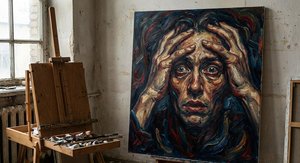
1915. Acrylic On Canvas.

§ 1Catalogue data


Detta konstverk är upphovsrättsligt skyddat
Konstverket som visas på denna sida skyddas av upphovsrättslagen, vilket innebär att vi inte lagligt kan skapa eller sälja en identisk reproduktion. Detta skydd upprätthålls genom internationella avtal såsom den Bernkonventionen och genom nationella lagar, inklusive de som fastställs av Amerikansk upphovsrättslag – Titel 17. Alla rättigheter förbehållna. Återgivning av konstverk är förbjuden utan skriftligt tillstånd från WahooArt.
Som ett respektfullt och lagligt alternativ erbjuder vi skräddarsydda, handmålade konstverk inspirerade av originalet. Våra skickliga och professionella konstnärer studerar noggrant originalets stil, stämning och konstnärliga essens för att skapa ett nytt, unikt verk som väcker samma känsla – samtidigt som det förblir en originell skapelse i egen rätt.
Denna metod följer fullt ut upphovsrättsliga regler eftersom den inte innebär kopiering eller duplicering av det skyddade konstverket. Istället är det en kreativ nytolkning – en ny målning som är influerad av originalet men inte identisk med det.
 Läs mer
§ 2Abstract
Beskrivning av samlarobjekt
The painting depicts a man standing on a rooftop amidst fantastical imagery – flying figures, animals, and a prominent clock – reflecting Chagall’s signature dreamlike style and capturing the spirit of Vitebsk's multicultural heritage.
Konstnärens biografi
Upplev Marc Chagalls drömlika "En sommarnattsdröm" (Midsummer Night's Dream). Ett surrealistiskt mästerverk fyllt av symbolik, kärlek och magi – fånga konstens essens!
§ 3Commentary
A Symphony of Color and Memory: Exploring Marc Chagall's "I Am Alone"
Marc Chagall’s “I Am Alone,” painted in 1915, isn’t merely a depiction of solitude; it’s an embodiment of existential angst rendered in the breathtaking language of Expressionism. Created during the turbulent years preceding World War I—a period marked by anxieties about national identity and impending conflict—the painting transcends its immediate historical context to speak to universal themes of isolation and longing. It's housed in the Musée d'Orsay, Paris, a testament to Chagall’s enduring influence on modern art.- Subject Matter: The canvas portrays a man standing alone on a rooftop amidst a swirling panorama of fantastical figures—a woman with outstretched arms, a child perched precariously on the edge of the roof, and several other stylized individuals drifting upwards into the heavens.
- Style: Chagall’s style is unmistakably Expressionist. Rejecting representational accuracy in favor of emotional intensity, he employs bold colors—primarily yellows, blues, and reds—to convey mood and feeling rather than to faithfully reproduce reality. The figures themselves are distorted and stylized, imbued with a dreamlike quality that defies logical interpretation.
Technique: Bold Brushstrokes and Layered Color
Chagall’s technique is characterized by thick, impasto brushstrokes—meaning the paint is applied in layers so thickly that it stands up prominently from the surface of the canvas. This textural approach contributes significantly to the painting's dramatic impact, creating a palpable sense of movement and conveying the artist’s emotional state directly onto the artwork. The colors are blended strategically to create luminous washes and vibrant accents, enhancing the overall visual richness.- Color Palette: The dominant hues—golden yellows symbolizing warmth and optimism juxtaposed with deep blues representing melancholy and uncertainty—are deliberately chosen to evoke specific emotions. Chagall’s masterful use of color underscores the painting's psychological depth.
- Composition: The rooftop setting serves as a focal point, anchoring the swirling figures and emphasizing the man’s isolation. The upward trajectory of the figures symbolizes aspiration but also hints at vulnerability—a yearning for connection amidst overwhelming circumstances.
Symbolism: Folklore and Existential Concerns
“I Am Alone” is replete with symbolic references drawn from Jewish folklore and Kabbalah—the mystical tradition of Judaism. The woman with outstretched arms represents compassion and maternal care, while the child symbolizes innocence and vulnerability. The swirling figures embody the chaotic forces of fate and the anxieties surrounding impending war. More broadly, the painting explores profound existential questions about human existence—questions concerning identity, purpose, and the inevitability of suffering.Ultimately, Chagall’s “I Am Alone” transcends its historical origins to resonate with viewers across generations. It's a hauntingly beautiful meditation on solitude, loss, and the enduring quest for meaning—a masterpiece that continues to inspire awe and provoke contemplation decades after its creation.
Frågor och svar
Är färgerna i "Marching" av Marc Chagall mättade eller dämpade?
Färgpaletten i "Marching" har en mättnad på Clear Color Presence.
Vilken mättnad och intensitet har "Marching" av Marc Chagall?
Färgen i "Marching" har en mättnad på Clear Color Presence och en intensitet på Vivid.
Vilken färgharmoni uppvisar "Marching" av Marc Chagall?
Färgerna i "Marching" av Marc Chagall uppvisar en Discordant Palette harmoni. Harmoni beskriver hur färgerna förhåller sig till varandra.



 Byt till tryck


 För konstverk eller reproduktioner som är större än 105 cm (cirka 41 tum) på någon sida, levereras ramen som ett isärplockat kit. Denna metod säkerställer en trygg leverans och förhindrar skador under transport.