Pengarna tillbaka-garanti · 100 dagar Fri frakt i hela världen
449 587konstverk 30 613konstnärer 4 660museer 32språk
Valuta
    Språk
      Ateljé · Grundat 2015 · Paris, Frankrike
      AllPaintingsStore
      allpaintingsstore.com
      Catalogue entry

      Stort cirkus

      1984. Akryl på duk, 130.0 x 97.0 cm.

      Fig. 1. Marc Chagall, Stort cirkus, 1984. Shown as the reproduction you are specifying: , .

      § 1Catalogue data

      § 2Abstract

      Beskrivning av samlarobjekt

      Upptäck Marc Chagalls surrealistiska mästerverk 'Stort cirkus'! Ett färgstarkt och drömlikt konstverk från 1984 som fångar essensen av cirkuslivet och judisk folklore.

      Konstnärens biografi

      Upplev Marc Chagalls drömlika "En sommarnattsdröm" (Midsummer Night's Dream). Ett surrealistiskt mästerverk fyllt av symbolik, kärlek och magi – fånga konstens essens!

      § 3Commentary

      Great Circus – A Surrealist Dreamscape by Marc Chagall

      Marc Chagall’s “Great Circus” transcends mere depiction; it's an immersion into a fantastical realm born from memory and infused with the vibrant spirit of Vitebsk, Belarus. Painted in 1984 during his prolific artistic period, this monumental canvas embodies Chagall’s signature Surrealist style—a deliberate rejection of rational representation favoring dreamlike imagery and symbolic narratives. The artwork isn't simply a visual spectacle; it’s an exploration of themes central to Chagall’s worldview: faith, folklore, and the enduring power of childhood recollections.
      • Subject Matter: The painting captures a circus scene—a familiar motif for Chagall—populated by figures both human and animal. Dominating the composition is a man riding atop a horse, an image laden with biblical references to Solomon’s Judgment and symbolizing leadership and perseverance amidst adversity. Surrounding him are other individuals engaged in various activities, creating a dynamic tableau that feels simultaneously joyous and melancholic.
      • Style & Technique: Chagall's technique is characterized by bold color palettes—primarily yellows, blues, reds, and greens—applied with loose brushstrokes that contribute to the painting’s ethereal quality. He employs flattened perspective and simplified forms, prioritizing expressive gesture over realistic detail. This stylistic choice aligns perfectly with Surrealism’s aim of accessing subconscious thought and bypassing conventional artistic conventions.
      • Historical Context: Created in the aftermath of World War II, “Great Circus” reflects Chagall's personal experience of displacement and resilience. Vitebsk had endured significant devastation during the war, marking a poignant reminder of loss and trauma. Yet, amidst this darkness, Chagall sought solace in his artistic vision—a celebration of beauty and imagination as antidotes to suffering.
      • Symbolism: The circus itself serves as a metaphor for life’s journey—filled with surprises, contradictions, and moments of both triumph and despair. Birds swirling throughout the canvas represent freedom and aspiration, mirroring Chagall's own spiritual beliefs. The horse symbolizes strength and nobility, while the figures scattered across the scene embody humanity's diverse experiences and emotions.
      • Emotional Impact: “Great Circus” evokes a profound sense of wonder and nostalgia. Its vibrant colors and whimsical imagery transport viewers to a realm beyond everyday reality—a space where dreams intertwine with memory and where beauty prevails over darkness. Chagall’s masterful use of color and composition creates an unforgettable visual experience that resonates deeply with the human spirit.
      This reproduction captures the essence of Chagall's artistic genius, allowing you to bring this iconic masterpiece into your home or workspace—a testament to enduring artistry and a celebration of imagination.

      Frågor och svar

      Vilken känsla förmedlar "Stort cirkus" av Marc Chagall?

      "Stort cirkus" förknippas med en Melankolisk känsla. Den emotionella tonen beskriver det intryck som verket förmedlar.

      Är "Stort cirkus" typisk för vad Marc Chagall vanligtvis skapade?

      Marc Chagalls återkommande teman inkluderar jewish folklore, dreamlike imagery, biblical symbolism, russian landscape, symbolic representation; "Stort cirkus" fokuserar på circus, animals, dreams, folklore, colourful, biblical, fantasy.

      Vem har skapat "Stort cirkus"?

      Konstnären bakom "Stort cirkus" är Marc Chagall. Verket är katalogiserat under Marc Chagalls namn.
      § 4The artist

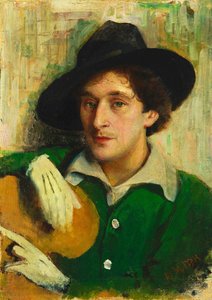
      Marc Chagall

      Marc Chagall

      1887 - 1985, Belarus

      Quick facts about Marc Chagall

      • Artistic Movement Or Style: Modernism, Kubism
      • Artists Or Movements Influenced By This Artist: ['Surrealism']
      • Artists Who Influenced This Artist:
        • Bakst
        • Delaunay
        • Borovikovsky
      • Date Of Birth: 7 juli 1887
      • Date Of Death: 28 mars 1985
      • Full Name: Marc Chagall
      • Nationality: Russisk, senare fransk
      • Notable Artworks:
        • I och byen
        • Den Liggande Poeten
        • Valentina
      • Place Of Birth: Liozna, Belarus

      Konstnärsbiografi

      A Life Painted in Dreams: The World of Marc Chagall

      Marc Chagall, born Moishe Shagal in 1887 in the small Belarussian town of Liozna near Vitebsk, wasn’t merely a painter; he was a poet of color, a weaver of dreams, and a chronicler of memory. His life, spanning nearly a century, mirrored the tumultuous currents of the 20th century, yet his art remained steadfastly rooted in a deeply personal vision—one infused with the folklore of his Hasidic Jewish upbringing and an unwavering belief in the power of imagination. Vitebsk itself was more than just a birthplace; it became the emotional core of his artistic universe, a recurring motif populated by flying figures, whimsical animals, and the vibrant hues of remembered landscapes. The town’s unique blend of cultures—Russian Orthodox churches alongside bustling Jewish marketplaces—forged an aesthetic sensibility that would defy easy categorization throughout his long career. Though he sought formal training first with a local sign painter and later in St. Petersburg under Léon Bakst, and then in Paris at the Académie de la Grande Chaumière, Chagall never fully embraced any single artistic movement. He absorbed elements of Cubism, Symbolism, and Fauvism, but always filtered them through his own intensely personal lens, creating a style that was uniquely, unmistakably Chagall.

      Early Influences and Artistic Beginnings

      Chagall’s formative years were marked by the traditions of Vitebsk’s Jewish community—a world steeped in ritual, storytelling, and vibrant visual culture. These influences would permeate his artistic vision throughout his life. His initial training was modest, focusing on practical skills as a sign painter, but he quickly developed an interest in broader artistic concepts. St. Petersburg provided him with access to influential teachers like Léon Bakst, who encouraged experimentation and challenged conventional stylistic norms. This exposure to theatrical design—particularly Ballets Russes productions—would prove crucial in shaping his approach to composition and visual storytelling. However, Chagall resisted the allure of rigid academic doctrines, prioritizing intuition and emotional expression over technical precision. He sought inspiration from Impressionism and Post-Impressionism, particularly Cézanne and Gauguin, recognizing their ability to capture fleeting moments of beauty and emotion.

      The Symbolist Vision: Fragments of Memory

      Chagall’s early paintings—such as I and the Village (1911)—demonstrate his fascination with Symbolism's exploration of psychological states and subconscious imagery. The village isn’t rendered realistically but as a fragmented collection of recollections, imbued with symbolic meaning. Figures float and dance across the canvas, defying gravity and logic, creating a dreamlike atmosphere that invites viewers into his inner world. This stylistic approach wasn’t accidental; it stemmed from a desire to move beyond mere imitation of reality and capture the essence of feeling, the weight of memory, and the power of folklore. The use of color—bold, non-naturalistic hues—served as a conduit for emotion rather than literal representation. Recurring motifs like birds, apples, and musical instruments reflect Chagall’s preoccupation with themes of flight, fertility, and artistic inspiration. These images are not simply decorative; they carry profound symbolic significance, conveying ideas about identity, spirituality, and the relationship between humanity and nature.

      Cubism's Influence and Artistic Evolution

      Despite his rejection of formal academic movements, Chagall absorbed elements of Cubism, particularly Picasso’s pioneering explorations of fractured perspectives. This influence is evident in works like The Musicians (1917), where figures are depicted simultaneously from multiple viewpoints—a technique that disrupts traditional spatial conventions and emphasizes the multiplicity of experience. However, Chagall skillfully blended Cubist principles with his own distinctive visual language, retaining a lyrical quality and emotional depth that distinguishes him from more intellectually rigorous artists. He continued to experiment with color and form throughout his career, refining his style while maintaining its core expressive power. The Russian Revolution profoundly impacted Chagall’s life and artistic practice, returning him to Vitebsk where he established an art school—a brief but significant endeavor aimed at fostering creativity and cultural renewal amidst the upheavals of the era.

      International Recognition and Legacy

      Chagall's emigration to Paris in 1923 marked a turning point in his artistic trajectory, propelling him onto the international stage. He embraced Surrealism’s fascination with dreams and irrationality, producing canvases that pulsate with imaginative energy—works like *White Crucifixion* (1938) reflecting the anxieties of wartime Europe. His subsequent move to New York City during World War II provided him with a new creative impetus, resulting in monumental paintings inspired by biblical narratives and American landscapes. Chagall’s influence extended far beyond his own lifetime, inspiring countless artists across disciplines—painting, sculpture, theater, and film—who sought to emulate his poetic vision and expressive style. His enduring legacy resides not only in his iconic artworks but also in the profound exploration of human emotion and spiritual yearning that characterizes his oeuvre. Marc Chagall remains one of the most celebrated artists of the twentieth century, a testament to the transformative power of imagination and the unwavering pursuit of artistic truth.

      § 5Comparanda

      § 6Questions

      Kortfakta

      • Artist: Marc Chagall
      • Influences:
        • Cubism
        • Fauvism
      • Dimensions: 130 x 97 cm
      • Subject or theme: Circus life, Jewish folklore
      • Medium: Painting
      • Artistic style: Symbolic Expressionism

      Konstquiz

      Det finns endast ett korrekt svar på varje fråga.

      Fråga 1:
      ¿Cuál es el estilo artístico principal de esta pintura?
      Fråga 2:
      ¿Dónde nació Marc Chagall?
      Fråga 3:
      ¿Qué elemento destaca en la imagen?
      Fråga 4:
      ¿Cuál fue una influencia importante en el estilo artístico de Chagall?
      Fråga 5:
      ¿En qué año fue creada esta obra maestra?

      § 7Cite this entry

      AllPaintingsStore.com, “Marc Chagall, Stort cirkus (1984)”, https://allpaintingsstore.com/sv/art/marc-chagall-stort-cirkus-8XYH7M-sv/ArtistReproduction/ (accessed 2 oktober 2026).

      § 8The reproduction

      Handgjord oljereproduktion

      Handmålad olja på duk i din valda storlek och ram, tillverkad efter beställning av våra konstnärer. ( Byt till tryck Byt till digital bild)

      It is specified on the order sheet in the margin; the present state of that sheet reads as follows.

      Stort cirkus

      Reproduktionsmetod

      Storlek på reproduktion

      -

      Elitkonstnär av högsta klass

      Mer detaljrikedom, finess och extra produktionstid

      -

      Inramning av reproduktion

      -

      -

      För konstverk eller reproduktioner som är större än 105 cm (cirka 41 tum) på någon sida, levereras ramen som ett isärplockat kit. Denna metod säkerställer en trygg leverans och förhindrar skador under transport.

      Professionell montering krävs – detta är inte en produkt för självmontering.
      Kitet måste monteras och duken spännas av en erfaren professionell inramare med hjälp av trälim (ingår ej), en spänntång för duk och klämmor för att hålla sargen rak medan limmet torkar. Felaktig montering eller ojämn spänning av duken kan orsaka permanenta skador på konstverket och täcks inte av vår garanti.

      • Alla massiva träribbor ingår, exakt tillkapade efter mått.

      • Monteras med de medföljande skruvarna, samt trälim för hörnfogarna, vilket inte ingår och måste anskaffas av din ramverkare.

      • Professionella verktyg krävs och ingår ej: en dukspännare och klämmor för att hålla listerna raka medan limmet torkar.

      Viktigt:
      Hörnjunctionerna kräver trälim, listerna måste hållas på plats med tvingar tills limmet har torkat helt, och för att spänna duken på den monterade ramen krävs en spänntång för duk. Inget av detta ingår i kitet. Vänligen kontakta en erfaren professionell rammakare innan du beställer denna storlek.

      Namnskylt

      -

      -

      Skyddande fernissa

      Glansig fernissa (förstärker färgerna, skyddar mot ljus och fukt)

      -

      Anpassa mitt konstverk

      Exempel på vad som kan ändras: Byt ut ansiktet mot ett foto från kunden; Lägg till ett husdjur (t.ex. byt ut en katt mot en hund); Inkludera ett dolt meddelande i bakgrunden; Ändra bakgrundens landskap eller detaljer.

      -

      Expressleverans

      Leverans över hela världen () inom 3–4 veckor istället för standardiserade 5 veckor. (30 oktober). Inga kompromisser med kvaliteten.

      -

      Expressleverans

      Leverans över hela världen () inom 5 veckor. (6 november).

      Ingår

      Slutgiltigt pris

      Skr 2581

      Included with every order

      • Fri expressfrakt över hela världen
      • Högkvalitativ linnecanvas
      • Fullständig fraktförsäkring
      • Garantier för återbetalning av tullavgifter
      • Garantier för exakt färgåtergivning
      • 100 dagars returrätt (endast vid fel)
      • 100% pengarna tillbaka-garanti
      • Mängdrabatt erbjuds
      Order sheet