


 Visa i rummet
 Skicka
 Dela
Dela
 Detaljer
 Studentguide för konstverk

 Ladda ner
 Liknande objekt
 Röntgen
 Bildspel
 Besökstatistik
Hat Rack


 Läs mer
Konstverket som visas på denna sida skyddas av upphovsrättslagen, vilket innebär att vi inte lagligt kan skapa eller sälja en identisk reproduktion. Detta skydd upprätthålls genom internationella avtal såsom den Bernkonventionen och genom nationella lagar, inklusive de som fastställs av Amerikansk upphovsrättslag – Titel 17. Alla rättigheter förbehållna. Återgivning av konstverk är förbjuden utan skriftligt tillstånd från WahooArt.
Denna metod följer fullt ut upphovsrättsliga regler eftersom den inte innebär kopiering eller duplicering av det skyddade konstverket. Istället är det en kreativ nytolkning – en ny målning som är influerad av originalet men inte identisk med det.
Giclée / Konsttryck
Giclée- eller canvasprint av museumskvalitet med snabb produktion och flexibla ytbehandlingsalternativ. ( Köp handmålat konstverk Byt till digital bildförsäljning)




P118B Skr10

P118H Skr10

P118W Skr10

P438Z Skr10

P508JH Skr12

P508YH Skr12

P805H Skr10

P805Z Skr10

P919BZ Skr10

P919G Skr10

P919XJ Skr10

P959ZH Skr10

P968JZ Skr12

W106C Skr8

W218G Skr10

W218JH Skr8

W218Y Skr10

W307PJ Skr10

W316G Skr10

W316PJ Skr8

W316Y Skr10

W398PJ Skr8

W4111J Skr10

W500HY Skr15

W500JH Skr15

W692G Skr12

W849H Skr8

W940BG Skr15

W953PJ Skr8




Välj bland våra förinställda storlekar som motsvarar konstverkets ursprungliga proportioner.

Ange den bredd och höjd du behöver, för att passa din ram eller din vägg. Ett tryck kan endast beskäras, aldrig göras större än bilden, vilket innebär att ett format med en annan formform leder till att en del av bilden går förlorad. Vi skickar en digital mockup för godkännande innan vi trycker något. Bilden som visas på denna sida visar inte den faktiska beskärningen — det är endast mockuppen som gör det.
Leverans över hela världen () på 2 veckor istället för standard 4/5 veckor. (23 oktober)

Fri expressfrakt över hela världen

Högkvalitativ linnecanvas

Fullständig fraktförsäkring

Garantier för återbetalning av tullavgifter

Garantier för exakt färgåtergivning

100 dagars returrätt vid fabrikationsfel

100% pengarna tillbaka-garanti

Mängdrabatt erbjuds
 Glasalternativet är endast tillgängligt i storlekar under 110 cm.

Hat Rack
Giclée / Konsttryck
Reproduktionsstorlek
-


Totalpris
Skr 635
A Deconstructed Object: Marcel Duchamp’s “Hat Rack” – A Study in Provocation
Marcel Duchamp's "Hat Rack," painted in 1917, isn’t merely a depiction of furniture; it’s a deliberate dismantling of artistic conventions and a profound statement on the nature of art itself. This seemingly simple image—a wooden chair supporting an absurdly stacked collection of hats—holds within its quiet stillness a revolutionary spirit that continues to resonate with viewers today. The painting, now housed in the Israel Museum, offers a glimpse into Duchamp’s burgeoning Dadaist philosophy and his audacious challenge to established artistic norms.
The composition is deceptively straightforward. A chair, rendered with an almost clinical precision, forms the skeletal structure of the piece. Its unusual design—a slightly off-kilter angle and subtly exaggerated proportions—suggests a deliberate rejection of functionalism. Instead of serving its intended purpose as a comfortable seat, it becomes a stage for the chaotic arrangement of hats. These aren’t meticulously chosen or artistically displayed; they are piled haphazardly upon one another, creating a visual jumble that defies logic and order. Duchamp's choice to present this commonplace object—a chair and a collection of hats—elevates them to the realm of art through sheer act of selection and presentation.
Dadaist Roots: Challenging Artistic Values
“Hat Rack” is deeply rooted in the Dada movement, which emerged during World War I as a reaction against the perceived irrationality and brutality of the conflict. Dada artists sought to dismantle traditional values—including those surrounding art—and expose the absurdity of societal norms. Duchamp’s work embodies this spirit perfectly. He wasn't interested in creating beautiful objects; he was interested in questioning what constituted “beauty” or “value” within the art world. The hat rack, with its inherent lack of aesthetic appeal, becomes a powerful symbol of this rejection. It forces us to reconsider our assumptions about what deserves artistic attention and how we define artistic merit.
The painting’s creation coincided with Duchamp's exploration of chance operations and the concept of “readymades”—industrial or manufactured objects presented as art without alteration. This approach, central to Dadaism, challenged the traditional notion that an artist needed to create something entirely new. Duchamp argued that the selection and presentation of an existing object could be just as valid a form of artistic expression. The hat rack can be seen as a precursor to this readymade philosophy, demonstrating how the context and intention behind an object’s display could transform its meaning.
Technique and Symbolism: A Calculated Discomfort
Duchamp's technique is remarkably restrained, almost austere. The painting is executed in oil on canvas with a precise, almost photographic quality. This deliberate lack of expressive brushwork further emphasizes the object-like nature of the work. There’s no attempt to romanticize or embellish the scene; instead, Duchamp presents it with cold, objective clarity. The hats themselves—a motley collection of varying shapes, sizes, and colors—add layers of symbolic meaning. They can be interpreted as representing the anxieties and uncertainties of a rapidly changing world, or perhaps simply as a commentary on consumer culture and the accumulation of possessions.
Furthermore, the chair’s unusual design subtly hints at instability and imbalance. It's not a stable, supportive structure; it leans slightly, mirroring the precariousness of the hat arrangement above. This visual dissonance reinforces the painting’s overall theme of disruption and challenges our expectations of harmony and order. The placement within a museum setting further elevates the piece, suggesting that even the most mundane objects can be worthy of contemplation and artistic consideration.
A Timeless Provocation: Reproduction and Interpretation
AllPaintingsStore offers meticulously crafted reproductions of “Hat Rack,” allowing you to bring this iconic work into your own space. Our hand-painted reproductions capture not only the visual details but also the underlying spirit of Duchamp’s revolutionary vision. Whether displayed in a contemporary interior or as a thoughtful addition to an art collection, "Hat Rack" continues to provoke and inspire, reminding us that art can be found in the unexpected and that questioning established norms is essential for artistic progress. Consider this piece not just as a painting, but as a meditation on perception, value, and the very definition of art itself.
Frågor och svar
Hur förhåller sig stilen i "Hat Rack" till sin skapares epok?
"Hat Rack" tillhör den Dada Gesamtkunstwerk rörelsen, och dess skapare verkade under Modernismen-eran.
Vilken konstnär och vilken stil ligger bakom "Hat Rack"?
"Hat Rack" skapades av Marcel Duchamp i Dada Gesamtkunstwerk-stil. Konstnären och stilen definierar verkets tradition.
Var kan jag se originalet av "Hat Rack" av Marcel Duchamp?
"Hat Rack" av Marcel Duchamp visas på Israels museum, Jerusalem, Israel. Museilistan avser originalverket, inte reproduktioner.
Liknande konstverk


Om konstnären
En revolutionär anda: Marcel Duchamps liv och konst
Marcel Duchamp, född Henri-Robert-Marcel Duchamp 1887 i Blainville-Crevon, Normandie, var mer än bara en konstnär; han var en filosofisk provokatör som fundamentalt förändrade den moderna konstens kurs. Hans tidiga liv, även om det verkade konventionellt – uppfostrad inom en familj som värderade konstnärligt uttryck med båda bröderna med framgångsrika karriärer som konstnärer – antydde den ikonoklasm som skulle komma. Duchamp sökte initialt formell utbildning, bemästrade traditionella tekniker och experimenterade med postimpressionistiska stilar. Denna akademiska grund fungerade dock inte som ett mål i sig, utan som en språngbräda för att ifrågasätta själva konstens natur, dess syfte och dess definition. Han var inte nöjd med att bara avbilda världen; han strävade efter att utmana hur vi uppfattar den och vad som utgör ett konstnärligt värde. Denna rastlösa intellektuella nyfikenhet skulle bli det definierande kännetecknet för hans produktiva karriär.Från kubism till dadaism: Ett avståndstagande från konventionerna
Duchamps konstnärliga resa präglades av en ständig evolution, ett medvetet borttagande av etablerade normer. Hans tidiga engagemang i kubismen, tydligt i verk som Porträtt av schackspelare (1ansi), uppvisade ett intresse för fragmenterade former och multipla perspektiv – ett brott mot traditionell representation. Ändå rörde han sig snabbt bortom rent estetiska frågor, då han insåg att det inte räckte med att bara arrangera om visuella element för att adressera de djupare frågor som bubblade inom honom. Förfärdelserna under första världskriget gav näring åt detta missnöje och ledde Duchamp till att omfamna dadaismen, en rörelse född ur desillusion och ett avvisande av logik, förnuft och traditionella konstnärliga värden. Det var inom den dadaistiska ramen som Duchamp verkligen började montera ner konventionella föreställningar om konst. Han var inte intresserad av att skapa vackra objekt; han ville provocera fram tankar, utmana antaganden och blottlägga det godtyckliga i estetiska omdömen. Denna period såg födelsen av hans mest radikala innovation: ”readymaden”.Readymades och konstens subversion
Introduktionen av readymades – vardagliga, massproducerade föremål som valts ut och presenterats som konst – var Duchamps mest betydelsefulla bidrag till 1900-talet. Dessa var inte bara funna föremål; de var medvetna handlingar av konstnärlig subversion. Genom att ta ett vardagligt föremål, som en urinoar (Fontänen, 1917), signera det med ”R. Mutt” och skicka in det till en konstutställning, utmanade Duchamp själva definitionen av konstnärlig skicklighet och upphovsmannaskap. Var det konstnärens hand som skapade verket, eller var det konstnärens idé? Denna fråga blev central för hans praktik och lade grunden för konceptkonsten. Andra betydelsefulla readymades, såsom L.H.O.O.Q. (1919) – en reproduktion av ett vykort av Mona Lisa som vandaliserats med mustasch och bockskägg – var lekfulla men skarpa kritiker av konsthistorien och etablerade kulturella ikoner. Dessa verk var inte tänkta att beundras för sina estetiska kvaliteter; de var avsedda att väcka debatt och tvinga betraktaren att ompröva sina förutfattade meningar om vad som utgör konst. Duchamp trodde att konsten skulle existera i sinnet, inte enbart i ögat.Arv och bestående inflytande
Marcel Duchamps inverkan på efterföljande generationer av konstnärer är omätbar. Han förändrade fundamentalt vår förståelse av konst och banade väg för rörelser som konceptkonst, minimalism, popkonst och många andra. Hans betoning av konstnärens idé – konceptet bakom verket – framför dess estetiska egenskaper fortsätter att inspirera konstnärer än idag.- Kubism: Tidig utforskning av brutna former och rumslig representation.
- Dadaism: Avvisande av logik, förnuft och traditionella konstnärliga värden som svar på första världskriget.
- Konceptkonst: Fokus på idén bakom konstverket snarare än dess estetiska kvaliteter.
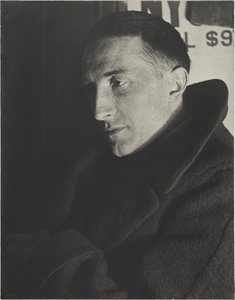
Marcel Duchamp
1887 - 1968 , Frankrike
Snabbfakta
- Artistic Movement Or Style:
- Cubism
- Dadaism
- Konceptuell konst
- Artists Or Movements Influenced By This Artist: ['Minimalism']
- Date Of Birth: 28 juli 1887
- Date Of Death: 2 oktober 1968
- Full Name: Marcel Duchamp
- Nationality: Fransk-Amerikansk
- Notable Artworks:
- Fontänen
- El gran vidrio - La novia desnudada por sus solteros
- Fountain
- Place Of Birth: Blainville-sur-Mer, Frankrike
Relaterade artiklar

Bronsålderns Mästerverk: 10 Skulpturer Som Förändrade Konsthistorien | AllPaintingsStore
Upptäck 10 legendariska brons skulpturer som revolutionerade konsthistorien! Lär känna Rodin, Michelangelo och andra mästare. Köp museumkvalitativa repliker & hitta inspiration för din inredning på AllPaintingsStore.com.

Marcel Duchamp: Challenging Conventions & Redefining Art in the 20th Century
Explore the revolutionary art of Marcel Duchamp! Discover how his Dadaist readymades challenged artistic conventions & redefined modern art. A deep dive into 'Fountain', conceptual shifts, and his lasting impact.

10 Bronsskulpturer Som Förändrade Konsthistorien – Upptäck Mästerverken
Utforska 10 legendariska bronsmästerverk som revolutionerade konsten! Lär känna Michelangelo, Rodin och andra ikoniska skulptörer. Hitta inspiration & museumskvalitativa konsttryck på AllPaintingsStore.com – för en tidlös inredning.

The Enduring Form: Sculpture Across History, Technique & Emotional Resonance
Explore the rich history of sculpture with AllPaintingsStore. Discover key techniques, influential artists & investment potential for discerning collectors. Expert insights into valuing and collecting timeless masterpieces.

The Enduring Form: Exploring Themes & Techniques in Sculpture Across Historical Periods
Explore the rich history of sculpture from ancient masterpieces to contemporary innovations. Discover key techniques, influential artists & investment potential for discerning art collectors.


