Pengarna tillbaka-garanti · 100 dagar Fri frakt i hela världen
449 582konstverk 30 618konstnärer 4 705museer 32språk
Valuta
    Språk
      Ateljé · Grundat 2015 · Paris, Frankrike
      AllPaintingsStore
      allpaintingsstore.com
      Visa i rummet Se i AR Byt till tryckta exemplar Byt till digital bildförsäljning Skicka
      Detaljer Studentguide för konstverk Lägg till i favoriter Ladda ner Liknande objekt Röntgen Bildspel Besökstatistik

      Untitled 23

      Explore Mark Rothko's iconic Color Field paintings & Abstract Expressionism. Discover the emotional depth & lasting impact of this pivotal modern artist with this stunning reproduction.

      Utforska Mark Rothko (1903-1970) ikoniska Color Field målningar & Abstrakta Expressionismen! Upptäck känslornas djup och konstnärns betydelsefulla arv inom modern konst.

      Konstverket som visas på denna sida skyddas av upphovsrättslagen, vilket innebär att vi inte lagligt kan skapa eller sälja en identisk reproduktion. Detta skydd upprätthålls genom internationella avtal såsom den Bernkonventionen och genom nationella lagar, inklusive de som fastställs av Amerikansk upphovsrättslag – Titel 17. Alla rättigheter förbehållna. Återgivning av konstverk är förbjuden utan skriftligt tillstånd från WahooArt.

      Som ett respektfullt och lagligt alternativ erbjuder vi skräddarsydda, handmålade konstverk inspirerade av originalet. Våra skickliga och professionella konstnärer studerar noggrant originalets stil, stämning och konstnärliga essens för att skapa ett nytt, unikt verk som väcker samma känsla – samtidigt som det förblir en originell skapelse i egen rätt.

      Denna metod följer fullt ut upphovsrättsliga regler eftersom den inte innebär kopiering eller duplicering av det skyddade konstverket. Istället är det en kreativ nytolkning – en ny målning som är influerad av originalet men inte identisk med det.

      Handgjord oljereproduktion

      Handmålad olja på duk i din valda storlek och ram, tillverkad efter beställning av våra konstnärer. ( Byt till tryckta exemplar Byt till digital bildförsäljning)

      Corner sample of the P118B picture frame: moulded polystyrene, 5 cm wide and 3 cm thick
      P118B Skr10
      Corner sample of the P118H picture frame: moulded polystyrene, 5 cm wide and 3 cm thick
      P118H Skr10
      Corner sample of the P118W picture frame: moulded polystyrene, 5 cm wide and 3 cm thick
      P118W Skr10
      Corner sample of the P438Z picture frame: moulded polystyrene, 5.5 cm wide and 3.5 cm thick
      P438Z Skr10
      Corner sample of the P508JH picture frame: moulded polystyrene, 7 cm wide and 3.5 cm thick
      P508JH Skr12
      Corner sample of the P508YH picture frame: moulded polystyrene, 7 cm wide and 3.5 cm thick
      P508YH Skr12
      Corner sample of the P805H picture frame: moulded polystyrene, 5 cm wide and 3.5 cm thick
      P805H Skr10
      Corner sample of the P805Z picture frame: moulded polystyrene, 5 cm wide and 3.5 cm thick
      P805Z Skr10
      Corner sample of the P919BZ picture frame: moulded polystyrene, 7 cm wide and 3.5 cm thick
      P919BZ Skr10
      Corner sample of the P919G picture frame: moulded polystyrene, 7 cm wide and 3.5 cm thick
      P919G Skr10
      Corner sample of the P919XJ picture frame: moulded polystyrene, 7 cm wide and 3.5 cm thick
      P919XJ Skr10
      Corner sample of the P959ZH picture frame: moulded polystyrene, 5 cm wide and 3 cm thick
      P959ZH Skr10
      Corner sample of the P968JZ picture frame: moulded polystyrene, 6 cm wide and 4 cm thick
      P968JZ Skr12
      Corner sample of the W106C picture frame: solid wood, 5 cm wide and 3 cm thick
      W106C Skr8
      Corner sample of the W218G picture frame: solid wood, 5 cm wide and 3 cm thick
      W218G Skr10
      Corner sample of the W218JH picture frame: solid wood, 5 cm wide and 3 cm thick
      W218JH Skr8
      Corner sample of the W218Y picture frame: solid wood, 5 cm wide and 3 cm thick
      W218Y Skr10
      Corner sample of the W307PJ picture frame: solid wood, 6 cm wide and 3 cm thick
      W307PJ Skr10
      Corner sample of the W316G picture frame: solid wood, 6 cm wide and 3 cm thick
      W316G Skr10
      Corner sample of the W316PJ picture frame: solid wood, 6 cm wide and 3 cm thick
      W316PJ Skr8
      Corner sample of the W316Y picture frame: solid wood, 6 cm wide and 3 cm thick
      W316Y Skr10
      Corner sample of the W398PJ picture frame: solid wood, 5 cm wide and 3 cm thick
      W398PJ Skr8
      Corner sample of the W4111J picture frame: solid wood, 6.5 cm wide and 3.5 cm thick
      W4111J Skr10
      Corner sample of the W500HY picture frame: solid wood, 7 cm wide and 5 cm thick
      W500HY Skr15
      Corner sample of the W500JH picture frame: solid wood, 7 cm wide and 5 cm thick
      W500JH Skr15
      Corner sample of the W692G picture frame: solid wood, 8 cm wide and 4 cm thick
      W692G Skr12
      Corner sample of the W849H picture frame: solid wood, 5 cm wide and 3 cm thick
      W849H Skr8
      Corner sample of the W940BG picture frame: solid wood, 7.5 cm wide and 4.5 cm thick
      W940BG Skr15
      Corner sample of the W953PJ picture frame: solid wood, 6 cm wide and 3.5 cm thick
      W953PJ Skr8

      Standardstorlek
      anpassad
      CM
      INCH

      Välj bland våra förinställda storlekar som motsvarar konstverkets ursprungliga proportioner.

      bredd
      höjd

      Du kan ange egna mått för att passa en specifik ram eller yta. Om den valda storleken inte matchar originalbildens proportioner kommer vi antingen att beskära konstverket eller utöka målningen med ytterligare handmålade element. En digital skiss skickas till dig för godkännande innan produktionen påbörjas.
      Observera att förhandsvisningen på skärmen inte återspeglar den faktiska beskärningen eller utökningen. Endast skissen visar den slutgiltiga kompositionen korrekt.
      Även om anpassade storlekar är möjliga, rekommenderar vi att du väljer en dimension från den fördefinierade listan för att bevara originalproportionerna.

      Exempel på vad som kan anpassas: Byt ut ansiktet mot ett foto av kunden; Lägg till ett husdjur (t.ex. byt ut en katt mot en hund); Inkludera ett dolt meddelande i bakgrunden; Ändra bakgrundens landskap eller element.
      Efter beställning kommer AllPaintingsStore.com team att mejla kunden för instruktioner och tillhandahålla en skissförhandsvisning

      Leverans över hela världen () på 3–4 veckor istället för standard 5 veckor. (10 oktober). Inga kompromisser med kvaliteten.

      Fri expressfrakt över hela världen
      Högkvalitativ linnecanvas
      Fullständig fraktförsäkring
      Garantier för återbetalning av tullavgifter
      Garantier för exakt färgåtergivning
      100 dagars returrätt vid fabrikationsfel
      100% pengarna tillbaka-garanti
      Mängdrabatt erbjuds

      Totalt pris

      Skr 2495

      Untitled 23

      Tryckteknik

      Reproduktionsstorlek

      -

      Totalpris

      Skr 2495

      Snabbfakta

      • Subject or theme: Emotional Depth
      • Title: Untitled 23
      • Artist: Mark Rothko
      • Notable elements or techniques: Large blue circles and prominent upper left circle.
      • Movement: Color Field Painting
      • Influences: Minimalism

      Konstquiz

      Det finns endast ett korrekt svar på varje fråga.

      Fråga 1:
      What is the primary visual element of Mark Rothko’s Untitled 23?
      Fråga 2:
      Which artistic movement is Mark Rothko most associated with?
      Fråga 3:
      What was the significance of John and Dominique de Menil commissioning Mark Rothko to create the Rothko Chapel?
      Fråga 4:
      The Rothko Chapel's design was influenced by what architectural style?
      Fråga 5:
      What technique did Mark Rothko employ to achieve the distinctive color fields in Untitled 23?

      The Luminous Silence of Color

      To stand before Mark Rothko’s “Untitled 23” is to step away from the clamor of the external world and enter a sanctuary of profound, silent dialogue. Painted in 1964, this monumental work serves as a cornerstone of the Abstract Expressionist movement, a period defined by a radical rejection of representational imagery in favor of the raw power of pure form. Rothko does not merely present a painting; he constructs an environment. Through his signature technique of layering thin, translucent washes of pigment onto linen, he creates hazy, luminous rectangles that appear to hover and breathe upon the canvas. These edges are never sharp; instead, they bleed into one another with an ethereal softness, inviting the viewer into a state of deep, meditative contemplation rather than mere visual analysis.

      The composition is deceptively simple yet architecturally profound. The palette is dominated by varying shades of blue, a choice that orchestrates a complex emotional duality. On one hand, these cerulean and deep azure tones evoke a sense of immense serenity and spiritual depth; on the other, they carry a weight of melancholy and introspection. While Rothko famously resisted explicit symbolism, believing that color alone could communicate the fundamental human emotions of tragedy, ecstasy, and doom, scholars often find in these blue fields a reflection of the infinite. The way the light seems to emanate from within the layers of pigment suggests a spiritual luminosity, making the canvas feel less like a flat surface and more like a window into a boundless, atmospheric realm.

      A Legacy of Emotion and Atmosphere

      The historical context of “Untitled 23” is inseparable from the artist’s own journey of displacement and existential searching. Born Markus Yakovlevich Rothkowitz in Latvia, Rothko’s early life was shaped by the anxieties of a Jewish family navigating political unrest and the profound sense of loss that accompanies immigration. This sensitivity to human vulnerability became the bedrock of his artistic vision. In the post-World War II era, as the world grappled with unprecedented trauma, Rothko’s move toward non-figurative art offered a new language for expressing the unspeakable. His work does not demand attention through frantic movement; rather, it commands presence through its rhythmic, slow-breathing intensity.

      For the discerning collector or interior designer, a high-quality reproduction of this masterpiece offers more than just aesthetic beauty; it provides an emotional anchor for a space. The sheer scale and atmospheric depth of “Untitled 23” make it an ideal centerpiece for environments designed for reflection, such as a quiet study, a minimalist gallery-style living room, or a serene wellness space. Integrating such a work into a modern interior allows the subtle interplay of light and shadow to transform the room's energy, creating an atmosphere of sophisticated calm. To possess a piece of this caliber is to invite the transformative power of Rothko’s vision into one's daily life, turning a physical space into a profound emotional landscape.

      Frågor och svar

      Vilken atmosfär förmedlar "Untitled 23"?

      Den övergripande stämningen i "Untitled 23" av Mark Rothko är Serene. Stämningen beskriver verkets allmänna atmosfär.
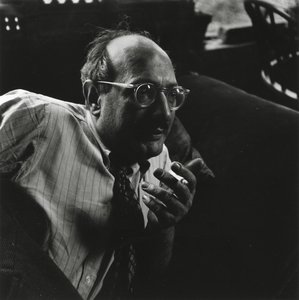
      Var kan jag köpa ett tryck av "Untitled 23" av Mark Rothko?

      För att beställa ett tryck av "Untitled 23" av Mark Rothko, gör helt enkelt din beställning på denna sida: ett konsttryck på bomullscanvas eller arkivbeständigt canvaspapper.

      Kan jag se en röntgenbild av "Untitled 23" av Mark Rothko?

      "Untitled 23" kan undersökas lager för lager på verkets Röntgen-sida, en visare inspirerad av en konservators ljusbord med elva optiska avläsningar av bilden.

      Kan jag beställa en oljereproduktion av "Untitled 23"?

      Du kan beställa en handmålad reproduktion av "Untitled 23" av Mark Rothko direkt på denna sida: en handmålad oljereproduktion på linneväv, tillverkad efter beställning.

      Vilken konstnär tillskrivs "Untitled 23"?

      "Untitled 23" tillskrivs Mark Rothko.

      Var kan jag hitta en guide till "Untitled 23"?

      Guiden till "Untitled 23" är konstverkets Guide-sida – ett utskrivbart faktablad som visar konstverket tillsammans med dess bildtext, källhänvisning och identitetstabell (konstnär, datum, medium, originalstorlek, samling).

      Vilket stämningsläge uttrycker "Untitled 23" av Mark Rothko inom Color Field Painting?

      "Untitled 23" förmedlar en Tranquil emotionell ton inom Color Field Painting-rörelsen.


      Om konstnären

      Early Life and the Seeds of Artistic Vision

      Mark Rothko, born Markus Yakovlevich Rothkowitz in Dvinsk, Latvia, in 1903, carried within him from the outset a sense of displacement that would profoundly shape his artistic journey. His early years were marked by the anxieties of a Jewish family living within the Pale of Settlement, shadowed by pogroms and political unrest. This atmosphere instilled a deep sensitivity to human suffering, a theme that would resonate throughout his oeuvre. The 1913 immigration to Portland, Oregon, represented not just a geographical shift but a cultural upheaval for the young Rothko. While his father, a pharmacist and intellectual with socialist leanings, fostered a home filled with debate and learning, the loss of Jacob Rothkowitz shortly after their arrival cast a long shadow. This early experience of loss, coupled with the challenges of assimilation, fueled a lifelong exploration of existential themes – mortality, trauma, and the search for meaning in a chaotic world. Though he excelled academically at Yale University, Rothko found himself drawn more to the vibrant energy of New York City, abandoning formal studies to pursue his passion for art at the Art Students League. These formative years laid the groundwork for an artistic vision that would ultimately challenge conventional notions of painting and redefine the emotional power of color.

      From Figurative Beginnings to Abstract Expressionism

      Rothko’s initial artistic explorations were firmly rooted in realism, depicting urban scenes and portraits with a keen eye for detail. However, these early works already hinted at the psychological depth that would become his hallmark. As the 1940s unfolded, and the world grappled with the horrors of World War II, Rothko’s art underwent a dramatic transformation. Influenced by Surrealism and mythology, he began to move away from representational imagery, seeking instead to express universal human emotions through symbolic forms. This period saw the emergence of multi-form paintings – canvases populated by ambiguous, biomorphic shapes that seemed to hover between figuration and abstraction. These works were not merely experiments in form; they were deeply felt responses to the anxieties and uncertainties of a world at war. By the late 1940s, Rothko had arrived at his signature style: large-scale canvases featuring rectangular blocks of color that appeared to float and resonate with one another. He stripped away all vestiges of recognizable imagery, focusing instead on the pure emotional impact of color and form. This marked a pivotal moment in the development of Abstract Expressionism, and established Rothko as a leading figure in this groundbreaking movement.

      The Color Field and the Pursuit of Transcendence

      Rothko’s mature work is defined by what came to be known as “Color Field” painting – vast expanses of luminous color that envelop the viewer in an immersive experience. These paintings are not about *what* they depict, but rather *how* they make you feel. Rothko believed that art should engage the viewer viscerally, bypassing intellectual analysis and speaking directly to the emotions. He meticulously layered thin washes of paint, creating subtle variations in tone and texture that seemed to emanate from within the canvas. The edges of his rectangular forms are often blurred, allowing them to blend and interact with one another, creating a sense of depth and movement. Rothko deliberately avoided titles beyond numbers – “No. 1,” “No. 6” – encouraging viewers to confront the paintings without preconceived notions and allow their own emotional responses to guide their experience. He sought to create a space for contemplation, a sanctuary where viewers could connect with something larger than themselves. His ambition was nothing less than to evoke profound spiritual experiences through the language of color.

      Major Achievements and Lasting Legacy

      Among Rothko’s most significant achievements are “No. 10 (1950),” a pivotal work that exemplifies his evolving style, and the Seagram Murals (1958). Commissioned for the Four Seasons Restaurant in New York City, these murals were ultimately rejected by Rothko, who felt they would be compromised by their intended environment. He instead donated them to the Tate Gallery in London, where they continue to inspire awe and contemplation. Perhaps his most ambitious project was the Rothko Chapel (1971) in Houston, Texas – a non-denominational sanctuary housing fourteen of his paintings. Designed as a space for quiet reflection, the chapel is considered a sacred place by many, embodying Rothko’s belief in the spiritual power of art. Rothko's influence on subsequent generations of artists has been immense. He paved the way for Minimalist art and continues to inspire contemporary painters who explore the emotional possibilities of abstraction. Despite struggling with depression throughout his life, culminating in his tragic suicide in 1970, Mark Rothko remains one of the most important and influential artists of the 20th century – a master of color whose work continues to resonate with audiences around the world.

      The Enduring Power of Emotional Resonance

      • Rothko’s paintings are celebrated for their ability to convey universal human emotions—tragedy, ecstasy, despair, and hope.
      • His exploration of color as a vehicle for emotional expression revolutionized abstract painting.
      • The Rothko Chapel stands as a testament to his belief in the spiritual power of art.
      • He remains a pivotal figure in Abstract Expressionism and a major influence on contemporary artists.
      Mark Rothko

      Mark Rothko

      1903 - 1970 , Lettland

      Snabbfakta

      • Artistic Movement Or Style: Color Field Painting
      • Artists Or Movements Influenced By This Artist: ['Minimalism']
      • Date Of Birth: September 25, 1903
      • Date Of Death: February 25, 1970
      • Full Name: Mark Rothko
      • Nationality: Russisk
      • Notable Artworks:
        • No. 10 (1950)
        • Seagram Murals
        • Rothko Chapel
      • Place Of Birth: Dvinsk, Latvia
      Utforska konstverk sorterade efter tema, stil och egenskaper.