


 Förhandsvisa
 Skicka
 Dela
Dela
 Visa detaljer
 Guide
Guide

 Ladda ner
 Liknande objekt
 Röntgen
 Bildspel
 Q&A
Q&A Statistik
Untitled 87

 Visa mer
Få en utskriftsfärdig fil som vida överträffar webbförhandsvisningen. Varje digital bild vi säljer kommer från en högupplöst master i vår bilddatabas – vanligtvis mellan 5 000 och 15 000 pixlar bred – så att du med trygghet kan göra stora utskrifter, beskära tätt eller återge fina detaljer.
Ingen fil lämnar vår studio utan att ha bearbetats. En digital expert kontrollerar färgerna mot originalmålningen och korrigerar dem vid behov, för att sedan förbättra skärpa och detaljrikedom med professionella retuscheringsverktyg — alltid med full respekt för konstnärens penseldrag och stil. Resultatet är en bild som ser ut som målningen, inte som en filtrerad skanning.
Du godkänner innan arbetet slutförs: vår expert skickar bilden via e-post inom 72 timmar för din granskning. Inte nöjd? Be om förbättringar eller korrigeringar, eller begär återbetalning om kvaliteten inte lever upp till förväntningarna.
Detta är den kvalitet som förlag, designstudior, gallerier och tryckerier litar på.
Digital bild
Ladda ner en högupplöst fil för personlig visning, utskrift och kreativa projekt. ( Byt till tryck Beställ handmålad reproduktion)
Ingår i varje beställning av digital bild
Professionell digital leverans, garanterad
När du väljer AllPaintingsStore.com får du inte bara en bild – du får ett professionellt förädlat digitalt konstverk, skapat med precision och med en garanterad tillfredsställelse. Här är allt som ingår i din beställning, automatiskt:

Snabb leverans via e-post
Din högupplösta digitala bild skickas till dig via e-post inom 72 timmar efter beställning – redo för omedelbar användning.

AI-förbättrad digital fil
Ditt konstverk optimeras professionellt med hjälp av avancerade AI-verktyg och manuell redigering, vilket garanterar maximal detaljrikedom, skärpa och färgnoggrannhet.

Fri livstidsåterleverans
Har du råkat radera eller tappa bort din fil? Ingen oro – vi skickar den kostnadsfritt till dig när som helst.

Inga importavgifter – någonsin
Njut av ditt konstverk omedelbart utan tull, importavgifter eller leveranskostnader – digitala nedladdningar är alltid skattefria.

Garanterad färgåtergivning
Vi säkerställer att din digitala bild återger de ursprungliga färgerna så exakt som möjligt med hjälp av professionella verktyg och färghantering.

100 dagars nöjdhetsgaranti
Om du inte är nöjd med din digitala bild kommer vi att revidera den eller återbetala 100% inom 100 dagar – utan frågor.

100% pengarna-tillbaka-garanti
Inte nöjd? Få full återbetalning inom 100 dagar efter att du mottagit din digitala fil – utan frågor.

Rabatt vid storköp
Köp 3 bilder, spara 10% – Köp 5, spara 15% – Köp 10+, spara 20%. Perfekt för kreativa projekt, gallerier och byråer.
The Genesis of a Silent Dialogue
Mark Rothko's "Untitled 87," a deceptively simple composition centered around a luminous white vase, isn’t merely a depiction of an object; it’s a profound exploration of human experience distilled into pure color. Born in 1903 in Daugavpils, Latvia – a region steeped in historical displacement and cultural tension – Rothko carried within him the indelible marks of his early life. This sense of rootedness in a world often marked by instability profoundly shaped his artistic vision, leading him to seek refuge not in narrative or representation, but in the elemental power of color itself. The painting’s creation occurred during a period when Rothko was deeply engaged with the concept of “sublimity” – that elusive quality of art which transcends the rational and touches upon something deeper within the human psyche. He deliberately avoided overt symbolism, believing that the emotional impact of his work should arise organically from the interaction of color fields, rather than being dictated by a specific image or narrative.

Color as a Language of Feeling
Rothko’s technique is remarkably restrained, yet intensely expressive. He employed thin layers of oil paint applied directly to the canvas, creating a matte surface that absorbs light and generates a subtle luminosity. The vase itself isn't rendered with meticulous detail; instead, it exists as a block of white, its edges softly blurred, inviting the viewer to lose themselves within the surrounding fields of color. The interplay between the dominant white and the subtly shifting hues – hints of pale blues, greens, and reds – generates an almost palpable sense of depth and atmosphere. This deliberate avoidance of sharp outlines is crucial to Rothko’s approach; he sought to create a meditative space where the viewer could engage with pure feeling, unburdened by the constraints of recognizable form. The inclusion of smaller vases and bowls adds layers of visual interest without disrupting the overall contemplative mood.
- Color Fields: Rothko’s signature technique – large, overlapping rectangular areas of color – creates a sense of immersion and emotional resonance.
- Matte Surface: The lack of gloss allows the colors to absorb light, generating a subtle luminosity and depth.
- Blurred Edges: Softening the edges of forms dissolves boundaries and encourages contemplation.
A Reflection on Loss and Transcendence
Considering Rothko’s personal history – his early experiences of displacement, loss (particularly the death of his father), and assimilation – it's not surprising that his work often grapples with themes of mortality, trauma, and the search for meaning. “Untitled 87” can be interpreted as a visual meditation on these profound human concerns. The white vase, a symbol of purity and potential, might represent the enduring spirit amidst suffering. The surrounding colors – suggestive of both sorrow and hope – evoke a sense of longing and introspection. It’s important to note that Rothko deliberately avoided providing explicit answers or narratives; he sought to create paintings that would resonate with each viewer on a deeply personal level.
Interestingly, the chapel where many of these works reside, the Rothko Chapel in Houston, Texas, was designed specifically to complement and amplify Rothko’s vision. The building's architecture – an octagon inscribed within a Greek cross – creates a space of quiet contemplation, mirroring the emotional atmosphere of the paintings themselves. The chapel’s use of dark materials and diffused light further enhances the sense of mystery and reverence.
Collecting the Essence of Rothko
AllPaintingsStore offers meticulously crafted hand-painted reproductions of Mark Rothko's "Untitled 87," allowing you to bring this iconic work into your own space. Our skilled artisans replicate Rothko’s distinctive technique with exceptional accuracy, capturing the subtle nuances of color and texture that define his style. Whether for a contemporary interior or as a treasured addition to a classic collection, our reproductions provide an authentic representation of this profoundly moving artwork. Explore the full detail and dimensions on our website and discover how you can own a piece of art history.
Frågor och svar
Kan jag se "Untitled 87" som ett bildspel i helskärm?
Se diaporamat för "Untitled 87" på konstverkets sida Bildspel.
Har "Untitled 87" starka ljus-mörkerkontraster?
"Untitled 87" av Mark Rothko uppvisar en Statement kontrast mellan sina ljusa och mörka partier.
Vilken teknik och stil kännetecknar "Untitled 87" av Mark Rothko?
"Untitled 87" av Mark Rothko förenar tekniken Acrylic On Canvas med stilen Color Field Abstraction. Teknik och epok beskriver verkets utförande och stilistiska uttryck.
Liknande konstverk


Konstnärsbiografi
Early Life and the Seeds of Artistic Vision
Mark Rothko, born Markus Yakovlevich Rothkowitz in Dvinsk, Latvia, in 1903, carried within him from the outset a sense of displacement that would profoundly shape his artistic journey. His early years were marked by the anxieties of a Jewish family living within the Pale of Settlement, shadowed by pogroms and political unrest. This atmosphere instilled a deep sensitivity to human suffering, a theme that would resonate throughout his oeuvre. The 1913 immigration to Portland, Oregon, represented not just a geographical shift but a cultural upheaval for the young Rothko. While his father, a pharmacist and intellectual with socialist leanings, fostered a home filled with debate and learning, the loss of Jacob Rothkowitz shortly after their arrival cast a long shadow. This early experience of loss, coupled with the challenges of assimilation, fueled a lifelong exploration of existential themes – mortality, trauma, and the search for meaning in a chaotic world. Though he excelled academically at Yale University, Rothko found himself drawn more to the vibrant energy of New York City, abandoning formal studies to pursue his passion for art at the Art Students League. These formative years laid the groundwork for an artistic vision that would ultimately challenge conventional notions of painting and redefine the emotional power of color.From Figurative Beginnings to Abstract Expressionism
Rothko’s initial artistic explorations were firmly rooted in realism, depicting urban scenes and portraits with a keen eye for detail. However, these early works already hinted at the psychological depth that would become his hallmark. As the 1940s unfolded, and the world grappled with the horrors of World War II, Rothko’s art underwent a dramatic transformation. Influenced by Surrealism and mythology, he began to move away from representational imagery, seeking instead to express universal human emotions through symbolic forms. This period saw the emergence of multi-form paintings – canvases populated by ambiguous, biomorphic shapes that seemed to hover between figuration and abstraction. These works were not merely experiments in form; they were deeply felt responses to the anxieties and uncertainties of a world at war. By the late 1940s, Rothko had arrived at his signature style: large-scale canvases featuring rectangular blocks of color that appeared to float and resonate with one another. He stripped away all vestiges of recognizable imagery, focusing instead on the pure emotional impact of color and form. This marked a pivotal moment in the development of Abstract Expressionism, and established Rothko as a leading figure in this groundbreaking movement.The Color Field and the Pursuit of Transcendence
Rothko’s mature work is defined by what came to be known as “Color Field” painting – vast expanses of luminous color that envelop the viewer in an immersive experience. These paintings are not about *what* they depict, but rather *how* they make you feel. Rothko believed that art should engage the viewer viscerally, bypassing intellectual analysis and speaking directly to the emotions. He meticulously layered thin washes of paint, creating subtle variations in tone and texture that seemed to emanate from within the canvas. The edges of his rectangular forms are often blurred, allowing them to blend and interact with one another, creating a sense of depth and movement. Rothko deliberately avoided titles beyond numbers – “No. 1,” “No. 6” – encouraging viewers to confront the paintings without preconceived notions and allow their own emotional responses to guide their experience. He sought to create a space for contemplation, a sanctuary where viewers could connect with something larger than themselves. His ambition was nothing less than to evoke profound spiritual experiences through the language of color.Major Achievements and Lasting Legacy
Among Rothko’s most significant achievements are “No. 10 (1950),” a pivotal work that exemplifies his evolving style, and the Seagram Murals (1958). Commissioned for the Four Seasons Restaurant in New York City, these murals were ultimately rejected by Rothko, who felt they would be compromised by their intended environment. He instead donated them to the Tate Gallery in London, where they continue to inspire awe and contemplation. Perhaps his most ambitious project was the Rothko Chapel (1971) in Houston, Texas – a non-denominational sanctuary housing fourteen of his paintings. Designed as a space for quiet reflection, the chapel is considered a sacred place by many, embodying Rothko’s belief in the spiritual power of art. Rothko's influence on subsequent generations of artists has been immense. He paved the way for Minimalist art and continues to inspire contemporary painters who explore the emotional possibilities of abstraction. Despite struggling with depression throughout his life, culminating in his tragic suicide in 1970, Mark Rothko remains one of the most important and influential artists of the 20th century – a master of color whose work continues to resonate with audiences around the world.The Enduring Power of Emotional Resonance
- Rothko’s paintings are celebrated for their ability to convey universal human emotions—tragedy, ecstasy, despair, and hope.
- His exploration of color as a vehicle for emotional expression revolutionized abstract painting.
- The Rothko Chapel stands as a testament to his belief in the spiritual power of art.
- He remains a pivotal figure in Abstract Expressionism and a major influence on contemporary artists.
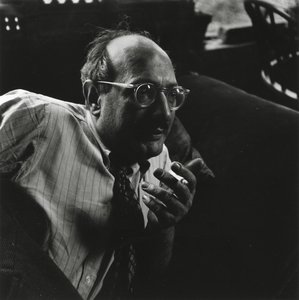
Mark Rothko
1903 - 1970 , Lettland
Kort om konstnären
- Artistic Movement Or Style: Color Field Painting
- Artists Or Movements Influenced By This Artist: ['Minimalism']
- Date Of Birth: September 25, 1903
- Date Of Death: February 25, 1970
- Full Name: Mark Rothko
- Nationality: Russisk
- Notable Artworks:
- No. 10 (1950)
- Seagram Murals
- Rothko Chapel
- Place Of Birth: Dvinsk, Latvia

