

1917. Olja på duk, 40.0 x 28.0 cm.

§ 1Katalogdata

- 40.0 x 28.0 cm


Detta konstverk är upphovsrättsligt skyddat
Konstverket som visas på denna sida skyddas av upphovsrättslagen, vilket innebär att vi inte lagligt kan skapa eller sälja en identisk reproduktion. Detta skydd upprätthålls genom internationella avtal såsom den Bernkonventionen och genom nationella lagar, inklusive de som fastställs av Amerikansk upphovsrättslag – Titel 17. Alla rättigheter förbehållna. Återgivning av konstverk är förbjuden utan skriftligt tillstånd från WahooArt.
Som ett respektfullt och lagligt alternativ erbjuder vi skräddarsydda, handmålade konstverk inspirerade av originalet. Våra skickliga och professionella konstnärer studerar noggrant originalets stil, stämning och konstnärliga essens för att skapa ett nytt, unikt verk som väcker samma känsla – samtidigt som det förblir en originell skapelse i egen rätt.
Denna metod följer fullt ut upphovsrättsliga regler eftersom den inte innebär kopiering eller duplicering av det skyddade konstverket. Istället är det en kreativ nytolkning – en ny målning som är influerad av originalet men inte identisk med det.
 Läs mer
§ 2Abstrakt
Konstnärens biografi
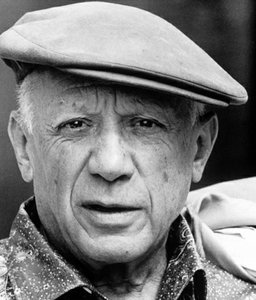
Pablo Picasso (1881-1973) var en revolutionerande spansk målare och skulptör, medgrundare av kubismen och mästare av olika stilar. Känd för ikoniska verk som Guernica & Les Demoiselles d'Avignon, fortsätter hans arv att inspirera.
§ 3Kommentarer
Pablo Picasso: A Revolutionary Artist
Pablo Diego José Francisco de Paula Juan Nepomuceno María de los Remedios Cipriano de la Santísima Trinidad Ruiz y Picasso (25 October 1881 – 8 April 1973) was a Spanish painter, sculptor, printmaker, ceramicist, and theatre designer who spent most of his adult life in France. One of the most influential artists of the 20th century, he is known for co-founding the Cubist movement, the invention of constructed sculpture, the co-invention of collage, and for the wide variety of styles that he helped develop and explore. Among his most famous works are the proto-Cubist Les Demoiselles d'Avignon (1907) and the anti-war painting Guernica (1937), a dramatic portrayal of the bombing of Guernica by German and Italian air forces during the Spanish Civil War. Beginning his formal training under his father José Ruiz y Blasco aged seven, Picasso demonstrated extraordinary artistic talent from a young age, painting in a naturalistic manner through his childhood and adolescence. During the first decade of the 20th century, his style changed as he experimented with different theories, techniques, and ideas. After 1906, the Fauvist work of the older artist Henri Matisse motivated Picasso to explore more radical styles, beginning a fruitful rivalry between the two artists, who subsequently were often paired by critics as the leaders of modern art. Picasso's output, especially in his early career, is often periodized. While the names of many of his later periods are debated, the most commonly accepted periods in his work are the Blue Period (1901–1904), the Rose Period (1904–1906), the African-influenced Period (1907–1909), Analytic Cubism (1909–1912), and Synthetic Cubism (1912–1919). Much of Picasso's work in the mid-1920s often has characteristics of Surrealism. His later work often combines elements of his earlier styles. Exceptionally prolific throughout the course of his long life, Picasso achieved universal renown and immense fortune for his revolutionary artistic accomplishments, and became one of the best-known figures in 20th-century art. He died peacefully in Mougins, France, on April 8, 1973, surrounded by his family.Early Life and Training (1881-1904)
- Born on October 25, 1881, in Málaga, Spain, Pablo Ruiz y Picasso demonstrated artistic talent from a very young age.
- His father, José Ruiz y Blasco, was an art teacher who provided his son with early training. It’s said Picasso's first words were “piz, piz” – attempting to say ‘pencil’.
- Picasso quickly surpassed his father’s abilities, showing remarkable skill in naturalistic depictions.
- The family moved to A Coruña and later Barcelona after the tragic loss of Picasso’s sister.
- In Barcelona, he attended the School of Fine Arts but often clashed with traditional academic instruction. He briefly studied at the Royal Academy of San Fernando in Madrid, finding it stifling and preferring to study masters like Velázquez and Goya independently.
The Blue and Rose Periods (1901-1906)
- The Blue Period (roughly 1901–1904) marked Picasso’s initial foray into expressive abstraction, reflecting themes of poverty, despair, and loneliness.
- Influenced by Cézanne's geometric simplification and the stylistic innovations of Matisse, Picasso explored tonal harmonies and melancholic subjects—often portraying marginalized figures like beggars and prostitutes—with muted blues and greens dominating his palette.
- The Rose Period (1904–1906) witnessed a shift towards warmer hues—rose pinks, ochres, and reds—as Picasso turned to portray portraits of circus performers and musicians.
- This period showcased a softer aesthetic compared to the Blue Period, reflecting Picasso’s newfound optimism and engagement with humanist themes.
Cubism: A Revolutionary Breakthrough
- Picasso's embrace of Cubism fundamentally altered artistic conventions, challenging traditional perspective and representation.
- Analytical Cubism (1909–1912) dissected objects into fragmented planes, presenting multiple viewpoints simultaneously—a technique that aimed to capture the essence of form rather than its visual appearance.
- Synthetic Cubism (1912–1919), spearheaded by Picasso and Georges Braque, reintroduced color and incorporated collage elements—such as newspaper clippings and fabric—to create textured surfaces and composite images.
Legacy and Influence
- Picasso’s groundbreaking innovations reverberated throughout the 20th century, inspiring artists across diverse mediums—painting, sculpture, printmaking, ceramics—and shaping movements like Surrealism and Expressionism.
- His prolific output spanned decades, encompassing monumental canvases, intimate portraits, and experimental explorations of form and materiality.
- Picasso’s enduring legacy resides not only in his artistic achievements but also in his unwavering commitment to artistic experimentation and his profound impact on the trajectory of modern art.
Frågor och svar
Vilken historisk plats har "Fruit dish" i konsthistorien?
Historiskt sett är "Fruit dish" ett Cubism-verk från den bredare Modernismen-eran.
Kan jag undersöka "Fruit dish" mer i detalj?
"Fruit dish" kan utforskas lager för lager på verkets Röntgenanalys-sida, en interaktiv vy inspirerad av en konservators ljusbord med elva optiska lager av bilden.
Vilka färger dominerar "Fruit dish" av Pablo Picasso?
Färgidentiteten i "Fruit dish" av Pablo Picasso: en Jordnära-palett, dominerad av Terrakotta (#ae602b).


 Byt till tryck


 För konstverk eller reproduktioner som är större än 105 cm (cirka 41 tum) på någon sida, levereras ramen som ett isärplockat kit. Denna metod säkerställer en trygg leverans och förhindrar skador under transport.


