


 Visa i rummet
 Skicka
 Dela
Dela
 Detaljer
 Studentguide för konstverk

 Ladda ner
 Liknande objekt
 Röntgen
 Bildspel
 Besökstatistik
The Boulevards


 Läs mer
Giclée / Konsttryck
Giclée- eller canvasprint av museumskvalitet med snabb produktion och flexibla ytbehandlingsalternativ. ( Köp handmålat konstverk Byt till digital bildförsäljning)




P118B Skr10

P118H Skr10

P118W Skr10

P438Z Skr10

P508JH Skr12

P508YH Skr12

P805H Skr10

P805Z Skr10

P919BZ Skr10

P919G Skr10

P919XJ Skr10

P959ZH Skr10

P968JZ Skr12

W106C Skr8

W218G Skr10

W218JH Skr8

W218Y Skr10

W307PJ Skr10

W316G Skr10

W316PJ Skr8

W316Y Skr10

W398PJ Skr8

W4111J Skr10

W500HY Skr15

W500JH Skr15

W692G Skr12

W849H Skr8

W940BG Skr15

W953PJ Skr8




Välj bland våra förinställda storlekar som motsvarar konstverkets ursprungliga proportioner.

Ange den bredd och höjd du behöver, för att passa din ram eller din vägg. Ett tryck kan endast beskäras, aldrig göras större än bilden, vilket innebär att ett format med en annan formform leder till att en del av bilden går förlorad. Vi skickar en digital mockup för godkännande innan vi trycker något. Bilden som visas på denna sida visar inte den faktiska beskärningen — det är endast mockuppen som gör det.
Leverans över hela världen () på 2 veckor istället för standard 4/5 veckor. (23 oktober)

Fri expressfrakt över hela världen

Högkvalitativ linnecanvas

Fullständig fraktförsäkring

Garantier för återbetalning av tullavgifter

Garantier för exakt färgåtergivning

100 dagars returrätt vid fabrikationsfel

100% pengarna tillbaka-garanti

Mängdrabatt erbjuds
 Glasalternativet är endast tillgängligt i storlekar under 110 cm.

The Boulevards
Giclée / Konsttryck
Reproduktionsstorlek
-


Totalpris
Skr 635
A Parisian Whisper: The Soul of The Boulevards
To step into Pierre Bonnard’s “The Boulevards” is to wander through a dream of fin de siècle Paris, where the bustling energy of the city is softened by a veil of poetic nostalgia. Created in 1900, this exquisite lithograph does not merely document a street scene; it captures the very breath of the Belle Époque. As a master of the Intimist movement, Bonnard moves away from the grand, sweeping gestures of traditional landscape painting to focus on the quiet, fleeting moments that define urban existence. The viewer is not an outsider looking in, but a silent participant, drifting alongside the figures strolling through a world rendered in a palette of muted greens, soft violets, and delicate pinks.
The composition possesses a deceptive simplicity that masks a profound emotional depth. Bonnard utilizes a subtly flattened perspective, compressing the space of the boulevard to draw the eye inward toward a towering architectural presence. This technique creates an intimate atmosphere, as if the city itself is leaning in to share a secret. The way the light filters through the scene—not with the harsh brilliance of the Impressionists, but with a diffused, ethereal glow—imbued the lithograph with a sense of timelessness. For the collector or interior designer, this piece offers a sophisticated balance of structure and softness, making it an ideal focal point for spaces that require a touch of historical elegance and contemplative calm.
Technique and the Art of Impressionistic Nuance
The technical mastery behind “The Boulevards” lies in Bonnard’s ability to use color as a vehicle for emotion rather than mere description. Executed as a lithograph on fine paper, the work showcases a remarkable command of tonal layering. By eschewing heavy outlines and traditional shading, Bonnard relies on overlapping planes of color to suggest depth and movement. The interplay between the cool greens and the warm, fleshy pinks creates a rhythmic vibration across the surface, mimicking the flickering movement of pedestrians and bicycles passing through the street. This approach reflects his roots in the Nabis group, where the decorative quality of the medium was just as vital as the subject matter itself.
Every stroke and color choice serves to evoke the atmosphere of a city in transition. There is a certain melancholy present in the muted tones, a reflection of the shifting social tides at the turn of the century. Yet, beneath this layer of nostalgia, there is an undeniable vibrancy—a pulse of life that remains even in the most subdued hues. For those seeking to adorn a home with art that tells a story, this reproduction provides more than just visual beauty; it offers a window into a vanished era of Parisian splendor, inviting a sense of romanticism and intellectual curiosity into any curated collection.
Frågor och svar
Vilken period av Pierre Bonnards karriär tillhör "The Boulevards"?
"The Boulevards" representerar Pierre Bonnards Mature Period.
Vilken är den färgmässiga identiteten hos "The Boulevards" av Pierre Bonnard?
Färgidentiteten i "The Boulevards" av Pierre Bonnard: en Neutrals-palett, dominerad av Putty (#cec1ab).
Vilken konstnär tillskrivs "The Boulevards"?
Konstnären bakom "The Boulevards" är Pierre Bonnard. Verket är katalogiserat under Pierre Bonnards namn.
Liknande konstverk


Om konstnären
A Life Bathed in Light: The World of Pierre Bonnard
Pierre Bonnard, född 1867 i den parisiska förorten Fontenay-aux-Roses, var inte tänkt att leva ett liv djupt rotat i konstnärligt uttryck. Hans far, en högt uppsatt tjänsteman vid det franska krigsministeriet, såg sin sons framtid i juridiken. Ung Pierre ägnade sig därför med flit studier i juridik och tog examen 1888, men hans hjärta fann sitt hem någon annanstans – i den förtrollande världen av färg och form. Denna dualitet, denna spänning mellan förväntningar och passion, skulle subtilt påverka hans konstnärliga resa, vilket gav hans verk en unik intimitet. Han började med karikatyrer, skärpt sin förmåga att observera – en färdighet som senare blomstrade ut i exakt avbildade hemmanära scener. Men det var vid Académie Julian där Bonnard verkligen fann sin väg, där han mötte likasinnade själar som delade hans växande avståndstagande från akademiska konventioner och omfamnade den avantgardistiska anda som svepte genom Paris. Detta ledde honom till Nabis-gruppen – en grupp konstnärer, inklusive Maurice Denis, Paul Sérusier och Édouard Vuillard – som sökte infusa konst med andlighet och symbolik, bortom ren representation mot en utforskning av inre upplevelse.The Nabi Years and the Cultivation of Intimacy
Bonnards tillhörighet till Nabis var avgörande. Gruppens betoning på platta former, djärva färgpaletter och ett avståndstagande från traditionell perspektiv resonerade djupt med hans konstnärliga känslor. Inspirerad av japanska tryck – deras eleganta linjer och harmoniska kompositioner – och Symboliströrelsens utforskning av subjektiva känslor, började Bonnard att utveckla sin signaturstil. Han var inte intresserad av storslagna berättelser eller historiska allegorier; istället vände han inåt, fokuserade på de tysta ögonblicken i vardagen: en kvinna som badar, en familj samlad till middag, en solkysst trädgård. Dessa var inte bara scenernas avbildningar utan destillationer av känsla – evokationer av minne och atmosfär. Detta fokus på intimitet i hemmet fick honom till namnet “Intimist”, ett begrepp som perfekt fångar den emotionella resonans i hans verk. Hans målningar handlar inte om *vad* som visas, utan *hur* det känns att vara närvarande i dessa ögonblick. Han arbetade från minne, skissade noggrant och sedan översatte dessa intryck till duken med en anmärkningsvärd känslighet för ljus och färg.Color as Emotion: A Master Colorist
Bonnards mästerskap i färg är utan tvekan hans mest definierande egenskap. Han använde inte bara färg; han *känns* den, tillät den att styra stämningen och atmosfären i sina målningar. Hans palett var livlig men nyanserad, ofta med hjälp av oväntade kombinationer som skapade en känsla av skimrande ljus. Han skulle återvända till färdiga dukar flera gånger, försiktigt justera färgerna över flera verk för att uppnå perfekt harmoni – ett testamente till hans besatta engagemang för kromatiskt balans. Detta var inte om realistisk representation; det handlade om att fånga den subjektiva upplevelsen av färg, dess förmåga att väcka känslor och minnen. Han avvek från direkt observation, föredrog istället att måla från minne, vilket gav honom möjlighet att infusa sina scener med en drömlik kvalitet. Hans landskap var inte bara representationer av platser utan emotionella svar på dem – filtrerade genom linsen av personliga erfarenheter.Influences and Development
Bonnards konstnärliga resa var formad av flera influenser. Han beundrade japansk konst, särskilt dess komposition och användning av ljus och skugga. Han studerade också verk av impressionister som Claude Monet och Auguste Renoir, men han utvecklade en egen stil som skiljde sig från deras. Hans tid i Nabis-gruppen var avgörande för hans utveckling, eftersom han lärde sig att fokusera på subjektiva känslor och att använda färg för att uttrycka dessa känslor. Han experimenterade med olika tekniker, inklusive pastell och collage, och hans verk blev alltmer abstrakta och expressionistiska under de sena åren av hans karriär.Later Life and Lasting Legacy
Under sin senare tid sökte Bonnard inspiration i den franska rivieran, särskilt i området kring Le Cannet. Han fortsatte att måla med samma passion och skicklighet som han hade visat under hela sitt liv, men hans verk blev alltmer personliga och introspektiva. Hans relation till Marthe de Meligny, hans fru och livslånga muse, var central för hans liv och konst. Hon figurerade ofta i hans målningar, ofta avbildad badande eller engagerad i vardagliga aktiviteter, hennes närvaro utstrålade en tyst grace och intimitet. Bonnard dog 1947, men hans arv lever vidare genom hans unika stil och hans förmåga att fånga den sköra skönheten i det vardagliga livet. Hans verk finns i museer över hela världen, inklusive Musée Marmottan Monet i Paris, Art Institute of Chicago och Tate Modern i London, vilket bevisar hans varaktiga inflytande på modern konst.Notable Works & Collections
- Woman in Checkered Dress (1890): Ett tidigt exempel på hans Nabis-inspirerade stil, som visar platta former och djärva färgkombinationer.
- The Dining Room (1913): En typisk Intimist-scen, som fångar värmen och intimiteten i hemmet.
- Bowl of Fruit (c. 1933): Visar hans mästerskap i stillivna objekt, med livfulla färger och en känsla av skimrande djup.
- The Almond Tree in Blossom (1947): Ett av hans sista verk, utfört bara några dagar före sin död, som visar hans fortsatta utforskning av färg och ljus.

Pierre Bonnard
1867 - 1947 , Frankrike
Snabbfakta
- Artistic Movement Or Style: Post-Impressionism, Intimism
- Artists Or Movements Influenced By This Artist: ['Impressionisterna']
- Artists Who Influenced This Artist:
- Les Nabis
- Hokusai
- Date Of Birth: 3 okt 1867
- Date Of Death: 23 jan 1947
- Full Name: Pierre Bonnard
- Nationality: Fransk
- Notable Artworks:
- Kvinnan i checkad klänning
- Matsalen
- Fruktskål
- Place Of Birth: Fontenay-aux-Roses, Frankrike
Relaterade artiklar
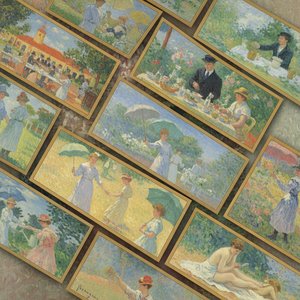
Renoirs Mästverk: Topp 25 Konstverk för Hemmet & Själens Frid
Utforska Renoirs 25 mest älskade konstverk! Fördjupa dig i impressionismens värld, från balettscener till romantiska porträtt. Hitta inspiration & museumkvalitativa reproduktioner på AllPaintingsStore.com.

Georges Seurat: Topp 25 mästerverk – Impressionismens ljus och vetenskap i din konstsamling
Utforska Georges Seurats 25 mest ikoniska verk! Fördjupa dig i impressionismens ljus, pointillismens teknik och fransk konsthistoria. Hitta inspiration & museumkvalitativa konsttryck för ditt hem på AllPaintingsStore.com.

Topp 10 Impressionistiska Mästerverk som Definierade Konsten – AllPaintingsStore
Utforska de 10 mest ikoniska impressionistiska mästerverken av Monet, Renoir & Degas. Lär känna historien bakom dessa tidlösa konstverk och upptäck hur ljus och färg definierade en epok. Köp museumskvalitativa tryck på AllPaintingsStore.com.

Impressionistic Realism's Finest: 10 Masterpieces for Your Home | AllPaintingsStore
Journey through Impressionistic Realism with 10 iconic masterpieces by Monet, Renoir & Van Gogh. Explore art history, techniques & find museum-quality reproductions for your home at AllPaintingsStore.com. Discover all masterpieces online!

Impressionismens Mästerverk: Topp 10 Landskap som Förändrade Konsten | AllPaintingsStore
Upptäck de 10 mästerverk som definierade impressionistiska landskap! Monet, Renoir & Cézanne – lär känna historien bakom ikoniska oljemålningar. Hitta inspiration och museumskvalitativa konsttryck på AllPaintingsStore.com.


